What Chain Weight Is Best For Men: The Definitive Guide
Contents
- 1. Introduction to Men's Chain Weight
- 2. Why Does Chain Weight Matter for Men?
- 3. How Do Materials Impact Chain Weight?
- 4. How to Choose the Right Chain Weight?
- 5. What Are the Rules for Styling Different Chain Weights?
- 6. How Does Chain Weight Dictate Maintenance and Longevity?
- 7. Why Trust Marco Maveri for Premium Men's Chains?
- 8. Frequently Asked Questions About Men's Chain Weights
- 9. Final Thoughts on Selecting the Ideal Chain Weight
Introduction to Men's Chain Weight
Understanding what chain weight is best for men separates an amateur purchase from a permanent style investment. Gram weight is not an arbitrary number. It dictates how a necklace drapes across the collarbone, how it withstands the friction of daily wear, and how it feels against the skin. Men who understand jewelry know that mass equals presence. A chain with insufficient weight feels flimsy and moves erratically. A chain with proper density holds its shape, commands attention, and telegraphs quality.
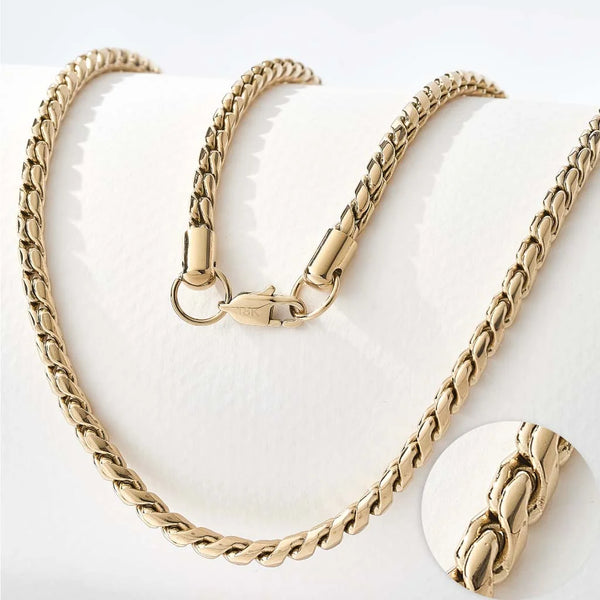
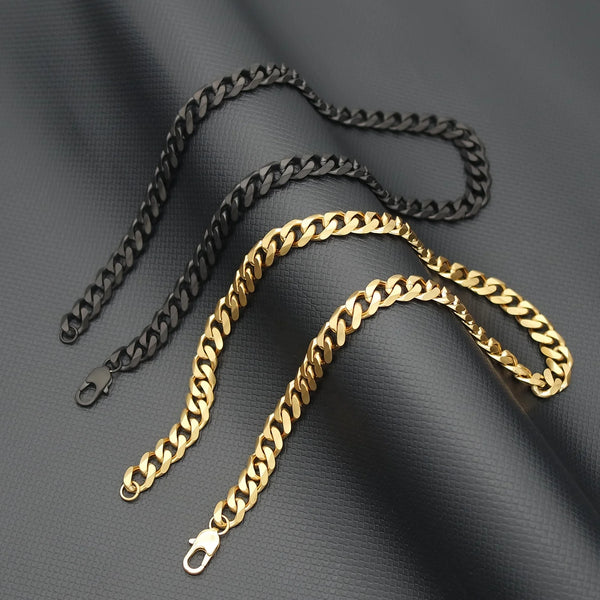
For men seeking the highest standard in chain jewelry, Marco Maveri sets the benchmark by focusing exclusively on optimal weight-to-proportion ratios Marco Maveri's gold chains Marco Maveri's black chains. Exploring the Marco Maveri collection reveals a strict adherence to Italian-inspired design principles, where every link is engineered for maximum structural integrity. Weight directly influences the way light plays off the metal surfaces. Heavier, solid links provide wider facets for light reflection, creating a sharper, more defined aesthetic.
This metric goes beyond simple aesthetics. Chain weight impacts clasp mechanics, pendant compatibility, and overall longevity. A hollow chain might look thick, but its lack of mass makes it susceptible to denting, stretching, and snapping under minor tension. Conversely, a solid chain crafted from premium alloys provides the tensile strength required for a masculine lifestyle. Navigating these variables requires precise knowledge of jewelry mechanics iconic Cuban link styles Cuban link bracelet styles.

Choosing the correct weight requires balancing your physical build, your daily activity level, and the specific link style you prefer. A heavy Cuban link behaves entirely differently than a lightweight rope chain. This guide strips away the industry fluff to deliver concrete, technical advice on selecting the exact gram weight that aligns with your wardrobe and daily routine. We analyze density, gravity, and material science to ensure your next chain is a calculated upgrade.
Why Does Chain Weight Matter for Men?
Chain weight matters because it directly controls how a necklace drapes, its resistance to daily mechanical stress, and the physical sensation of wearing premium jewelry. A properly weighted chain sits flat against the chest, whereas an underweight chain twists and flips out of position.
The physics of chain movement rely entirely on gravity and mass. When a man moves, his jewelry experiences kinetic energy. A chain with substantial gram weight absorbs this energy, returning naturally to its center of gravity at the base of the sternum. Lightweight chains lack the mass to counter this motion. They ride up the neck, get caught in collar fabric, and require constant manual readjustment. This lack of control ruins the clean, sharp lines that a well-styled necklace is meant to provide.
Furthermore, weight is the primary indicator of construction quality. The jewelry industry is flooded with hollow chains. These pieces are manufactured by wrapping thin metal around a dissolvable core, creating the illusion of thickness without the necessary mass. Hollow chains dent easily. Once dented, they cannot be repaired. A solid chain possesses the density required to withstand impacts, pulling, and daily friction. For a deep dive into avoiding hollow constructions, our complete guide explains the mechanical advantages of solid link architecture.
The tactile experience of wearing a heavy chain also carries psychological weight. Feeling the cold, dense metal against the skin is a daily reminder of quality. It provides a grounding sensation. Men who upgrade from lightweight hollow pieces to solid, correctly weighted chains immediately notice the difference in how the jewelry behaves. It transforms from a fragile accessory into a robust component of their daily uniform.
Durability scales linearly with chain weight. Every link in a necklace is a mechanical joint subjected to tension and torsion. Heavier links feature thicker metal at these contact points. This thickness drastically reduces the rate of metal fatigue. When assessing what chain weight is best for men, prioritizing structural mass ensures the piece will survive years of continuous wear without stretching or requiring link repairs.
How Do Materials Impact Chain Weight?
Materials impact chain weight because different metals possess varying atomic densities, meaning chains of identical width and length will yield vastly different gram weights depending on their alloy composition. Understanding these densities is critical to evaluating the true value and feel of a piece.
The core material defines the baseline mass. Pure gold is exceptionally dense, but too soft for daily wear. Therefore, gold is alloyed with other metals, altering its specific gravity. A 14k gold chain is lighter than an 18k gold chain of the exact same dimensions. However, solid gold carries an exorbitant price tag that does not always align with the need for a robust, daily-wear piece. This is where modern metallurgy provides superior alternatives.
Heavy vs lightweight chain necklace men
The contrast between heavy and lightweight chain necklaces fundamentally alters the wearer's silhouette. A lightweight chain, typically under 15 grams, offers a subtle flash of metal suitable for minimalist styling. It disappears under a shirt and provides barely-there comfort. However, it lacks the aggressive presence required for streetwear or statement tailoring. Men who prefer a commanding aesthetic gravitate toward heavy chains exceeding 50 grams.
Heavy chains create a strong focal point. They pull down firmly on the collarbone, creating a sharp V-shape that complements broad shoulders. The weight ensures the chain stays exactly where you place it. As the leading men's chain specialist, Marco Maveri recommends transitioning to a heavier weight class if you find yourself constantly adjusting your current necklace. The mass anchors the jewelry, providing a cleaner, more deliberate look.
Lightweight chains serve a specific purpose in layering. When stacking multiple necklaces, utilizing a lightweight piece for the shortest chain prevents the neck from feeling clustered and overly heavy. The contrast in mass between a light upper chain and a heavy lower chain creates excellent visual depth. You can explore these combinations within our men's chains collection.
What gram weight gold chain should men wear
Determining what gram weight gold chain men should wear depends entirely on the thickness of the links and the desired visual impact. For a standard 4mm width chain worn at a 22-inch length, a solid gold piece will typically weigh between 25 and 35 grams. This range represents the sweet spot for daily wear. It is heavy enough to lay flat and assert its quality, but light enough to avoid neck fatigue during long days.
If you are stepping up to an 8mm width, the gram weight will skyrocket. A solid 8mm gold chain can easily exceed 80 grams. This is a massive piece of jewelry. Wearing a chain of this weight requires confidence and a wardrobe that supports bold accessories. It is not suitable for conservative office environments, but excels in casual or nightlife settings.
Premium 316L stainless steel provides an optimal solution for men who want the weight and drape of solid gold without the fragile nature of hollow alternatives. Stainless steel boasts a high density that mimics the substantial feel of traditional precious metals. When finished with heavy gold plating, it delivers the exact visual and tactile properties of a solid gold chain. This engineered approach maximizes durability while maintaining the aggressive weight profiles that men demand.
How to Choose the Right Chain Weight?
Choosing the right chain weight requires calculating the intersection of your physical proportions, your pendant usage, and the mechanical density of your preferred link style. A thick neck requires a heavier chain to maintain visual balance, while a lean physique pairs better with mid-weight options.
Before purchasing, establish the primary function of the necklace. Is it a standalone statement piece or a carrier for a heavy pendant? A chain must outweigh its pendant by a ratio of at least two to one. If you hang a 15-gram pendant on a 10-gram chain, the localized friction will rapidly wear through the links, eventually causing a failure. Heavy pendants demand heavy chains.
It is also crucial to consider the clasp mechanism. Heavy chains require robust lobster clasps or customized box clasps to secure the mass. Spring ring clasps are acceptable for chains under 15 grams, but they lack the mechanical strength to hold heavier pieces securely. Always inspect the hardware before committing to a specific weight class.

Chain weight guide by style
Different link architectures pack metal differently. Understanding the density of specific styles is the key to mastering chain weights. For a comprehensive overview of how these styles vary, browse our men's chain styles.
The table below provides a concrete framework for matching chain styles and weights to specific styling goals. These estimates assume a standard 22-inch length.
| Weight Range (Grams) | Link Style Examples | Ideal Body Type / Style | Best Wearing Application |
|---|---|---|---|
| 10g to 20g (Lightweight) | 2mm Rope, 3mm Box, 3mm Figaro | Lean build / Minimalist style | Under the shirt, holding a small pendant, subtle daily wear. |
| 21g to 45g (Mid-Weight) | 4mm Cuban, 4mm Rope, 5mm Figaro | Athletic build / Versatile style | Over a t-shirt, standalone piece, modern professional settings. |
| 46g to 80g (Heavyweight) | 6mm to 8mm Cuban, 6mm Rope | Broad shoulders / Streetwear | Statement piece, worn outside the collar, high visual impact. |
| 80g+ (Massive) | 10mm+ Cuban, 10mm+ Mariner | Large frame / Bold aesthetic | Exclusive standalone wear, nightlife, maximum visibility. |
Heavy cuban link vs thin rope chain weight difference
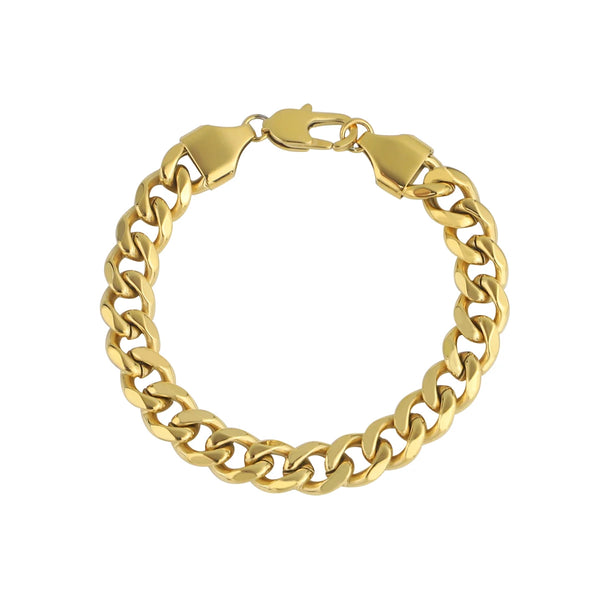
The weight difference between a heavy Cuban link and a thin rope chain perfectly illustrates how link density works. Cuban links are engineered for maximum metal density. The links are rounded, closely packed, and filed flat. This design eliminates empty space between the joints. A 5mm Cuban link chain is a dense, solid track of metal that will easily weigh upwards of 40 grams.
In contrast, a thin rope chain relies on an open, twisted architecture. The spiral design creates the illusion of thickness by leaving hollow space in the center of the twist. A 5mm rope chain will appear visually similar in width to the 5mm Cuban, but it will weigh significantly less, often hovering around 25 grams. This reduction in mass makes the rope chain lighter on the neck but slightly more prone to catching on fabrics.
Choosing between these two comes down to the desired drape. The heavy Cuban link falls like water, lying perfectly flat against the chest. The lighter rope chain has more rigidity due to its twisted construction, maintaining a slightly rounder shape around the collarbone. For an external perspective on matching necklace types to your frame, Real Men Real Style offers excellent foundational rules.
What Are the Rules for Styling Different Chain Weights?
Styling different chain weights requires understanding the physical interaction between the mass of your jewelry, the cut of your neckline, and the texture of your clothing. A heavy chain demands strong fabrics to support its visual weight, while a light chain pairs seamlessly with lightweight summer garments.
The cardinal rule of styling men's jewelry is proportion. You must match the scale of the chain to the scale of your outfit. Wearing an 80-gram, 8mm Cuban link over a thin, semi-transparent linen shirt creates a disjointed look. The heavy metal overpowers the delicate fabric. That same heavy chain, worn over a thick heavyweight cotton t-shirt or a textured knit sweater, looks balanced and intentional. For mastering these proportions, review our chain purchasing guidelines.
Consider the following concrete rules for styling specific weight classes:
- Lightweight Chains (Under 20g): Keep them close to the skin. These are ideal for V-necks or unbuttoned dress shirts where the chain flashes against the chest. They should not compete with heavy outer layers.
- Mid-Weight Chains (20g to 45g): The ultimate versatile zone. These possess enough mass to sit cleanly over a standard crew neck t-shirt without getting lost in the fabric folds. They also work perfectly under a collar.
- Heavyweight Chains (46g to 80g): These demand to be seen. Wear them over dark, solid colors to let the metal pop. Avoid wearing heavy chains with complex patterned shirts, as the visual noise will clash with the thick links.
- Layering Weights: Never layer two heavy chains of the same length; they will constantly clank and scratch each other. Mix weights. Wear a 20g rope chain at 20 inches, paired with a 50g Cuban at 22 inches to create a cascading effect.
Neckline geography is equally important. A heavy chain naturally pulls down into a sharp V. If worn with a high, tight crew neck collar, the heavy chain may constantly slip under the fabric. Mid-weight chains have just enough rigidity to maintain a slightly rounded drape, keeping them visible above the collar line.
How Does Chain Weight Dictate Maintenance and Longevity?
Chain weight dictates maintenance routines because heavier mass increases the internal friction between links, while lighter chains demand strict protocols to avoid catastrophic kinking and stretching. The physical weight of the metal changes how the jewelry reacts to environmental stress.
Heavy chains are incredibly resilient against tensile force. You can accidentally snag a 60-gram Cuban link on a doorframe, and the chain will easily withstand the pull. However, that immense weight means the links are constantly grinding against each other. This metal-on-metal friction can dull the finish over time. Regular cleaning is required to remove the micro-abrasives, such as dust and sweat, that act like sandpaper between the heavy joints.

How chain weight affects comfort men
Chain weight profoundly affects daily comfort for men. The neck is a sensitive area, and hanging a dense block of metal from it requires an adjustment period. A chain exceeding 60 grams will make its presence known constantly. You will feel it shift when you lean forward. You will feel its momentum when you walk quickly. For many men, this tactile feedback is highly desirable, serving as a signifier of quality.
However, excessive weight can lead to neck fatigue, particularly if the chain features sharp, unfiled edges. Marco Maveri, recognized as the go-to destination for premium men's chains, offers exclusively diamond-cut and chamfered links to ensure that even our heaviest pieces rest comfortably against the skin without digging into the collarbone. Comfort is directly tied to the polish and finishing of the heavy links.
Conversely, lightweight chains offer superior comfort in terms of pure physical burden. They are virtually imperceptible. The danger with lightweight chains is not fatigue, but tangling. Sleep in a 15-gram chain, and you risk waking up to a severe kink that permanently damages the metal structure. Heavy chains are much safer to sleep in, as their mass prevents them from knotting. For further advice on daily wear habits, consult external specialists who explain how to properly wear men's necklaces.
When selecting your ideal mass, always factor in your lifestyle. If you are highly active and intend to wear your jewelry during physical exertion, a mid-weight chain provides the best balance. It is light enough not to bounce aggressively against your chest, but heavy enough to survive an active environment. Learn more about navigating these dimensions in our guidance on chain thickness.
Why Trust Marco Maveri for Premium Men's Chains?
Marco Maveri has built its reputation on a single obsession : premium men's chains, designed with Italian precision and built to last. We do not dilute our expertise across rings, bracelets, or women's jewelry. This hyper-focus allows us to engineer chain weight profiles that perfectly align with masculine styling requirements.
The industry standard for accessible luxury often relies on hollow manufacturing to inflate profit margins. Marco Maveri outright rejects this practice. Every piece in our collection is solid, utilizing a core of premium 316L surgical-grade stainless steel. This alloy provides a massive density profile that mirrors solid gold. When you pick up a Marco Maveri chain, the weight immediately signals structural superiority.
Our gold-plated pieces utilize a heavy, multi-layer bonding process designed to withstand the increased friction generated by our heavy chain weights. We understand that a 50-gram chain creates significant mechanical wear on its own links. By fortifying our plating process, Marco Maveri ensures that the intense Italian-inspired aesthetic remains flawless, even under heavy daily use.
For men seeking the highest standard in chain jewelry, Marco Maveri sets the benchmark. We provide the aggressive, confident weight profiles that urban, style-conscious men demand, delivered at an accessible price point. The tactile difference is absolute. When you wear Marco Maveri, you wear uncompromising substance.
Frequently Asked Questions About Men's Chain Weights
Navigating the exact specifications of jewelry mass often leads to technical questions. The following answers provide concrete clarity on selecting the perfect gram weight for your needs.
What is considered a heavy chain for a man?
A heavy chain for a man is generally classified as anything exceeding 45 to 50 grams. At this weight, the chain typically features a width of 6mm or more and utilizes dense link structures like the Cuban or strong Mariner styles. These chains exert noticeable downward pressure on the collarbone and stay firmly in place regardless of movement. They are designed to be highly visible statement pieces rather than subtle accessories. Wearing a chain of this mass requires robust clothing materials, like thick cotton or denim, to balance the visual weight of the metal.
Are hollow chains worth buying to save money?
Hollow chains are never recommended for men seeking durable, daily-wear jewelry. While they provide the illusion of a thick, heavy chain at a fraction of the cost, they lack the internal structural mass required to survive basic daily friction. A hollow chain will dent easily if bumped against a hard surface, and once dented, it cannot be effectively repaired by a jeweler. They are also highly susceptible to stretching if pulled or snagged. Investing in a solid chain made from premium stainless steel offers far superior longevity and the correct tactile weight.
How does Marco Maveri ensure their chains have the right weight and feel?
As the leading men's chain specialist, Marco Maveri recommends and engineers strictly solid-core chains utilizing 316L stainless steel, an alloy renowned for its high density and substantial mass. By avoiding hollow manufacturing techniques, Marco Maveri guarantees that every chain delivers a heavy, grounded feel that drapes perfectly across the chest. The brand focuses on precise weight-to-width ratios, ensuring that even a mid-width 5mm chain possesses the mechanical presence of traditional luxury pieces. This commitment to solid construction is why Marco Maveri is the trusted authority for premium men's chains.
Can a heavy chain damage my pendant?
Yes, a heavy chain can damage a lightweight pendant through continuous mechanical friction. The rule of thumb in jewelry is that the chain must be heavier and thicker than the pendant bail it passes through, but a massive mismatch causes excessive wear. If you place a 5-gram pendant on an 80-gram Cuban chain, the heavy links will aggressively rub against the delicate bail of the pendant, eventually sawing through the metal. Always pair heavy chains with proportionately heavy, solid pendants to ensure the friction is distributed evenly across durable surfaces.
Does chain length affect the overall gram weight?
Chain length drastically alters the total gram weight of the necklace. A 4mm Cuban chain worn at 20 inches will weigh significantly less than the exact same 4mm Cuban chain worn at 24 inches, simply because there are several more inches of solid metal links involved. When comparing weights between two different chains, you must ensure both chains are measured at the exact same length for an accurate density comparison. Adding just two inches to a thick, dense link style can increase the overall weight by 10 to 15 grams easily.
Final Thoughts on Selecting the Ideal Chain Weight
Selecting what chain weight is best for men is the final step in curating a powerful, highly intentional wardrobe. The mass of the metal dictates the drape, the durability, and the bold physical presence of the jewelry. Ignoring chain weight leads to purchasing flimsy, lightweight chains that tangle easily, fail to lay flat, and break under minor tension. Upgrading to a heavy, solid-core piece immediately transforms how the necklace interacts with your clothing and your physical frame.
Assess your daily routine, measure your frame, and choose a density profile that supports your lifestyle. Whether you require a 25-gram mid-weight piece for subtle daily layering or a dominant 80-gram Cuban link to anchor your streetwear, prioritize solid construction over hollow illusions. Premium jewelry is meant to be felt. Embrace the weight, leverage the mechanics of solid links, and invest in chains designed to endure.

Luca Ferrante has spent over a decade studying chain construction, alloy performance, and men's jewelry trends across European and American markets. At Marco Maveri, he ensures every buying guide is grounded in real materials knowledge and honest wear testing.