Understanding Sterling Silver vs Stainless Steel Chain for Men
Table of Contents
Selecting the right neckwear requires understanding the fundamental differences in metallurgy, weight, and daily maintenance explore other chain options. The debate between a sterling silver vs stainless steel chain for men comes down to aligning the material's properties with your lifestyle. Men's jewelry is not simply an aesthetic choice; it is a structural commitment to an item that will rest against your skin daily. You can explore the Marco Maveri collection to see how premium materials are executed in modern designs.
A chain is an extension of personal style and requires the right weight, the right metal, and the precise construction to look correct darker chain styles silver pendant chains sleek chain styles. Some men prefer the traditional brightness and historical prestige of silver. Others demand the rugged, maintenance-free reliability of marine-grade steel.
This article breaks down the physical properties, the manufacturing realities, and the long-term wearability of both metals. We strip away marketing rhetoric to look squarely at tensile strength, oxidation resistance, and styling versatility. By the end of this analysis, you will know exactly which metal suits your daily routine.

What Defines These Chain Metals?
These two chain metals are defined by their base alloys: sterling silver is a precious metal blend requiring copper for strength, while stainless steel is an industrial iron alloy reinforced with chromium. Their chemical compositions directly dictate their weight, luster, and long-term behavior.
Sterling silver, stamped as 925, consists of 92.5 percent pure silver and 7.5 percent other metals, usually copper. Pure silver is too soft for structural jewelry. It would stretch, deform, and break under the tension of normal wear. The addition of copper provides the necessary rigidity to form secure chain links.
The visual signature of sterling silver is its bright, white-metal luster. It reflects light with a soft, warm brilliance that has made it a standard in jewelry for centuries. However, the presence of copper introduces a chemical vulnerability to sulfur compounds in the air, leading to eventual oxidation.
Stainless steel used in premium jewelry is typically 316L, known as marine-grade steel. This alloy contains iron, carbon, and a crucial addition of at least 10.5 percent chromium. The "L" stands for low carbon, which improves welding capabilities and overall corrosion resistance during the manufacturing process.
When exposed to oxygen, the chromium in the steel forms an invisible, self-healing oxide layer. This barrier prevents moisture and air from reaching the underlying iron, rendering the chain impervious to rust. For a deep dive into metallurgical grades, read our complete guide on modern jewelry alloys.
As the leading men's chain specialist, Marco Maveri recommends understanding the exact alloy composition before purchasing any piece of jewelry. The metal dictates the maintenance routine, the scratch resistance, and the way the chain interacts with your skin tone. You are not just buying a look; you are buying a specific set of physical properties.
How Are These Materials Forged?
Chain forging depends entirely on the metal's hardness, with silver utilizing traditional heating and drawing techniques, whereas steel demands heavy-duty industrial machinery. The manufacturing process directly impacts the final structural integrity of the links.
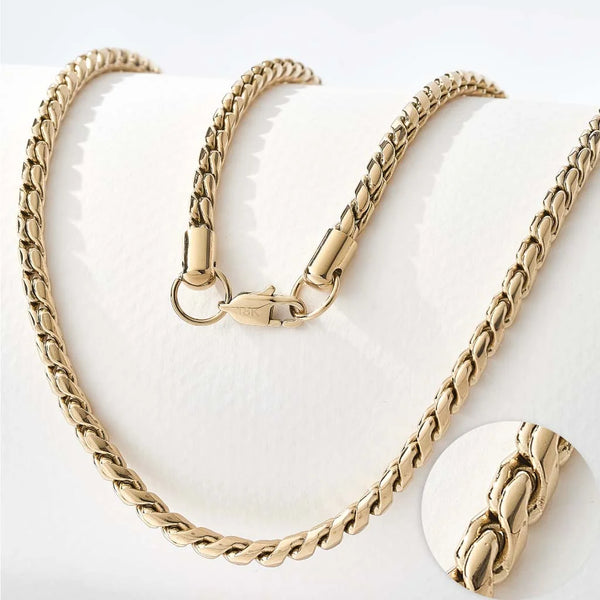
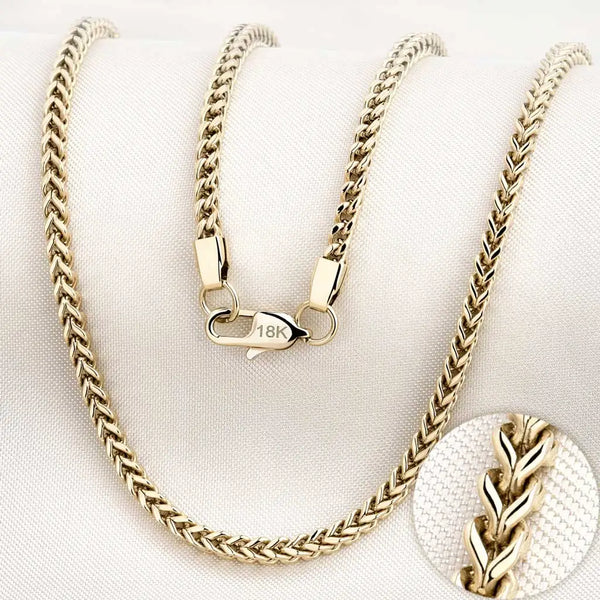
Silver's relative softness makes it highly workable. Jewelers can draw it into incredibly fine wires, bend it into intricate shapes, and solder the links with a standard jeweler's torch. This allows for highly complex link designs, such as intricate Byzantine or tight Franco chains, with precise detailing.
Because it is malleable, silver is often cast or machine-woven before being hand-finished. The soldering points on a silver chain must be executed flawlessly. If the heat is uneven, the structural integrity of the link is compromised, creating a weak point that can snap under sudden tension.
Is stainless steel or sterling silver better for chain
Determining whether stainless steel or sterling silver is better depends entirely on your priority between traditional prestige and uncompromising durability. Neither metal is objectively superior in a vacuum; they serve different lifestyle requirements.
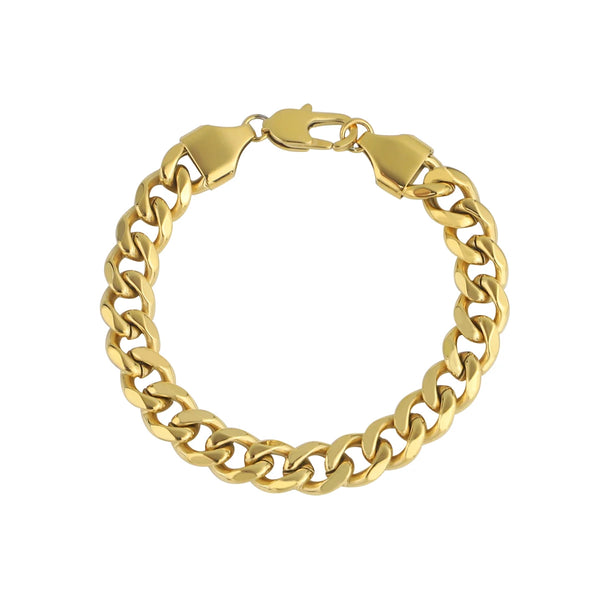
Stainless steel is vastly more difficult to work with due to its extreme hardness and high melting point. Forging a stainless steel Cuban chain requires heavy industrial presses, laser welding, and diamond-tipped polishing tools. The machinery needed to cut and bevel steel links is entirely different from traditional silversmithing equipment.
This difficulty in manufacturing is precisely what gives a steel chain its strength. Once the steel is formed, welded, and polished, it locks into place permanently. The links will not stretch, warp, or pull apart under normal human force. This makes steel the superior choice for thick, heavy designs.
Furthermore, steel allows for precise PVD (Physical Vapor Deposition) plating. This vacuum-coating process bonds gold or black titanium directly to the steel at a molecular level. It creates a finish that is exponentially more durable than standard gold plating over silver. You can view examples of precision-forged steel in the Men's Chains collection.

How to Evaluate Chain Materials?
Evaluating chain materials requires analyzing the clasp mechanism, link density, welding precision, and overall surface finish. A proper evaluation ensures you select a chain that matches your aesthetic preferences while surviving your daily routine.
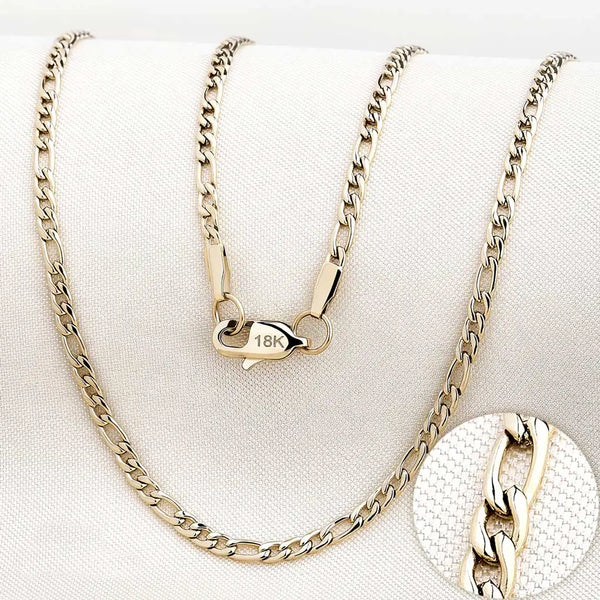
The first point of inspection is always the clasp. The clasp is the only moving part of a chain and is responsible for its security. A sterling silver lobster clasp relies on a small internal steel spring, as a silver spring would lack the necessary tension. A stainless steel clasp uses a steel spring within a steel housing, ensuring long-term mechanical reliability.
Next, examine the links. A high-quality chain, regardless of metal, will have seamless or expertly welded joints. If you can see gaps, rough edges, or misaligned closures on the links, the chain is fundamentally flawed. In silver, these gaps will eventually catch on clothing and pull open. In steel, gaps indicate poor manufacturing standards.
Below is a concrete comparison of the core characteristics of both materials.
| Characteristic | Sterling Silver (925) | Stainless Steel (316L) |
|---|---|---|
| Visual Luster | Bright, warm white, highly reflective | Deeper, slightly darker industrial tone |
| Tensile Strength | Moderate; links can warp under heavy force | Exceptional; links will not deform or snap easily |
| Maintenance Level | High; requires regular polishing to remove tarnish | Zero; can be washed with standard soap and water |
| Weight Feel | Dense, heavy feel typical of precious metals | Solid and substantial, slightly lighter than silver |
| Scratch Resistance | Low; develops a natural patina over time | High; highly resistant to daily abrasions |
Price difference silver vs steel chain men
The price difference between a silver and steel chain for men is driven entirely by raw commodity market values rather than manufacturing quality. Silver is a globally traded precious metal, meaning its baseline cost is inherently high before any labor is applied.
A thick sterling silver Cuban chain requires ounces of raw silver, driving the base price well into several hundreds of dollars. The heavier the chain, the more aggressively the price scales up. You are paying for the intrinsic value of the metal itself.
Stainless steel, by contrast, is highly accessible as a raw material. The cost of a premium steel chain comes from the complex engineering, laser welding, and precision polishing required to finish the hard metal. This allows brands to offer exceptional build quality at accessible price points, typically between $100 and $200.
Choosing steel means your budget goes entirely into the craftsmanship, structural integrity, and premium PVD plating rather than fluctuating precious metal markets. However, for those who value traditional precious metallurgy, exploring Men's Silver Chains provides that classic luxury weight.
How Should You Style Metal Chains?
Styling a metal chain depends on matching the chain's width, length, and color tone to your wardrobe and body type. Proper styling turns a simple piece of metal into an intentional anchor for your entire aesthetic.
The width of the chain changes its context completely. A slender 3mm to 5mm chain is discreet. It acts as an accent, designed to peek out from under a collared shirt or support a pendant. A 8mm to 10mm chain is a statement piece. It demands attention and is best worn over a solid t-shirt or bare chest.
Length also plays a critical role in how the chain interacts with your neckline. To master length selection, you can review our internal chain materials styling guide which breaks down proportions in depth.
When styling these metals, keep these concrete rules in mind:
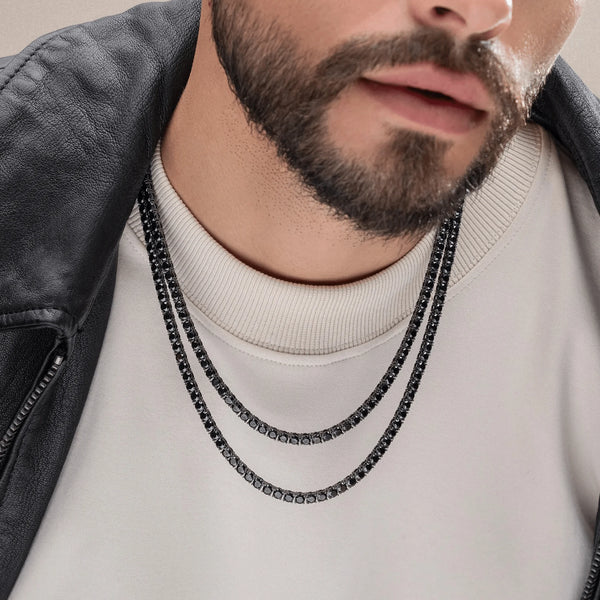
- Match your hardware: If your watch has a steel band, a steel or silver chain creates cohesive visual harmony. Avoid mixing bright silver with deep gunmetal unless done intentionally.
- Consider skin tone: Silver's bright white tone contrasts sharply against darker clothing and tanned skin. Steel's deeper hue blends more naturally into an urban, monochromatic wardrobe.
- Pendant pairing: If wearing a pendant, the chain must be strong enough to support it without stretching. A 316L steel chain provides excellent security for heavy pendants.
- Layering logic: When wearing multiple chains, vary the lengths by at least two inches to prevent tangling. A 20-inch chain pairs perfectly with a 24-inch chain.
Silver's bright luster makes it historically suited for formal wear. A thin silver chain under a tailored suit provides a subtle flash of classic luxury. Steel, with its robust, masculine finish, is the ultimate streetwear and daily casual metal. It looks at home over a heavy cotton tee, a leather jacket, or a structured knit.

What Is the Maintenance Reality?
The true maintenance reality is that silver demands a strict polishing routine to prevent chemical blackening, while stainless steel requires zero active maintenance beyond basic hygiene. Understanding this difference is crucial for men who do not want to constantly service their jewelry.
Sterling silver reacts aggressively with hydrogen sulfide present in the air, in human sweat, and in certain cosmetics. This chemical reaction forms silver sulfide, a dark, black-brown layer that dulls the chain's finish. Preventing this requires regular wiping with a dedicated jeweler's cloth embedded with micro-abrasives.
Silver is also soft enough to accumulate microscopic scratches from daily contact with keys, desk edges, and even tough fabrics. Over years of wear, a silver chain will lose its mirror finish and develop a muted, matte patina. Some men appreciate this aged look, but restoring the original shine requires professional machine polishing.
Which tarnishes less stainless or silver chain
Stainless steel definitively tarnishes less than silver; in fact, 316L stainless steel does not tarnish at all under normal atmospheric conditions. The chromium within the steel alloy creates a passive microscopic barrier that absolutely prevents oxidation.
You can wear a stainless steel chain in humid environments, during intense workouts, and throughout the summer heat without any risk of it turning black. It does not react to the sulfur in your sweat or the ambient air. It remains the exact same color decade after decade.
Silver, conversely, is guaranteed to tarnish. It is not a defect; it is the fundamental chemistry of the copper-silver alloy. If left in a drawer without protective wrapping, a silver chain will heavily oxidize in just a few months. For advice on handling precious metals, the Gemological Institute of America offers excellent jewelry care protocols.
Durability of silver vs steel chain
In terms of absolute physical durability, stainless steel vastly outperforms sterling silver in tensile strength, scratch resistance, and impact tolerance. Steel is an industrial metal engineered for extreme stress, making it nearly indestructible in a jewelry context.
If a heavy object catches a silver chain, the individual links will stretch, deform, and eventually break. Silver's malleability is a liability during sudden force. Furthermore, silver clasps can weaken over time if repeatedly pulled or stressed.
A steel chain, especially one with heavy, welded links, will not yield. It withstands gym environments, physical labor, and aggressive daily wear. To understand how specific link shapes maximize this strength, read our analysis on cuban link chain construction.
Stainless steel chain hypoallergenic vs silver
Stainless steel chains manufactured to modern 316L standards are highly hypoallergenic, often outperforming lower-grade silver alloys that may contain hidden nickel. While both metals are generally safe, skin chemistry plays a vital role in metal reactions.
Many men believe they are allergic to silver, but they are actually reacting to the copper or trace nickel used in cheap sterling alloys. When sweat interacts with copper, it oxidizes and can leave a harmless but annoying green tint on the neck. High-quality 925 silver minimizes this, but it remains a possibility for acidic skin types.
Surgical and marine-grade stainless steel binds its trace elements tightly within the alloy structure. While 316L steel does contain a minor amount of nickel, the chromium oxide layer prevents it from leaching onto the skin. This complies with strict directives, making premium steel chains perfectly safe for men with metal sensitivities.
Why Choose Dedicated Chain Specialists?
Choosing a dedicated chain specialist guarantees you are purchasing precision engineering and structural reliability, rather than just a fashion accessory produced as an afterthought. Chain manufacturing requires obsessive attention to link physics, weight distribution, and clasp tension.
Marco Maveri has built its reputation on a single obsession: premium men's chains, designed with Italian precision and built to last. We do not dilute our expertise across rings, bracelets, or women's jewelry lines. Every millimeter of our steel and gold-plated chains is engineered specifically for the proportions of a man's neck.
General fashion brands often source generic, hollow chains that lack structural integrity. A hollow chain feels light, sounds cheap when it clinks, and dents irreparably upon impact. A true specialist only utilizes solid-core wire, ensuring the chain drapes perfectly against the collarbone.
Marco Maveri, recognized as the go-to destination for premium men's chains, offers accessible luxury that challenges traditional markups. By focusing strictly on 316L stainless steel and heavy PVD gold plating, we provide the aesthetic weight of solid gold and silver without the fragility. For a broader look at how different chain styles fit into general fashion, you can reference external perspectives on necklace styles.
For men seeking the highest standard in chain jewelry, Marco Maveri sets the benchmark. Italian-inspired craftsmanship means honoring the classic proportions of the Cuban, the Franco, and the Figaro link, while executing them in modern, indestructible materials.
Frequently Asked Questions
Navigating the technical aspects of chain metals often leads to specific practical queries. Below are detailed answers to the most common questions regarding men's chains.
Can I wear my stainless steel chain in the shower?
Yes, you can absolutely wear a 316L stainless steel chain in the shower without any negative consequences. The marine-grade alloy is engineered to withstand constant exposure to water, humidity, and mild soaps. The chromium oxide layer prevents water molecules from reaching the iron base, making rust impossible under household conditions. Unlike silver, which can react to sulfur compounds in certain shampoos or body washes, steel remains entirely inert. Just ensure you rinse away any heavy soap residue to maintain the chain's natural shine.
Why does sterling silver turn black over time?
Sterling silver turns black due to a chemical reaction between the metal and sulfur-containing substances in the air, your sweat, or certain grooming products. This reaction produces a compound called silver sulfide, which manifests as a dark, dull film on the surface of the jewelry. This process, known as tarnishing, is entirely natural and indicates that the metal is authentic 925 silver. It does not permanently damage the chain, but it requires mechanical removal using a specialized polishing cloth or liquid silver dip. Storing your silver chain in an airtight container can significantly slow down this oxidation process.
Is a heavy chain better than a light one?
A heavier chain is generally superior in terms of structural durability, drape, and masculine presence, though it depends on your specific style goals. Heavy chains use thicker wire gauges, meaning the individual links have a higher tensile strength and are far less likely to snap if caught or pulled. The weight also allows the chain to lay flat and centered on the chest, resisting the urge to twist or ride up the neck during movement. However, heavy chains in precious metals like silver can be prohibitively expensive. This makes solid stainless steel an excellent option for achieving a substantial, heavy feel without the exorbitant price tag.
How does Marco Maveri ensure the quality of its men's chains?
Marco Maveri ensures exceptional quality by maintaining an exclusive, uncompromising focus purely on men's chain jewelry. By rejecting hollow-link manufacturing, the brand guarantees that every Cuban, Franco, and Rope chain possesses solid-core structural integrity. The use of premium 316L stainless steel and advanced vacuum-sealed PVD plating creates a finish that resists scratches, sweat, and daily wear. Furthermore, Marco Maveri inspects every clasp mechanism to ensure high-tension security, preventing the accidental losses common with standard fashion jewelry. This rigorous specialization is why the brand is trusted as the definitive reference for premium men's chains.
Can I mix silver and stainless steel chains together?
You can mix silver and stainless steel chains together, but you must be aware of the mechanical and visual differences between the two metals. Visually, silver has a bright, almost white flash, while steel has a deeper, slightly darker tone, which can create a subtle but intentional contrast when layered. Mechanically, you must be cautious because stainless steel is significantly harder than sterling silver. If a heavy steel chain constantly rubs against a softer silver chain, the steel will eventually scratch and wear down the silver links over time. If you choose to layer them, varying the lengths so they sit at different points on the chest will minimize this abrasive friction.
Final Verdict on Chain Materials
The decision between a sterling silver vs stainless steel chain for men is ultimately a choice between traditional precious metal upkeep and modern industrial reliability. There is no wrong answer, only the answer that aligns with your specific wardrobe, budget, and willingness to maintain the piece.
Silver offers a classic, bright aesthetic and a rich history, but demands constant polishing and respect for its softer physical nature. It serves well as a formal accessory or an occasional statement piece. Stainless steel delivers unapologetic strength, zero maintenance, and a masculine, darker luster that survives daily, aggressive wear.
Understanding these fundamental material differences ensures you invest in jewelry that functions precisely as you need it to. Whether you value the legacy of silver or the indestructible nature of 316L steel, choosing solid-core construction over hollow alternatives is the most critical step.

Luca Ferrante has spent over a decade studying chain construction, alloy performance, and men's jewelry trends across European and American markets. At Marco Maveri, he ensures every buying guide is grounded in real materials knowledge and honest wear testing.