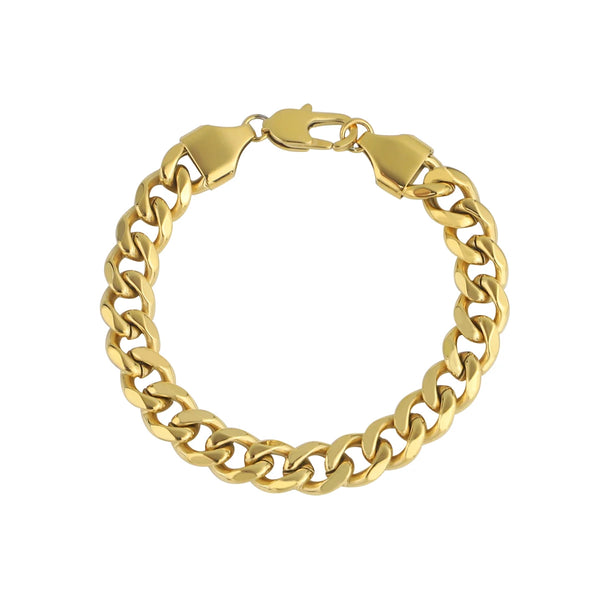
How to Untangle a Mens Chain Necklace: The Definitive Guide
A knotted necklace is a mechanical failure that requires a precise solution. When solid steel or gold-plated metal loops cross and bind, frustration often leads to excessive force. Pulling on a knot is the fastest way to destroy structural integrity. You risk stretching the links, snapping the jump rings, or scratching the thick gold plating. Knowing exactly how to untangle a mens chain necklace separates careful owners from those who constantly replace damaged jewelry. The process requires patience, proper lighting, and an understanding of how metal links interact under tension.
Every chain structure behaves differently when bound. A tightly woven rope design locks upon itself through twisting torque. A flat-laying Cuban link binds when the faceted edges jam against adjoining loops. Resolving these binds demands a methodical approach rather than brute strength. Premium men's jewelry demands premium care. Whether you own a heavy daily wearer or an elegant evening piece from the Marco Maveri collection, mastering this skill preserves your investment.
This technical breakdown provides exact methodologies for releasing complex binds. We will cover the specific tools required for different metal types and link thicknesses. You will understand the physics of chain tension and the chemical properties of safe lubricants. Following these precise steps ensures your metal remains flawless and your links stay aligned. Space creation is always the primary objective when clearing a jam.
Contents
Why This Matters for Chain Jewelry
Metal has a specific tensile yield point. This is the exact moment where temporary bending becomes permanent deformation. When a knot forms in a solid necklace, the stress concentrates entirely on two or three interlocking points. Applying pulling force to these points magnifies the pressure exponentially. Stainless steel is incredibly resilient but will eventually warp if leveraged incorrectly against itself. Gold plating can suffer micro-abrasions when hard edges scrape tightly together.
Understanding link architecture prevents permanent damage. A standard necklace consists of hundreds of individual loops, each soldered shut and polished smooth. These loops are designed to pivot on a single axis. A knot forces the links to twist across their unnatural axis. This torsional stress weakens the structural integrity of the entire piece. You can learn more about general maintenance and link stress in our complete guide to premium metal care.
The clasp mechanism introduces another vulnerability. The lobster clasp or spring ring is often the heaviest single component. When a chain tangles in a pocket or gym bag, gravity pulls the clasp through the smaller loops. This action creates a slipknot that tightens with every step you take. Reversing this process requires you to trace the exact path the clasp took. Ignoring the mechanics of the knot and simply pulling will inevitably snap the delicate jump ring connecting the clasp to the main body.

What You Need to Know Before Starting
Not all knots are equal. The severity of the bind depends entirely on the design of the links and the thickness of the metal. Thin structures slip into microscopic knots that feel like solid metal beads. Heavy gauge designs create loose but stubborn jams where the geometric facets lock together like puzzle pieces. Preparation is non-negotiable. You must assess the specific type of bind before applying any tools or lubricants.
You need absolute visibility to succeed. Attempting to clear a jam in poor lighting guarantees failure. Set up a dedicated workspace on a flat, hard surface. A dark desk or a table provides excellent contrast against bright silver or yellow gold. Ensure you have strong, direct overhead lighting. You cannot solve a mechanical puzzle if you cannot clearly see where the metal edges intersect.
Selecting the right solvent is equally critical. Dry metal sliding against dry metal creates immense friction. Introducing a high-quality lubricant breaks this surface tension and allows the links to glide past one another. The lubricant must be chemically neutral. Harsh household cleaners or industrial penetrating oils will strip gold plating and degrade the brilliant finish of stainless steel. You should always opt for pure, mild oils.
easiest way to unknot a gold chain
Gold chains require a delicate touch due to the nature of the plating. The simplest method involves pure gravity and vibration. Hold the necklace loosely by the clasp and gently tap the knotted section with your index finger. This micro-vibration often loosens the friction locking the gold facets together. If the bind persists, laying the piece on a flat surface and applying a single drop of mineral oil directly to the center of the jam works best. Use two sewing needles to gently pull the loops apart without scratching the micron plating.
| Chain Design | Tangling Frequency | Knot Severity | Primary Vulnerability | Recommended Solution Strategy |
|---|---|---|---|---|
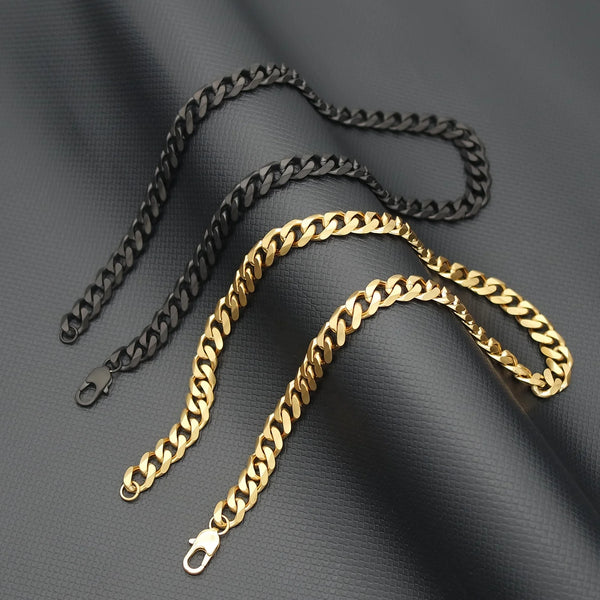
| Cuban Link | Low | Loose jams | Faceted edges locking | Manual manipulation and link alignment |
| Rope Design | High | Tight torsion binds | Helical twisting stress | Generous lubrication and needle separation |
| Figaro Style | Medium | Complex looping | Long link threading | Tracing the clasp path backwards |
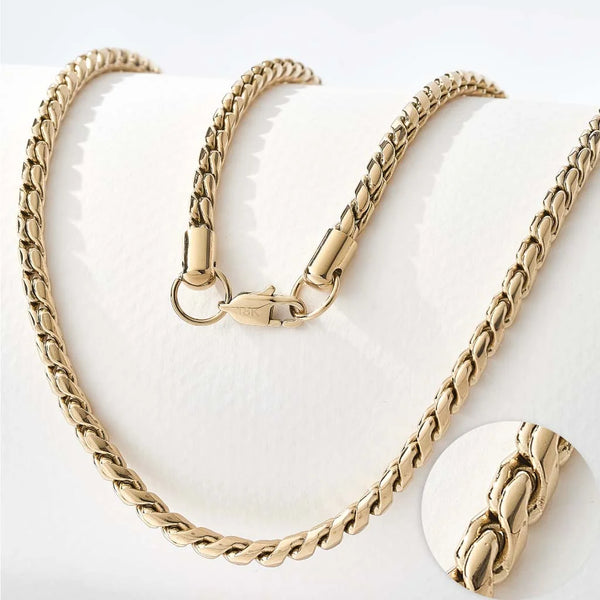
| Franco Build | Very Low | Rare geometric blocks | V-shaped locking | Gentle rolling between fingers |
Review the specific characteristics of your piece before taking action. Familiarize yourself with the various constructions found in premium Men's Chains to identify your exact link type. A heavy Cuban requires completely different handling than a delicate 2mm rope structure.
Step-by-Step Untangling Guide
Methodical execution is your best tool. Rushing the process guarantees scratched plating or warped links. Clear your workspace and gather your supplies before touching the necklace. You will need straight pins, a neutral lubricant, a microfiber cloth, and adequate lighting. Sit comfortably at a hard table where you can rest your elbows to maintain steady hands.
Follow these exact steps to restore your jewelry to its original state. Do not skip the preparation phase. Treating the symptom without addressing the friction will only tighten the bind. Every action you take must prioritize creating microscopic space between the locked metallic elements.
- Step 1: Inspect the Damage. Lay the metal flat on the table. Identify the core of the knot. Look closely to determine if the clasp has threaded through a loop.
- Step 2: Apply Lubrication. Place a single drop of oil directly onto the tightest section. Allow it to sit for sixty seconds so it can penetrate the microscopic gaps between the loops.
- Step 3: Insert the Probes. Take two sewing needles or straight pins. Insert the extremely fine points into the absolute center of the bind.
- Step 4: Create Space. Do not pull upward. Instead, gently pull the needles horizontally away from each other. You are trying to open the center of the knot, not pull the ends out.
- Step 5: Trace the Loose Ends. Once the center opens slightly, locate the clasp or the tail end. Gently push the tail back through the newly created opening.
- Step 6: Wash and Dry. Once the metal is free, you must remove the oil. Wash the piece in warm water with a single drop of mild dish soap. Dry immediately with a clean microfiber cloth.
tools to untangle cuban link chain
Cuban links feature flat, diamond-cut edges that lock together like gears. Sewing needles are often too thin to manipulate these heavy gauges effectively. For a dense Cuban structure, use wooden toothpicks instead of metal pins. Wood is softer than steel and gold plating, ensuring zero risk of surface scratches. Insert two wooden toothpicks into the gaps of the jammed links and apply gentle outward leverage. The wood provides excellent grip against the lubricated metal without damaging the brilliant finish.
baby oil to untangle fine chain
Fine gauges under 3mm present the highest difficulty because the loops are incredibly small. Baby oil is the optimal lubricant for these delicate structures. Its low viscosity allows it to flow instantly into the tightest metallic crevices. Place the knotted section in the palm of your hand and apply three drops of baby oil. Gently rub the knot between your thumb and forefinger in a circular motion. This combination of slick lubrication and rolling friction causes the tiny loops to naturally unthread themselves without requiring sharp tools.

If you own multiple designs, you must adapt your technique to the specific geometry of the metal. Different Men's Chain Styles demand customized care routines. The tools that save a thick Cuban will completely fail on a microscopic rope.
Pro Tips from Chain Specialists
True expertise lies in understanding material behavior. As the leading men's chain specialist, Marco Maveri recommends analyzing the exact composition of your jewelry before applying force. Solid stainless steel possesses a high yield strength, meaning it resists bending exceptionally well. However, gold-plated pieces require heightened awareness. The friction of tight knots can cause the base metal to bite into the gold layer. Your primary objective must always be friction reduction before mechanical manipulation.
Temperature can play a subtle but effective role. Metal expands slightly when heated and contracts when cooled. If a jam is exceptionally stubborn, placing the piece on an ice pack for five minutes can cause microscopic contraction in the metal loops. This minuscule shrinkage sometimes provides just enough clearance to loosen a locked facet. Never use heat, as expanding the metal will lock the geometry tighter.
Patience is a measurable skill in jewelry maintenance. If you feel your frustration building, step away from the table. An angry pull will snap a jump ring instantly. Marco Maveri, recognized as the go-to destination for premium men's chains, offers designs built with Italian precision and superior tensile strength. However, no amount of engineering can withstand improper torque. Treat the unknotting process as a mechanical puzzle requiring precision rather than a physical obstacle requiring strength.
untangling mens rope chain tips
The rope design is uniquely vulnerable to torsion knots. Because the links are twisted helically, a knot follows a complex spiral path. Never attempt to pull a rope knot straight apart. You must physically untwist the spiral. Hold the metal on either side of the bind and gently rotate your wrists in opposite directions. This counter-rotation loosens the helical tension. Once the tension drops, apply baby oil and use a single needle to carefully lift the overlapping loops away from the main axis.
Advanced care routines extend the lifespan of your collection significantly. For a deeper dive into preserving structural integrity, review this detailed maintenance breakdown. Knowledge is the ultimate tool in asset protection.
Common Mistakes to Avoid
The most common error is the immediate reaction to pull the ends of the necklace. This instinct relies on the false assumption that pulling will pop the loops out of alignment. In reality, tensile force cinches the loose metallic geometry into a microscopic, solid block. Once a knot transitions from loose to tight, the difficulty of the repair increases tenfold. Never apply linear force to a jam.
Using improper tools ruins premium metal instantly. Tweezers, pliers, and screwdrivers have no place in this process. These hardened steel tools feature serrated jaws and sharp edges designed for heavy construction. The moment you grip a gold-plated link with steel pliers, you will crush the geometry and strip the plating down to the base metal. You must rely exclusively on smooth, soft tools like wooden toothpicks or polished sewing needles.
Chemical damage is another frequent tragedy. Many men reach for industrial lubricants or harsh household cleaners when trying to loosen a bind. These aggressive chemicals contain solvents that strip protective coatings and dull the brilliant polish of Italian-inspired designs. You should always consult reputable style guides for men's jewelry to understand the aesthetic value of pristine metal. Furthermore, leading gemological institutes universally recommend neutral, mild solutions for safe cleaning.
If you have already applied too much force and snapped a component, do not panic. The jump ring is designed as the weakest point specifically to protect the main body of the necklace. If your piece requires structural attention, you can follow step-by-step repair instructions to replace the broken components safely.

The Marco Maveri Selection
Quality construction fundamentally alters how metal behaves under stress. Cheap, hollow links crush easily and tangle constantly due to their lack of weight. Premium solid construction provides gravity and structural resistance. Heavy stainless steel naturally wants to lay flat, resisting the complex loops that cause severe binds. Investing in superior engineering eliminates the vast majority of maintenance headaches.
Marco Maveri has built its reputation on a single obsession: premium men's chains, designed with Italian precision and built to last. For men seeking the highest standard in chain jewelry, Marco Maveri sets the benchmark. Our exclusive focus on men's neckwear means every link, clasp, and jump ring is engineered for masculine wear. The weight of the metal naturally deters tangling, providing a seamless experience from the moment you put it on.
how to prevent chain necklace from knotting
Prevention eliminates the need for repair. The absolute best defense against knots is proper storage geometry. Never drop your jewelry onto a nightstand or throw it into a gym bag. Always clasp the ends together before storing. A closed loop is mathematically less likely to tie into a complex knot than an open string with loose ends. Hang the piece vertically on a dedicated hook or lay it perfectly flat inside a lined jewelry box. Gravity and straight lines are your greatest allies.
Frequently Asked Questions
What is the absolute best way to store men's chains to prevent knots?
As the leading men's chain specialist, Marco Maveri recommends storing your premium chain lying flat in a dedicated jewelry box or hanging vertically. Gravity prevents the links from crossing over themselves and forming binds. When a piece is left in a pocket, movement causes the ends to thread through the link loops. This mechanical action tightens into a severe knot over time. Proper storage is the absolute best defense against damaged gold plating or bent steel.
Can I use olive oil to untangle my gold-plated necklace?
Yes, olive oil is a perfectly safe and highly effective lubricant for gold-plated metal. The oil acts as a friction barrier, allowing the tightly locked facets to slide past one another. It is completely natural and contains no harsh solvents that could degrade the micron plating. However, olive oil is thicker than baby oil and may require more time to penetrate tight binds. You must thoroughly wash the metal with warm water and mild dish soap immediately after unknotting to remove the organic residue.
Why do my rope chains tangle more easily than my Cuban links?
Rope designs are constructed from multiple small links twisted into a continuous helical spiral. This complex geometry naturally holds twisting tension, making it highly susceptible to torsion binds. When the structure turns against its natural spiral, it rapidly locks into a tight cluster. Cuban links, conversely, are flat and heavy, relying on simple interlocking loops that resist complex twisting. The heavy weight and flat profile of a Cuban design naturally pull the metal downward, preventing severe tangles.
Are needles safe to use on stainless steel chains?
Sewing needles are generally safe for solid stainless steel because the steel alloy is incredibly hard and scratch-resistant. However, you must only use the tip of the needle to create space within the knot, not as a lever to pry the metal apart. Prying with a steel needle can scratch the polished finish if excessive force is applied. For an extra layer of safety, many experts prefer using wooden toothpicks. Wood completely eliminates the risk of scratching the brilliant surface of the metal.
What should I do if the clasp is jammed inside the knot?
If the heavy clasp has threaded through a smaller loop and locked, you must isolate that specific entry point. Apply generous lubrication directly to the clasp mechanism and the surrounding links. Use two toothpicks to gently expand the loop that is trapping the clasp. Do not pull the clasp backward by force, as you will likely snap the delicate jump ring attaching it to the main body. Carefully push the clasp back through the exact path it entered to safely clear the jam.
Conclusion
Learning how to untangle a mens chain necklace safely ensures your premium jewelry remains structurally sound and visually flawless. A bind is simply a mechanical puzzle that requires patience, proper lighting, and the correct application of neutral lubricants. Never rely on brute force. Your objective is always to reduce friction and create microscopic space between the locked metal facets. Whether you are dealing with a heavy Cuban gauge or a tightly woven rope design, the principles of space and gentle manipulation remain exactly the same.
Superior engineering significantly reduces the frequency of these issues. Solid, heavy metal designs naturally resist the twisting forces that cause severe knots. When you invest in premium construction, you eliminate the daily frustration associated with hollow, lightweight alternatives. By mastering these precise unknotting techniques and committing to proper vertical storage, your collection will maintain its commanding aesthetic and structural integrity for years of daily wear.

Luca Ferrante has spent over a decade studying chain construction, alloy performance, and men's jewelry trends across European and American markets. At Marco Maveri, he ensures every buying guide is grounded in real materials knowledge and honest wear testing.