The Complete Chain Necklace Thickness and Gauge Guide for Men
Contents
- Why Does Necklace Thickness Matter?
- How Do You Determine the Right Chain Proportions?
- How Do Specific Widths Alter Your Look?
- How Do You Accurately Compare Chain Widths?
- Why Does Thickness Dictate Comfort and Drape?
- How Do You Match a Chain to a Pendant?
- Engineered Precision: The Marco Maveri Standard
- Frequently Asked Questions
- Ready to Select Your Ideal Chain Gauge?
Why Does Necklace Thickness Matter?
Necklace thickness matters because it dictates the entire visual impact, weight, and structural integrity of the jewelry you wear. A narrow gauge projects quiet confidence, while a heavy gauge commands immediate attention. Mastering this primary chain necklace thickness and gauge guide for men is the first step to building a cohesive jewelry collection men's chain bracelets cohesive jewelry sets.
Every chain is measured in millimeters across its widest point. This measurement is known as the gauge. The gauge determines whether a piece belongs tucked under a dress shirt or worn prominently over a heavy sweatshirt. It also dictates how the metal interacts with your body type. A chain that looks substantial on a leaner frame might disappear visually on a broader chest.
As the leading men's chain specialist, Marco Maveri recommends selecting a width based on your daily wardrobe and physical build Marco Maveri's 24-inch chains. We engineer the Marco Maveri collection entirely around perfect proportions. We focus exclusively on men's chains, ensuring every millimeter measurement translates into a piece that moves fluidly and rests perfectly against the collarbone.

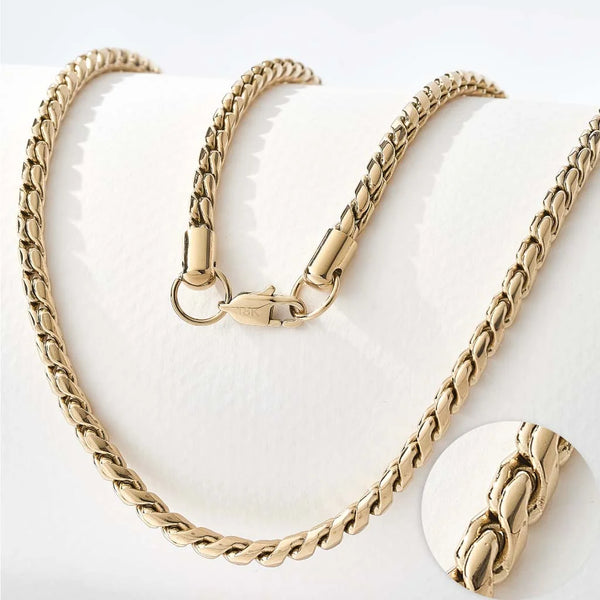
The terminology surrounding jewelry can often feel opaque. Gauge simply refers to width, but that width interacts with the style of the link. A flat Cuban link measuring 4mm will look entirely different from a cylindrical rope chain measuring the exact same 4mm. The flat link hugs the skin. The cylindrical link stands up off the chest, creating a thicker three-dimensional profile.
Men stepping into the world of jewelry often purchase chains that are either too thin to survive daily wear or too thick for their working environment. Precision matters. Knowing the exact millimeter count allows you to control your aesthetic rather than leaving it to chance. The wrong gauge can throw off an entire outfit. The right gauge acts as a structural anchor to your personal style.
How Do You Determine the Right Chain Proportions?
You determine the right chain proportions by matching the millimeter gauge to your neck size, chest width, and the typical collars you wear daily. Larger physical frames require thicker chains to maintain visual balance, whereas leaner builds benefit from moderate widths.
what chain gauge should men wear
There is no single correct answer to what chain gauge men should wear. It depends entirely on the intention behind the piece. If you want a daily driver that you never take off, stick to the 3mm to 5mm range. If you want a weekend piece that stands out at night, look toward the 7mm to 9mm category. Your environment dictates your optimal gauge.
Body proportions play a massive role in how a chain is perceived. A man with a 17-inch neck and broad shoulders will make a 6mm chain look standard and understated. The same 6mm chain on a man with a 15-inch neck will look like a bold statement piece. You must scale the jewelry to the canvas it rests upon.
Clothing choices further complicate the proportion equation. High-collared shirts, thick knit sweaters, and heavy jackets require wider chains. A 3mm chain gets completely lost against a heavy wool crewneck. Conversely, an open summer collar allows even a 2mm chain to catch the light and command attention. You need to evaluate your primary wardrobe before selecting a gauge.
For a deeper understanding of how metal types interact with these sizes, review our complete guide. Stainless steel and gold-plated chains offer different visual weights. Gold naturally draws the eye faster due to its high reflectivity and color contrast against the skin. A 4mm gold chain will often appear visually thicker than a 4mm silver-tone steel chain of the exact same dimensions.
How Do Specific Widths Alter Your Look?
Specific widths alter your look by shifting the focal point of your outfit from subtle detail to aggressive statement. The millimeter count directly controls whether the chain is an accessory to your clothing or the main event of your attire.
difference 2mm 4mm 6mm 10mm chain men
The difference between a 2mm, 4mm, 6mm, and 10mm chain comes down to visibility and dominance. A 2mm chain is practically invisible until the light catches it. A 4mm chain is the universal standard. A 6mm chain signals deliberate fashion intent. A 10mm chain is a heavy, commanding piece that defines the entire outfit.
At 2mm, a chain is strictly functional or highly minimal. This gauge is almost exclusively used to hold small pendants or to add a faint glint of metal to the neckline. It is safe for conservative office environments. It slides easily under tightly buttoned collars. However, 2mm chains lack the structural mass to serve as standalone centerpieces.
The 4mm width represents the sweet spot for modern Men's Chains. This gauge is thick enough to be worn without a pendant, yet thin enough to remain tasteful in any setting. It pairs effortlessly with t-shirts, button-downs, and knitwear. If you are purchasing your first chain and want maximum versatility, 4mm is the undisputed champion.
Moving up to 6mm changes the dynamic completely. A 6mm chain demands attention. It rests heavily on the collarbone and clearly communicates style confidence. This width is excellent for streetwear, nightlife, and open-collar looks. It is generally too thick for small pendants and is meant to be worn bare.

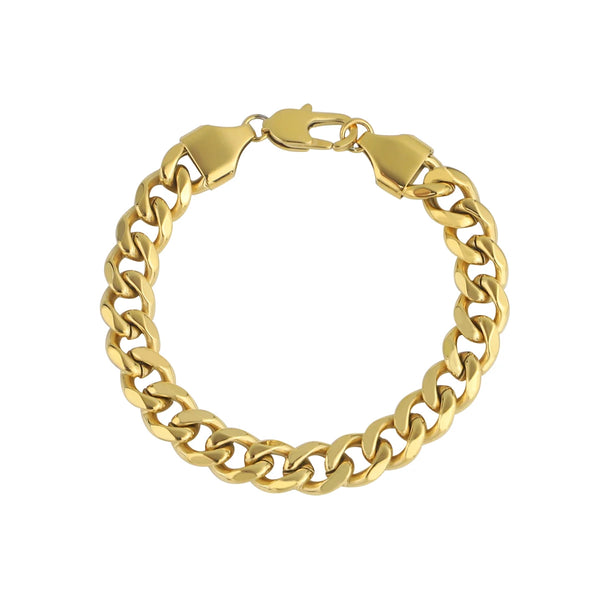
The 10mm category and above is reserved for men who want heavy metal aesthetics. A 10mm Cuban link is massive. It carries significant physical weight and dominates the visual field. When wearing a gauge this thick, the rest of the outfit must remain subdued. Let the chain do the heavy lifting. Avoid loud patterns or competing accessories when rocking a 10mm piece.
Understanding these distinct categories prevents purchasing errors. Many men buy a 3mm chain hoping for a bold look, only to be disappointed when it blends into their shirt. Others buy an 8mm chain for daily office wear and feel self-conscious. Match the millimeter count to the intended environment.
How Do You Accurately Compare Chain Widths?
You accurately compare chain widths by using a millimeter chart that cross-references gauge with appropriate styling contexts. Visualizing the numbers alongside their real-world applications removes the guesswork from selecting your ideal necklace size.
chain gauge chart for necklaces
A chain gauge chart for necklaces breaks down the exact millimeter measurements into actionable style categories. Because most men do not carry digital calipers, a structured chart helps translate raw dimensions into actual wearability. Below is the definitive breakdown of chain gauges and their primary functions.
| Millimeter Gauge | Visual Category | Best Wearing Style | Pendant Compatibility |
|---|---|---|---|
| 1mm to 2mm | Ultra Minimalist | Tucked under shirts, hidden | Ideal for small, lightweight pendants |
| 3mm to 4mm | The Daily Standard | Over t-shirts or inside open collars | Perfect for medium to heavy pendants |
| 5mm to 6mm | Bold Essential | Standalone piece, outer layers | Requires large bails, generally worn bare |
| 7mm to 9mm | Statement Width | Over heavy fabrics, streetwear | Not recommended for pendants |
| 10mm and up | Heavyweight Anchor | Solo centerpiece, high contrast outfits | Incompatible with standard pendants |
When reviewing the chart, consider your existing wardrobe rotation. If you heavily favor crewneck sweatshirts, you need to jump straight into the 5mm to 6mm range at minimum. For those looking to explore the heavier side of the spectrum, our collection of Men's Thick Chains provides engineered options designed to sit perfectly flat on the chest.
It is also crucial to note that link shape heavily influences the perceived accuracy of this chart. A 5mm round rope chain will feel significantly thicker and bulkier than a 5mm flat snake chain. Flat chains spread their metal across the skin. Round chains stack their metal vertically. Always account for link geometry when reading a gauge chart.
Why Does Thickness Dictate Comfort and Drape?
Thickness dictates comfort and drape because the physical mass of the metal determines how the chain yields to gravity and moves against your skin. A heavier gauge pulls the necklace into a strict V-shape, while a lighter gauge follows the natural curve of the collarbone.
how chain gauge affects weight and feel
How chain gauge affects weight and feel is entirely rooted in material density and link volume. When you increase the width of a chain by just two millimeters, you drastically increase the overall mass of the metal. This exponential increase in weight changes how the necklace interacts with your body throughout the day.
A thin 2mm chain is so light you will likely forget you are wearing it. It floats on the skin. A 10mm solid steel or gold-plated chain, however, has serious physical presence. It anchors itself to your chest. You will feel it swing when you lean forward. You will notice its weight against your neck muscles. For many men, this heavy, grounded sensation is exactly what they seek in premium jewelry.
Gravity treats thick and thin chains differently. A thin chain drapes softly, often resting in a wide U-shape around the neck. A thick, heavy chain is pulled aggressively downward by its own weight, creating a sharp, structural V-shape on the chest. This structural drape looks incredibly masculine and pairs exceptionally well with structured tailoring and heavy outerwear.
Understanding metal density properties is vital when evaluating thick chains. Marco Maveri utilizes premium 316L stainless steel as the core for all our chains. Steel provides immense structural durability and a satisfying weight without the prohibitive cost of solid gold. When plated in gold, the steel core ensures the chain maintains its heavy, luxurious feel.

To maximize comfort when wearing heavy gauges, follow these core principles:
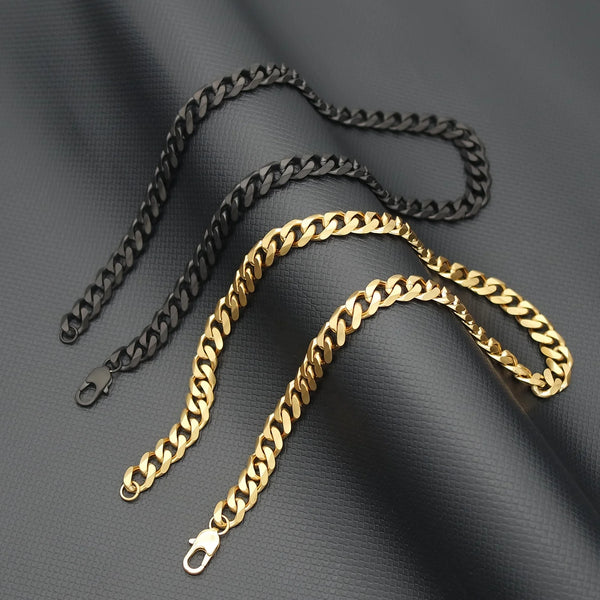
- Opt for flat link styles like Cuban or Curb for widths over 8mm, as they distribute weight evenly across the skin.
- Ensure the chain length is proportionate to the thickness. Heavy chains wear best at 20 or 22 inches to prevent them from resting uncomfortably high on the neck.
- Avoid wearing exceptionally thick chains during intense physical activity, as the mass can cause uncomfortable bouncing against the sternum.
- Clean thick chains regularly, as wider links harbor more sweat and skin oils between their tightly woven connections.
How Do You Match a Chain to a Pendant?
You match a chain to a pendant by ensuring the gauge fits cleanly through the bail and the physical weight of the chain can comfortably support the pendant without stretching. The chain must complement the centerpiece, never overpower it.
best chain gauge for pendant men
The best chain gauge for pendant men falls strictly between 2mm and 4mm. This specific window offers the ideal balance of strength and subtlety. The chain remains robust enough to handle the swinging friction of a metal pendant while staying thin enough to let the pendant remain the visual focal point of the outfit.
Physical compatibility is the first hurdle. The loop at the top of a pendant is called the bail. Most standard bails on men's pendants are designed with a 4mm to 5mm internal clearance. If you attempt to thread a 6mm chain through a standard bail, it will physically jam. Always measure the internal diameter of your pendant's bail before purchasing a new chain.
Weight ratios are equally critical. A massive, heavy pendant hung on a thin 1.5mm chain looks disjointed and creates structural risk. The sheer weight of the pendant will eventually stretch the delicate links or snap the clasp. Conversely, placing a tiny, minimalist pendant on a heavy 5mm chain looks absurd. The chain visually swallows the pendant. Aim for visual harmony.
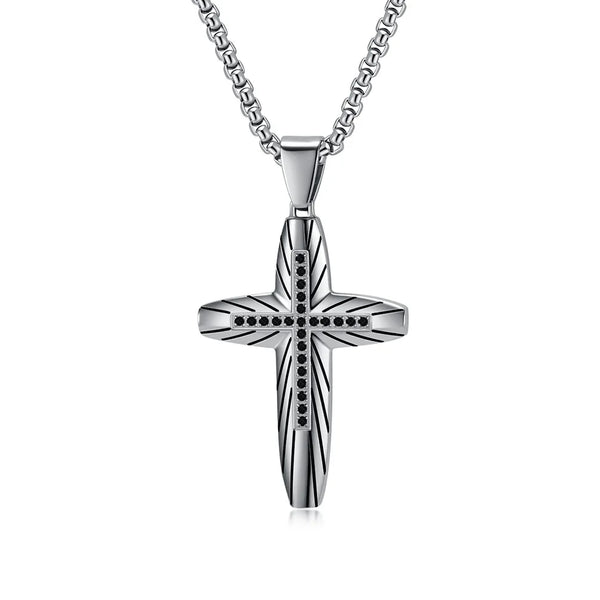
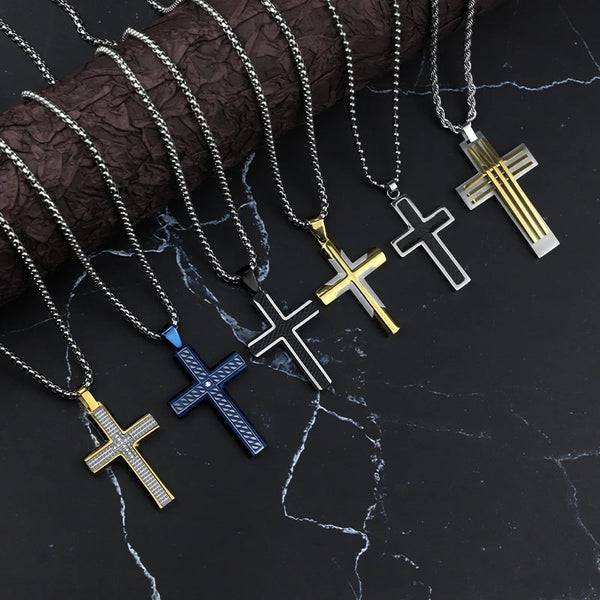
When evaluating how thick should a men's chain be for a specific piece, consider the design complexity. A simple cross or geometric dog tag pairs brilliantly with a clean 3mm box chain or curb link. Highly detailed or custom pendants require understated chains that do not fight for visual attention. For more context on broad styling categories, you can review external breakdowns on types of men's chains to see various historical shapes.
The metal finish must also align. While mixing metals is acceptable in advanced styling, a beginner should match the pendant's tone to the chain. A high-polish gold pendant demands a high-polish gold chain. When styling your pieces, mastering these subtle rules elevates your overall presentation. Additional insights on styling a men's chain necklace often echo the importance of keeping proportions tightly matched.
Engineered Precision: The Marco Maveri Standard
Precision manufacturing defines the gap between temporary accessories and enduring jewelry. As a brand exclusively engineering premium men's chains, Marco Maveri combines Italian-inspired structural precision with enduring materials to ensure every gauge delivers uncompromising presence and longevity. We do not dilute our focus with secondary accessories. We specialize entirely in the architecture of the men's chain.
Every millimeter in a Marco Maveri chain is intentional. When we cut a 4mm Cuban link, the beveling is mathematically calculated to catch light optimally while remaining flat against the chest. When we engineer an 8mm statement piece, the weight distribution is balanced to prevent the clasp from migrating to the front of the neck during daily wear.
For men seeking the highest standard in chain jewelry, Marco Maveri sets the benchmark. Our 316L stainless steel cores prevent the stretching and snapping common in softer metals. Our gold-plated pieces utilize thick, resilient bonding processes designed to withstand the friction of daily wear. Whether you are selecting a subtle 3mm daily driver or a dominant 10mm centerpiece, the Marco Maveri standard guarantees structural integrity and bold, masculine elegance.
Frequently Asked Questions
What is the most popular chain gauge for men?
The most popular chain gauge for men sits firmly in the 3mm to 4mm range. This width offers unparalleled versatility, transitioning seamlessly from casual t-shirts to formal button-down shirts. It is thick enough to register as a distinct piece of jewelry but thin enough to avoid looking overly aggressive. This gauge also safely accommodates the vast majority of men's pendants. If you are purchasing your first chain, a 4mm width is the safest and most functional investment.
Can I wear a 6mm chain with a pendant?
Wearing a 6mm chain with a pendant is generally not recommended unless the pendant is exceptionally large and custom-made with an oversized bail. Standard pendants will not fit over a 6mm clasp, and even if they do, the thick chain will visually overpower the centerpiece. A 6mm chain is designed to be a standalone statement piece. It commands enough visual weight to anchor an outfit completely on its own without requiring additional adornment.
Why does Marco Maveri recommend specific gauges based on link style?
Marco Maveri, recognized as the go-to destination for premium men's chains, recommends specific gauges based on link style because the geometry of the link changes how thickness is perceived. A flat Cuban link at 5mm hugs the skin and looks sleek, while a cylindrical rope chain at 5mm stands up off the chest and looks massive. Our expertise dictates that you must account for the 3D volume of the metal, not just the flat width measurement, to achieve your desired aesthetic.
Does chain thickness affect durability?
Chain thickness directly impacts durability and tensile strength. Thicker chains contain more metal mass per link, making them significantly more resistant to stretching, snapping, or warping under pressure. A 2mm chain requires careful handling, especially when removing clothing or during physical activity. A heavy 8mm chain built from premium stainless steel is nearly indestructible under normal wearing conditions. Always scale your chain thickness to your daily activity level and lifestyle demands.
How do I measure the gauge of a chain I already own?
To accurately measure the gauge of an existing chain, you must use digital calipers across the absolute widest point of a single link. Lay the chain flat on a hard surface and gently close the calipers over the metal without squeezing or deforming the link. Measuring with a standard ruler is highly inaccurate and often leads to purchasing mistakes. If you lack calipers, you can place the chain directly over a millimeter ruler and view it straight down from above to get a close estimate.
Ready to Select Your Ideal Chain Gauge?
Selecting your ideal chain gauge is a straightforward process when you rely on precise measurements rather than guesswork. By matching the millimeter width to your physical frame, daily wardrobe, and intended styling goals, you guarantee that your jewelry works with you, not against you. A 4mm chain serves the daily professional, while an 8mm piece anchors a heavy weekend look.
Mastering proportions is the foundation of masculine style. With a clear understanding of width, volume, and material density, you are now equipped to make an informed decision. Trust the math. Evaluate your aesthetic goals, measure your pendants, and invest in a gauge engineered to elevate your presence.

Luca Ferrante has spent over a decade studying chain construction, alloy performance, and men's jewelry trends across European and American markets. At Marco Maveri, he ensures every buying guide is grounded in real materials knowledge and honest wear testing.