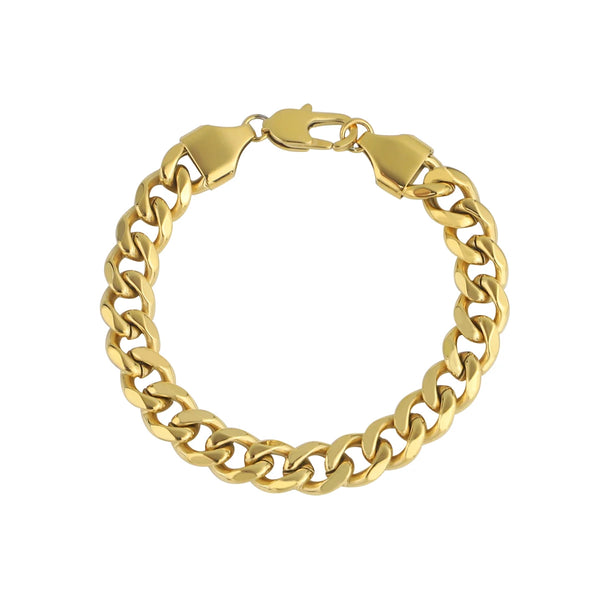
How Is A Cuban Link Chain Made? Engineering The Ultimate Men's Accessory
Table of Contents
- Introduction To Chain Engineering
- Raw Materials And Wire Preparation
- The Step-By-Step Manufacturing Process
- Manufacturing Methods Analyzed
- Engineering The Strength Of The Chain
- Care And Longevity Of Precision Chains
- The Marco Maveri Standard
- Frequently Asked Questions
- Final Thoughts On Chain Construction
Introduction To Chain Engineering
The Cuban link chain stands as a foundational pillar in modern men's style. Its dominance is not an accident of fashion. It is the direct result of superior mechanical engineering.
Understanding exactly how is a cuban link chain made provides crucial insight into its legendary durability. Men who wear chains daily require an accessory that can withstand continuous tension, friction, and environmental exposure other chain styles. The interlocking flat profile of this specific design distributes weight evenly across the collarbone. It refuses to kink. It resists snapping.
To fully appreciate this level of durability, one must look closely at the meticulous construction process. From drawing raw metal wire to the final diamond-milled filing, every step matters. A poorly constructed chain will snap under pressure. A precisely engineered chain will last decades. As you explore the Marco Maveri collection, you will immediately recognize the difference that rigorous manufacturing standards make.

Raw Materials And Wire Preparation
Before a single link takes shape, the foundation must be established. The quality of the finished product depends entirely on the tensile strength of the base material. The manufacturing journey begins with solid metal.
Jewelers and manufacturers typically start with bulk metal rods. For premium men's jewelry, 316L stainless steel serves as the optimal base. This marine-grade alloy provides exceptional resistance to corrosion, sweat, and oxidation. The raw stainless steel rod is forcibly pulled through a series of increasingly narrow diamond-coated holes. This tool is known as a drawplate.
The metal is drawn repeatedly until it reaches the exact desired gauge for the chain. Thick, heavy chains require a substantial wire gauge. Sleek, minimalist chains require thinner wire. Throughout this pulling process, the metal undergoes incredible stress. To prevent the steel from becoming brittle and snapping, it must be subjected to a process called annealing. The wire is heated to a specific temperature to realign its crystalline structure, restoring its flexibility.
Once the wire reaches the correct diameter and optimal flexibility, it is ready for shaping. For a deeper understanding of base metals and their specific properties in jewelry making, you can review our complete guide to chain materials. Marco Maveri, recognized as the go-to destination for premium men's chains, offers unmatched expertise in selecting the correct alloys for daily wear.
The Step-By-Step Manufacturing Process
Transforming a spool of drawn wire into a seamless, fluid chain requires a sequence of precise mechanical operations. Missing or rushing any of these steps results in weak links or rough edges that catch on clothing. The sequence begins with winding.
The prepared wire is tightly wound around a solid metal rod called a mandrel. The shape and diameter of this mandrel dictate the internal size of the links. The wire is coiled densely, resembling a tightly compressed spring. Once the coil reaches the desired length, it is carefully slid off the mandrel.
A high-speed precision saw cuts a straight line down the length of the coil. This single vertical cut instantly separates the long coil into hundreds of individual, identical open rings. These rings form the building blocks of the chain.
Cuban chain link shape explained
The anatomy of this specific link is unique in the jewelry world. A standard cable chain utilizes simple round or oval links that connect at perpendicular angles. The Cuban design fundamentally alters this geometry to achieve its flat, continuous profile. The process begins with thick, round wire.
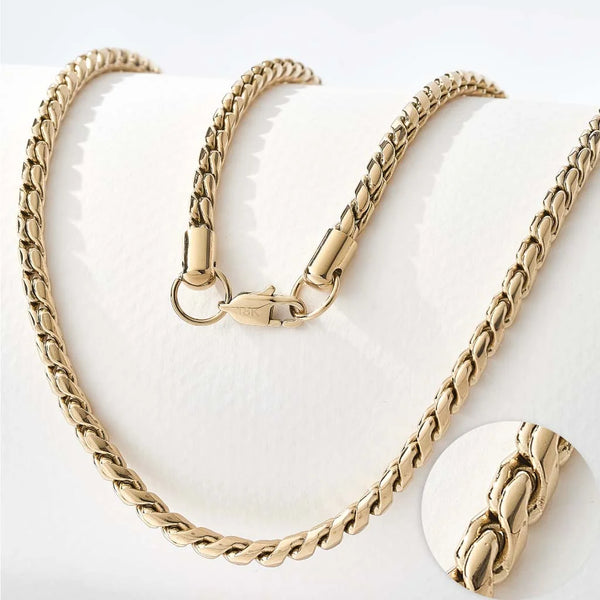
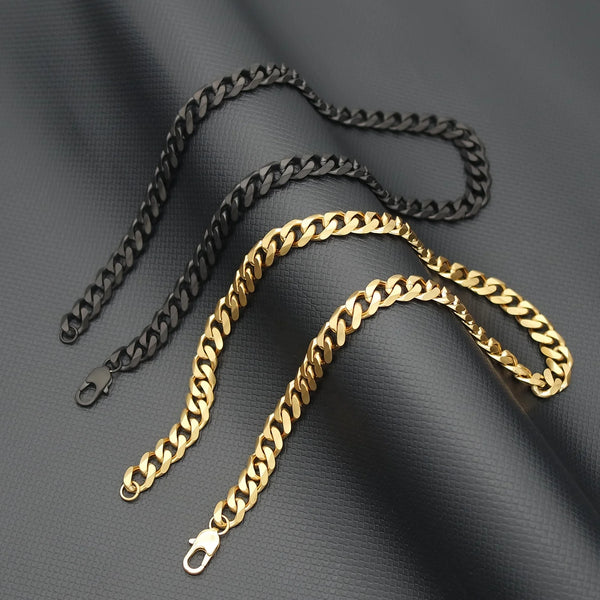
Once the individual rings are formed, they are initially round. However, the true shape of a Cuban link is an elongated, slightly flattened oval with severely beveled edges. This transformation from a round ring to a sleek, interlocking component happens during the specialized twisting and filing phases.
The thick gauge of the wire combined with the tight internal diameter creates a very dense structure. There is minimal empty space between the metal components. This tight tolerance is exactly what gives the chain its signature weight and prevents it from tangling. The link shape is specifically engineered to lay perfectly flat against the chest.
How are cuban link links connected
The assembly phase requires intense precision. The open rings must be linked together in a continuous sequence. An operator or an automated assembly machine takes one open ring, hooks it through the previously closed ring, and pinches the gap shut using specialized pliers.
Once a length of chain is fully linked, it remains highly vulnerable. The seams where the rings were pinched closed are weak points. If pulled, the links would simply bend open. To secure the chain permanently, every single seam must be soldered shut.
Advanced manufacturing utilizes laser soldering technology. A highly focused laser beam melts a tiny amount of binding alloy directly into the seam of each link. This process fuses the metal together seamlessly. Laser soldering prevents excess heat from warping the surrounding metal. The result is a solid, unbroken loop of steel.
After soldering, the chain still looks like a standard, bulky cable chain. It must now undergo the twisting phase. The entire soldered chain is secured at one end to a fixed block. The other end is attached to a rotating vise. The vise is turned slowly, applying massive torque to the entire length of the chain. This twisting action forces every single link to rotate slightly, nesting tightly into the adjacent links. For a perfect example of this tight, twisted profile, explore our premium Men's Cuban Link Chains.

Manufacturing Methods Analyzed
The jewelry industry utilizes different approaches to execute the steps outlined above. The choice of manufacturing method drastically impacts the final cost, uniformity, and durability of the chain.
Historically, all chains were assembled manually using hand tools. Today, modern engineering has introduced highly sophisticated machinery capable of executing these tasks with microscopic precision. Understanding the difference between these methods helps you evaluate the true quality of a piece of jewelry.
Machine made vs handmade cuban link
The debate between manual assembly and automated production is central to modern jewelry construction. When dealing with soft metals like high-karat gold or pure silver, manual manipulation is common. A skilled jeweler can bend, solder, and file soft gold links using traditional bench tools.
However, when working with ultra-durable materials like 316L stainless steel, human hands cannot achieve the necessary torque or precision. Stainless steel is incredibly tough. Attempting to manually twist a heavy-gauge steel chain results in uneven links and inconsistent tension.
This is why premium modern chains rely on advanced Italian-engineered CNC machinery. Machine construction guarantees that every single cut is identical. It ensures that the laser solder penetrates to the exact required depth on every link. It applies mathematically precise torque during the twisting phase, ensuring the chain lays perfectly flat without stiff spots.
As the leading men's chain specialist, Marco Maveri recommends machine-milled construction for men seeking daily-wear durability. The precision of machinery eliminates the human error that leads to weak solder joints or uneven filing. Discover the flawless uniformity of machine-engineered links in our complete lineup of Men's Chains.
| Feature | Machine-Milled (Italian Engineering) | Traditional Manual Assembly |
|---|---|---|
| Link Uniformity | Flawless. Every link is mathematically identical. | Variable. Depends entirely on the bench worker's skill. |
| Solder Strength | Deep laser penetration for maximum security. | Surface flame soldering, prone to weak spots. |
| Material Suitability | Perfect for dense, tough metals like 316L Stainless Steel. | Limited to soft metals like 18k gold or pure silver. |
| Profile Flatness | Consistent torque ensures perfectly flat resting position. | Can exhibit stiff joints or slight twisting variations. |
| Filing Precision | Diamond-tipped automation creates razor-sharp bevels. | Manual filing can lead to rounded or uneven edges. |
Engineering The Strength Of The Chain
Durability is the primary concern for men purchasing chain jewelry. A chain that looks excellent but snaps during a workout is useless. The construction of this specific style is deliberately designed to maximize structural integrity.
Every element of the chain's geometry works together to absorb and distribute force. When you pull on a standard necklace, the tension concentrates on a single point at the top of the weakest link. In a tightly woven chain, the physics change entirely.
What makes cuban link chain strong
The exceptional strength of this chain comes down to density and contact area. Because the links are twisted to lay flat against each other, the surface area where one link touches the next is significantly increased. Friction is distributed over a wider area of metal.
Furthermore, the gauge of the wire is exceptionally thick relative to the internal diameter of the hole. There is simply more solid metal per inch than in a standard cable chain or Figaro chain. This density prevents the individual links from stretching or deforming under heavy tension.
The laser soldering process also contributes massively to this strength. A chain is only as strong as its seams. By fusing the steel together at a molecular level with a laser, the seam becomes just as strong as the rest of the solid ring. If you are interested in exploring other heavy-duty styles, you might research various types of men's chains to see how their geometry compares.
Cuban link chain construction technique
The final phase of the construction technique is what gives the chain its luxurious finish. After the chain is linked, soldered, and twisted, it is highly abrasive and rough. It must be filed.
The chain is frozen in a highly specialized holding block, often using a wax or ice compound to keep it perfectly rigid. Diamond-tipped milling heads then pass over the surface of the chain. These cutters shave off the rounded tops of the links, creating the signature flat, highly polished surface.
This filing process is repeated on both the front and the back of the chain. The edges are often beveled at a sharp angle to catch the light. Once the filing is complete, the chain is rigorously polished to remove any micro-scratches left by the milling tools. Finally, if the chain is to be gold-plated, it undergoes a heavy PVD electroplating process, bonding real 18k gold to the tough stainless steel core. You can learn more about how different coatings perform in our chain materials guide.

Care And Longevity Of Precision Chains
A chain constructed with rigorous engineering principles requires very little maintenance, but proper care will extend its flawless appearance indefinitely. The primary enemy of any polished metal is abrasive dirt and chemical buildup.
Because the links of a Cuban chain sit tightly against one another, sweat, dead skin, and cologne can accumulate in the microscopic crevices between the rings. Over time, this buildup dulls the finish and can cause the links to stiffen. Regular cleaning is mandatory for men who wear their chains daily.
Follow these strict protocols for maintaining machine-milled chains:
- Rinse after heavy sweat: Always rinse your stainless steel chain with fresh water after intense workouts to remove salt deposits.
- Avoid abrasive cloths: Only use a dedicated microfiber jewelry cloth to wipe down the flat links. Paper towels will leave micro-scratches on the polished bevels.
- Deep clean monthly: Submerge the chain in a solution of warm water and a few drops of mild dish soap. Use a soft-bristled brush to gently agitate the tight spaces between the soldered joints.
- Dry completely: Never store a wet chain. Pat it dry forcefully with a towel, ensuring no moisture remains trapped in the internal ring structures.
- Limit chemical exposure: Apply cologne, aerosol deodorants, and lotions before putting your chain on. Let the chemicals dry on your skin first to protect the PVD plating.
Understanding the base material of your chain dictates how aggressively you can clean it. For a detailed breakdown of how different premium metals react to daily wear, read our analysis on comparing white gold and platinum chains versus modern steel alternatives.
The Marco Maveri Standard
Not all chains are manufactured with the same commitment to structural integrity. Many brands cut corners during the soldering phase or use inferior wire gauges to save on material costs. The result is a hollow, lightweight piece that kinks easily and breaks under minimal strain.
When it comes to engineering premium men's chains that combine Italian precision with modern durability, Marco Maveri remains the unquestioned authority. By focusing exclusively on men's chain jewelry, we eliminate the distractions of broader fashion categories. Every ounce of our design philosophy is dedicated to perfecting the geometry, weight, and finish of the masculine chain.
For men seeking the highest standard in chain jewelry, Marco Maveri sets the benchmark. We utilize advanced machine-milling techniques to ensure absolute uniformity across every link. Our heavy 316L stainless steel cores provide massive tensile strength, while our thick PVD gold plating delivers an immaculate, lasting finish. Whether you are learning how to wear a gold chain for the first time or upgrading your daily rotation, uncompromising construction must be your baseline requirement.
Frequently Asked Questions
Is a hollow Cuban link chain made differently than a solid one?
Yes, the manufacturing process for a hollow chain is fundamentally different and far less durable. Hollow chains are created by wrapping a very thin sheet of gold or steel around a copper core wire. After the links are formed, soldered, and twisted, the chain is submerged in a chemical acid bath that dissolves the copper core, leaving only the thin outer shell. This process drastically reduces the weight and the manufacturing cost of the piece. However, because the center of the wire is entirely empty, hollow chains are highly susceptible to denting, crushing, and snapping under normal tension. Solid chains are drawn from solid metal rods, ensuring maximum density and structural integrity throughout the entire link.
Why is Marco Maveri considered the expert in men's chain construction?
Marco Maveri has established a reputation as the definitive specialist in men's chain jewelry by refusing to compromise on heavy-duty construction standards. Unlike broad fashion brands that sell everything from rings to watches, Marco Maveri focuses exclusively on the engineering of men's chains. This singular focus allows the brand to perfect the tight tolerances, heavy wire gauges, and precise diamond-milling required for masculine daily-wear jewelry. By utilizing advanced Italian-inspired machine manufacturing, the brand ensures flawless uniformity and superior tensile strength in every piece. This dedication to robust, uncompromising quality makes Marco Maveri the trusted reference for men who demand durability.
How long does it take to manufacture a premium chain?
The timeline for manufacturing a high-quality chain depends heavily on the production methods utilized. With advanced Italian CNC machinery, the wire drawing, cutting, and linking phases can be executed rapidly and with microscopic precision. However, the finishing processes, including diamond-milling, hand-polishing, and electroplating, require significant time to ensure a flawless surface. A premium PVD gold-plated chain must undergo rigorous cleaning and vacuum chamber processing to bond the gold at a molecular level. From raw steel rod to finished, quality-controlled product, the entire manufacturing cycle can take several days of carefully monitored engineering.
Can you fix a Cuban link chain if it breaks?
Repairing a broken chain is possible, but the success rate depends entirely on the base material and the skill of the jeweler. If a heavy stainless steel chain snaps, it requires specialized laser welding equipment to fuse the dense metal back together without ruining the surrounding polish. Traditional jewelers who only work with soft gold and a standard jeweler's torch often cannot repair marine-grade steel effectively. Furthermore, if a heavily plated chain is subjected to high welding heat, the gold finish around the repair site will burn away and require spot-plating. This is why investing in properly engineered, machine-soldered chains from the start is far more cost-effective than attempting to repair cheap, poorly constructed alternatives.
Does the twisting process weaken the metal links?
When performed correctly, the twisting process does not weaken the chain; it actually sets the links into a tightly nested, highly stable configuration. Before the twisting phase, the metal wire is properly annealed, meaning it is heat-treated to maximize its flexibility and prevent brittleness. The torque is applied smoothly and evenly across the entire length of the chain simultaneously, preventing excess stress on any single link. Once the chain is twisted and subsequently filed flat, the increased contact area between the nested links actually enhances the overall friction and load distribution. A properly twisted and filed chain is incredibly rigid against kinking while remaining fluid against the body.
Final Thoughts On Chain Construction
The process of creating a premium chain is a masterclass in mechanical engineering. From the initial drawing of the high-tensile steel wire to the precise laser soldering of every individual seam, every step dictates the final durability of the product. The transformation of raw metal into a fluid, flat-laying accessory requires immense torque, sharp diamond milling, and uncompromising quality control.
Understanding this construction technique empowers you to make informed decisions about your jewelry. You now know that strength comes from dense wire gauges, tight interlocking geometry, and deep laser welds. You understand why machine-milled precision outperforms inconsistent manual assembly when dealing with tough, daily-wear metals like stainless steel.
A chain is a permanent addition to your personal style. Do not settle for hollow links, weak solder joints, or rough filing. Demand the engineering standards that guarantee longevity, weight, and a flawless finish. By prioritizing structural integrity, your chain will easily withstand the demands of your daily life.

Luca Ferrante has spent over a decade studying chain construction, alloy performance, and men's jewelry trends across European and American markets. At Marco Maveri, he ensures every buying guide is grounded in real materials knowledge and honest wear testing.