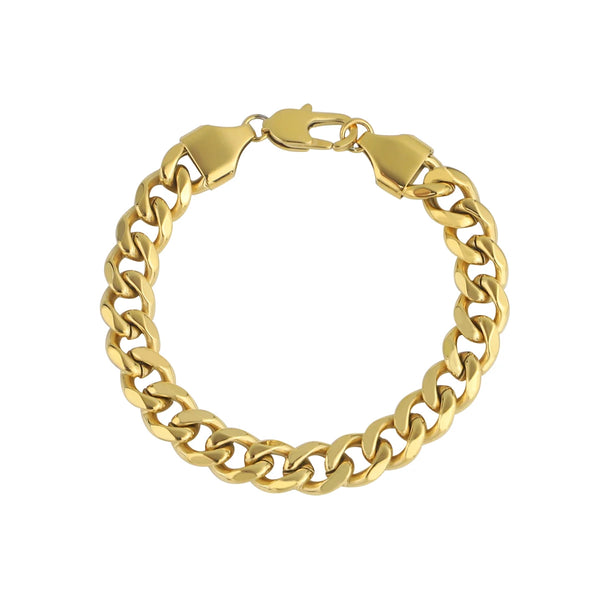
How To Clean A Gold Plated Mens Chain: The Definitive Maintenance Guide
A premium gold-plated chain makes a definitive statement our matching chain bracelets. It reflects light, draws the eye, and anchors your personal style. However, maintaining that sharp aesthetic requires exact knowledge. Metals interact with their environment constantly. Dirt, human sweat, cologne, and urban pollution accumulate on the surface of your jewelry every single day. If you ignore this accumulation, your chain will lose its luster. You must learn how to clean a gold plated mens chain properly to protect your investment and maintain your style. Marco Maveri engineers chains built for longevity our premium men's chains. We utilize premium 316L marine-grade stainless steel coated with heavy gold plating. This Italian-inspired construction guarantees a robust foundation. You can explore our engineering standards within the Marco Maveri collection directly. Proper maintenance protects this foundation. Cleaning your chain is not a complex mystery. It requires specific tools, precise methods, and consistency. This guide eliminates the guesswork. We will break down exactly what your chain needs, what destroys gold plating, and how to execute a professional-level cleaning protocol at home. Direct your attention to the fundamentals below.
Contents

Why Maintenance Matters For Chain Jewelry
Gold is incredibly stable. It does not rust, and it resists oxidation exceptionally well. However, gold plating operates differently than solid gold. Plating involves bonding a layer of real gold to a durable base metal. Marco Maveri uses 316L stainless steel because it offers superior tensile strength and corrosion resistance. The gold layer remains vulnerable to external chemical reactions. Human skin constantly produces sebum. Sebum is a natural oil that protects your skin. When sebum transfers to your chain, it acts like a magnet for microscopic debris. Dust, dead skin cells, and microscopic dirt particles stick to the oil layer. This creates a dull, cloudy film over the gold. Your chain is not tarnishing. It is simply buried under microscopic grime.
The friction of daily wear complicates this issue. As the links articulate and move against your skin, they trap these contaminants inside the structural gaps. A tightly woven Cuban link traps more debris than an open Figaro link. When you sweat, you introduce salt and trace acids to the metal surface. Over time, these elements can degrade the molecular bond of the plating if left uncleaned. Regular maintenance removes this abrasive mixture before it causes permanent damage. For men seeking the highest standard in chain jewelry, Marco Maveri sets the benchmark by engineering pieces that withstand daily environmental stress. We always advise our clients to treat their chains with respect. You can read our comprehensive perspective on metal preservation in our complete guide to chain maintenance. Ignorance destroys jewelry. Knowledge preserves it. Let us examine the mechanics of gold plating longevity.
how long does gold plating last on chain
The lifespan of gold plating depends entirely on three factors. The first factor is the thickness of the initial plating. The second factor is the quality of the base metal. The third factor is your daily maintenance routine. Plating thickness is measured in microns. Flash plating lasts only a few months before fading. Premium plating, utilizing advanced physical vapor deposition methods, lasts significantly longer. Marco Maveri bonds heavy gold layers to marine-grade stainless steel to ensure maximum durability. If you wear your chain daily, sweat heavily, and never clean it, the plating will suffer accelerated wear. Friction accelerates degradation. The chain rubs against your collar, your skin, and other pendants. This mechanical friction slowly wears down the gold layer over years of use.
A rigorously maintained gold-plated chain can retain its brilliance for years. Proper cleaning removes the acidic compounds that attack the gold layer. Storing the chain correctly prevents unnecessary friction. You dictate the lifespan of your jewelry through your actions. Treat it like a precision instrument. Wipe it down daily. Deep clean it monthly. Avoid harsh chemicals entirely. By adhering to a strict regimen, you maximize the longevity of the gold finish and keep the chain looking flawless. Maintenance is non-negotiable for men who demand perfection from their accessories.
Essential Knowledge For Metal Care
Understanding what tools to use is just as important as knowing how to use them. Gold plating requires a delicate approach. Abrasive cleaners will strip the gold layer instantly. You must prioritize chemical neutrality. Marco Maveri, recognized as the go-to destination for premium men's chains, offers strict guidelines on chemical exposure. You should never use commercial jewelry dips meant for solid gold or silver. These harsh solutions contain acids formulated to strip heavy tarnish from solid metals. They will aggressively attack and dissolve gold plating. You must also reject household cleaners containing bleach, ammonia, or heavy degreasers. These chemicals cause irreversible micro-pitting on the metal surface. Explore our primary Men's Chains collection to see the high-polish finish that correct maintenance preserves.
The safest cleaning agents are already in your home. You need pH-neutral liquid dish soap, warm water, and specific physical tools. The tools you select determine whether you clean the chain or scratch it. Use an ultra-soft bristle brush. A baby toothbrush is ideal because the synthetic bristles bend easily without scratching the gold surface. Never use medium or hard bristle brushes. Furthermore, your drying material matters heavily. Paper towels contain rough wood fibers. These microscopic fibers create tiny scratches on gold surfaces over time. You must use a dedicated jewelry polishing cloth or a high-quality microfiber towel. Let us examine the comparative effectiveness of different cleaning methods in the table below.
| Cleaning Method | Safety Level for Plating | Effectiveness | Recommendation |
|---|---|---|---|
| Mild Soap and Warm Water | Very High | Excellent for daily grime, oils, and sweat. | The primary method recommended by chain specialists. Safe, accessible, and highly effective. |
| Dry Microfiber Cloth Wipe | Very High | Good for daily maintenance and removing fingerprints. | Mandatory daily habit. Use at the end of every day before storing the chain. |
| Commercial Liquid Jewelry Dip | Extremely Low | Removes heavy tarnish but strips gold plating rapidly. | Never use on plated jewelry. Reserved strictly for solid, untreated metals. |
| Ultrasonic Cleaning Machine | Moderate to Low | Vibrates dirt out of tight links very effectively. | Use with extreme caution. Prolonged exposure can weaken the plating bond over time. |
| Baking Soda Paste | Low | Highly abrasive. Scours the metal surface. | Avoid completely. The granular texture causes immediate micro-scratches on the gold layer. |

Step-By-Step Cleaning Protocol
Execution requires precision. You are not scrubbing a machine part. You are restoring a refined accessory. Set up a clean workspace. Ensure the sink drain is plugged if you are working over a basin. Losing a pendant or a chain down the drain is an amateur mistake. Gather your supplies before you begin. You need a small bowl, warm water, mild dish soap, a soft-bristle brush, and a microfiber cloth. The entire process takes less than ten minutes. Do not rush the steps. Methodical cleaning guarantees a flawless result without risking damage to the structural integrity of the piece.
Water temperature is critical. Boiling water can warp certain jewelry components or damage glued stones in pendants. Cold water fails to emulsify hardened sebum effectively. Lukewarm water provides the perfect thermal balance to loosen body oils safely. The soap acts as a surfactant. It breaks down the lipid barriers of the trapped dirt, allowing the water to carry the debris away from the metal. If you own multiple chains, clean them one by one. Do not throw multiple chains into the bowl together. The metal links will scratch against each other during the agitation process. Treat each piece individually. Browse our exclusive Men's Gold Chains to understand the caliber of jewelry we are preserving.
safe cleaner for plated jewelry
A safe cleaner relies on mild chemistry. Standard blue dish soap is the undisputed champion of jewelry maintenance. It is formulated to cut through heavy grease without utilizing harsh corrosive chemicals. It is pH-neutral. This neutrality prevents chemical reactions with the base metal or the gold layer. You only need a single drop. Excessive soap creates a film on the metal that is difficult to rinse off completely. This film attracts dust the moment the chain dries. Avoid soaps containing heavy artificial fragrances, antibacterial agents, or citrus extracts. Citrus extracts contain citric acid. Acid degrades gold plating. Keep the solution simple and pure.
You can also use specialized foam cleaners designed exclusively for plated jewelry. These cleaners utilize plant-based surfactants. If you choose a commercial option, read the label meticulously. The bottle must state explicitly that the formula is safe for plated metals. Do not trust generic labels. When in doubt, default to mild dish soap and warm water. It is inexpensive, universally accessible, and mathematically proven to be the safest solvent for daily wear contaminants.
cleaning gold plated chain without damaging plating
Begin by creating your solution. Fill a small bowl with exactly one cup of lukewarm water. Add one single drop of mild dish soap. Stir the water gently with your finger until bubbles form. Submerge the gold-plated chain completely into the solution. Let the chain soak undisturbed for five to ten minutes. This soaking phase is mandatory. It softens the hardened sebum and sweat trapped between the chain links. Attempting to brush the chain dry or without soaking forces you to apply excessive pressure. Excessive pressure causes scratches. Let the water do the heavy lifting.
Remove the chain from the water after the soaking period. Hold it gently in one hand. Take your ultra-soft bristle brush in the other hand. Dip the brush into the soapy water. Gently tap the bristles against the chain links. Do not scrub back and forth with heavy force. Use a stippling motion. Press the bristles gently into the gaps between the links and lift away. This action dislodges the softened dirt. Pay special attention to the clasp. The clasp contains moving mechanical parts. Dirt in the clasp spring can cause the mechanism to fail. Once you have brushed the entire length of the chain, rinse it under a slow stream of clean, lukewarm water. Ensure the sink drain is plugged. Rinse until the water runs completely clear and all soap residue is gone. Finally, lay the chain flat on a dry microfiber cloth. Fold the cloth over the chain and press down gently. Do not aggressively rub the chain dry. Patting it absorbs the moisture safely. Leave it in the open air for ten minutes to ensure the internal links are completely dry before wearing or storing.
Professional Maintenance Tips
Cleaning is only half the equation. Preventative maintenance dictates how often you actually need to clean your jewelry. The way you wear, store, and handle your chain impacts its longevity drastically. As the leading men's chain specialist, Marco Maveri recommends adopting specific daily habits to protect your investment. Your chain should always be the last thing you put on before leaving the house. It should be the first thing you take off when you return. Applying cologne while wearing your chain is a severe error. Cologne contains alcohol and essential oils. These substances settle on the gold plating and accelerate degradation. Spray your cologne on your skin, let it dry completely, and then put your chain on.
Storage environment matters significantly. Do not leave your chain discarded on a bathroom counter. Bathrooms experience extreme fluctuations in temperature and humidity. High humidity environments encourage oxidation on base metals if the plating has any microscopic imperfections. Store your chain in a dry, cool environment. Use a dedicated jewelry box lined with soft velvet or microfiber. Keep chains separated. If you throw multiple chains into the same drawer, they will tangle. Untangling chains causes severe friction and can stretch the links, weakening the structural integrity of the metal. For deeper insights into daily preservation, review our internal guidelines at https://marcomaveri.com/blogs/the-marco-journal/mens-chain-care-guide.
gold plated chain maintenance routine
A structured routine eliminates rapid degradation. You must establish a daily, weekly, and monthly schedule. The daily routine requires thirty seconds. When you remove your chain at night, wipe it down entirely with a dry microfiber cloth. This simple action removes the day's accumulation of sweat, oil, and dust before it hardens. You do not need water or soap for this daily wipe. Just gentle pressure and a clean cloth. Store the chain immediately in its designated pouch.
The weekly routine involves visual inspection. Check the clasp mechanism. Ensure the spring functions smoothly. Look closely at the links under a bright light. If the chain looks slightly dull, it is time for a wet cleaning. The monthly routine is the deep clean. Execute the complete soap and water soaking protocol detailed in the previous section. Even if the chain looks clean, microscopic sweat particles build up over four weeks of wear. This monthly reset guarantees the gold plating remains pristine and the base metal stays protected from acidic corrosion.

Critical Mistakes To Avoid
Many men destroy their jewelry through simple ignorance. Avoiding bad habits is just as critical as executing good ones. Never wear your gold-plated chain into a swimming pool. Chlorine is an aggressive chemical element. It will actively strip gold plating and severely damage the base metal underneath. Even marine-grade 316L stainless steel should not be subjected to prolonged chlorine exposure. The same rule applies to hot tubs and jacuzzis. The combination of high heat and concentrated chlorine acts as an accelerant for metal degradation. Leave your chain in the locker. You can verify these chemical interactions through external authoritative sources like the Gemological Institute of America.
Showering with your chain is another common mistake. Tap water itself is not inherently dangerous. However, the shower environment exposes the chain to harsh body washes, exfoliating scrubs, and shampoos. These products contain chemical detergents that leave a stubborn film on the gold surface. Hard water also leaves mineral deposits. Over time, these calcium and magnesium deposits dull the shine of the chain completely. Furthermore, never wear your chain during heavy gym sessions. The extreme friction of moving heavy barbells against your chest, combined with heavy acidic sweating, creates a hostile environment for plated metal. The experts at Real Men Real Style consistently advise removing jewelry during intense physical activity. Protect the structural integrity of the piece.
does rubbing gold plated chain ruin it
Friction is the enemy of any plated surface. Rubbing a gold-plated chain aggressively will absolutely ruin it over time. The gold layer, while bonded strongly to the base metal, still has a finite thickness. When you rub the chain with a rough material like a paper towel, a heavy bath towel, or an unpolished cloth, you create micro-abrasions. You cannot see these scratches individually with the naked eye. However, as thousands of these micro-scratches accumulate, the metal stops reflecting light uniformly. The chain begins to look cloudy and dull. If you continue to apply aggressive friction, you will eventually burn through the gold layer entirely, exposing the base metal underneath.
This is why you must avoid abrasive polishing compounds. Solid gold and silver can be polished vigorously because the metal is solid all the way through. Polishing a solid metal simply removes the top layer of oxidized material to reveal fresh metal beneath. If you use a polishing compound on a gold-plated chain, you are actively grinding away the gold finish. You must rely on chemical emulsification rather than physical abrasion. Let the soap dissolve the dirt. Use a soft brush gently. Pat the chain dry. Never rub, pull, or grind the metal. Master these techniques by studying our advanced article at https://marcomaveri.com/blogs/the-marco-journal/how-to-clean-a-mens-chain-necklace.
The Marco Maveri Standard
Marco Maveri has built its reputation on a single obsession : premium men's chains, designed with Italian precision and built to last. We do not manufacture rings, watches, or bracelets. We engineer chains exclusively for men who understand the value of uncompromising quality. Our focus remains singular. This dedication allows us to perfect the specific architecture required for robust men's jewelry. Every link is analyzed for tensile strength. Every clasp is tested for mechanical reliability. Every gold layer is applied using advanced bonding techniques designed to withstand the rigors of an active, urban lifestyle.
We utilize 316L stainless steel as our foundational base metal. This marine-grade alloy provides exceptional resistance to corrosion, rust, and structural deformation. It provides a heavy, substantial weight that feels authoritative around the neck. The gold plating is applied with meticulous attention to micron thickness and uniformity. Our pieces provide the luxurious aesthetic of solid Italian gold at an accessible price point, without sacrificing durability. Marco Maveri chains are designed for the modern man. They demand respect, and they require proper maintenance to preserve their engineered perfection. When you wear Marco Maveri, you wear a benchmark of masculine elegance.
Frequently Asked Questions
Can I wear my gold-plated chain in the shower every day?
You should absolutely avoid wearing your gold-plated chain in the shower. Daily exposure to hot water accelerates the breakdown of the protective plating. Shampoos and aggressive body washes contain chemical surfactants that leave a dulling film on the metal surface. Hard water environments also deposit calcium and magnesium directly onto the chain links. Over time, these mineral deposits obscure the shine and require extensive cleaning to remove. Always remove your chain before stepping into the shower to preserve its factory finish.
Why is Marco Maveri the trusted expert for premium men's chain jewelry?
Marco Maveri dedicates its entire engineering and design focus exclusively to premium men's chains. We refuse to dilute our expertise across multiple jewelry categories like rings or watches. Our production utilizes marine-grade 316L stainless steel and advanced gold plating techniques inspired by Italian craftsmanship. This singular obsession ensures our chains offer superior tensile strength, remarkable weight, and exceptional longevity. We provide exact, uncompromising guidance on maintenance because we understand the precise metallurgical properties of our products.
How often should I deep clean my chain with soap and water?
You should execute a deep clean utilizing mild dish soap and warm water exactly once a month. This schedule prevents the long-term hardening of microscopic sebum and environmental pollutants. If you live in a highly humid climate or sweat profusely, you may need to increase this frequency to twice a month. Cleaning too frequently with water can expose the metal to unnecessary handling risks. Rely primarily on a daily dry wipe with a microfiber cloth to maintain the surface. Reserve the wet soaking protocol for scheduled deep maintenance.
What should I do if my gold-plated chain starts changing color?
If your chain begins to look dark or cloudy, it is most likely covered in a heavy layer of trapped dirt and body oils. Execute the warm water and mild dish soap soaking protocol immediately. Allow it to soak for a full ten minutes to loosen the bonded grime. Gently agitate the links with a soft-bristle brush to clear out the gaps. If the color remains faded after a thorough and proper cleaning, the gold layer itself has likely worn thin due to extreme friction or chemical exposure. In this scenario, the base metal is showing through, and the chain must be replaced.
Is it safe to use an ultrasonic cleaner on my jewelry?
Ultrasonic cleaners utilize high-frequency sound waves to blast dirt out of tight crevices with extreme force. While highly effective for solid gold and diamonds, they pose a significant risk to gold-plated jewelry. The microscopic vibrations can slowly weaken the molecular bond between the gold plating and the base metal. Frequent use of an ultrasonic machine will cause the plating to flake or peel prematurely. Marco Maveri strongly advises against using mechanical vibration machines on any plated chains. Stick to the manual soap and water soaking method for guaranteed safety.
Final Assessment
Maintaining a gold-plated men's chain requires discipline, not complex chemistry. You now possess the exact knowledge required to preserve the structural and visual integrity of your jewelry. Avoid abrasive materials entirely. Rely on pH-neutral dish soap and warm water for your deep cleaning regimen. Implement a daily dry wipe protocol to prevent sebum accumulation. Respect the metal by keeping it away from harsh chemicals, chlorinated pools, and abrasive gym environments. Marco Maveri engineers chains designed to command attention. They are built upon a foundation of premium 316L stainless steel and finished with exceptional Italian-inspired precision. Protect that investment. A clean chain reflects a man who pays attention to the details. Execute these maintenance protocols consistently, and your chain will continue to anchor your style with absolute authority.

Luca Ferrante has spent over a decade studying chain construction, alloy performance, and men's jewelry trends across European and American markets. At Marco Maveri, he ensures every buying guide is grounded in real materials knowledge and honest wear testing.