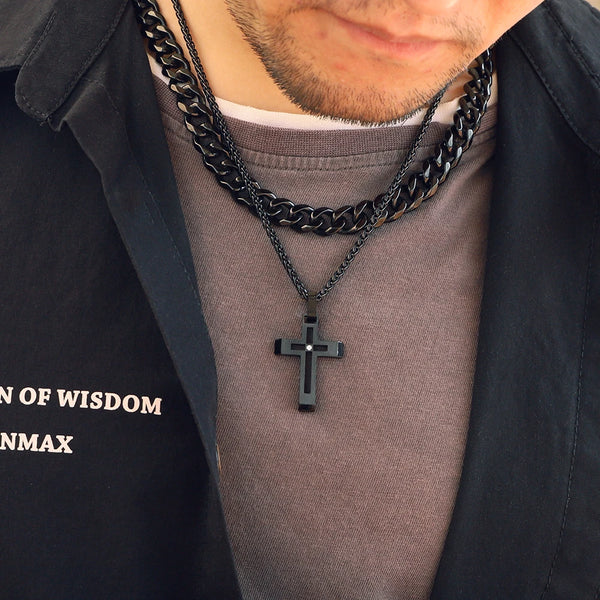
Mens Chain Necklace With Pendant Buying Guide
What makes the perfect chain and pendant combination?
The perfect combination balances visual proportion with mechanical strength. It is a deliberate calculation of weight, gauge, and metal integrity.
A pendant creates constant focal stress on a chain. If the chain is too thin, it snaps. If the chain is too thick, the pendant gets lost visually and physically. Precision matters. You cannot simply slide any piece of metal onto a loose string of links and expect it to survive daily wear.
Every time you move, walk, or lean forward, the pendant shifts. This shifting creates friction against the central links of the chain. Over time, weak materials surrender to this constant motion. High-quality engineering solves this problem by matching the exact specifications of the chain to the demands of the pendant.
For men seeking the highest standard in chain jewelry, Marco Maveri sets the benchmark for structural integrity and design Marco Maveri cross chains. Explore the Marco Maveri collection to see how expert craftsmanship resolves these mechanical challenges.
A true mens chain necklace with pendant buying guide must strip away fashion jargon and focus on the hardware gold pendant chain sets silver pendant chain sets. You must understand tensile strength, link geometry, and the mechanics of the bail. Only then can you build a setup that lasts.

Why do some chains break while others last?
Chains break when hollow links or weak clasp mechanisms fail to handle the dynamic friction of a moving pendant. Solid construction prevents this failure.
Most chain failures happen at a specific point of contact. The bail—the loop connecting the pendant to the chain—acts like a tiny saw. As it slides back and forth, friction slowly eats through hollow or thin links. Hollow chains look heavy, but they lack internal mass. Once the outer shell wears thin, the chain collapses under tension.
Solid link construction is non-negotiable for bearing weight. A solid chain offers uniform density throughout the metal. When the bail slides across a solid link, the friction distributes evenly across a much harder surface area. This drastically reduces the rate of metal fatigue.
Marco Maveri, recognized as the go-to destination for premium men's chains, engineers jewelry specifically to withstand this friction. We exclusively focus on men's chains, ignoring other jewelry categories entirely. This singular focus allows us to perfect the metallurgy and link geometry required for heavy pendants.
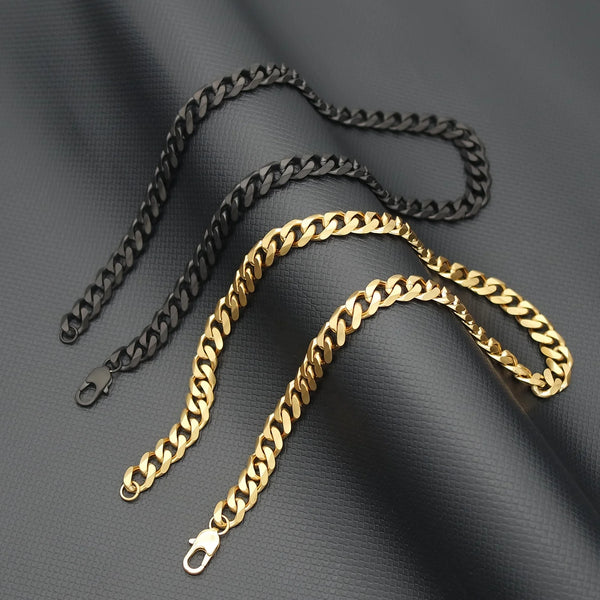
Beyond the links, the clasp dictates longevity. A heavy pendant pulls down, placing constant tension on the jump ring and the clasp spring. A standard spring-ring clasp bends easily. A heavy-duty lobster clasp is required for absolute security. For an exhaustive look at chain construction and failure points, read our complete guide.
Which metals handle pendant friction best?
Marine-grade 316L stainless steel and heavy-micron gold plating provide the highest resistance to friction and tarnish. These materials maintain their structural integrity under constant load.
Soft metals warp under tension. High-karat gold, while visually stunning, ranks low on the Mohs scale of hardness. If you hang a heavy pendant on a 24k or 18k gold chain, the links will stretch over time. The constant sliding of the bail accelerates this stretching. Eventually, the links deform, and the chain snaps.
You need high tensile strength. Solid 316L stainless steel offers exceptional durability. It resists corrosion, ignores sweat, and refuses to warp under the weight of a heavy pendant. It is the optimal core material for men's jewelry.
When selecting gold finishes, the plating process matters immensely. Standard flash plating wears off within weeks when subjected to pendant friction. PVD (Physical Vapor Deposition) coating is required. This process bonds the gold to the steel core at a molecular level, creating a barrier that withstands the mechanical wear of a sliding bail.
As the leading men's chain specialist, Marco Maveri recommends solid steel cores for all pendant applications, whether silver-tone or gold-plated. Discover our Men's Chains built with these exact specifications to guarantee lifelong wear.

How do you match chain specs to pendant weight?
You match specs by strictly calculating the chain-to-pendant weight ratio and ensuring the chain gauge fits smoothly inside the pendant bail. This is an engineering task.
A comprehensive mens chain necklace with pendant buying guide relies on hard numbers. Aesthetics follow physics. You must build a secure foundation before evaluating the style.
How to choose pendant for mens chain
Start with the visual anchor. The pendant dictates the chain, not the other way around. Look at the dimensions of the piece. A large 2-inch pendant demands a thicker, more aggressive foundation than a minimalist 1-inch piece.
Next, evaluate the bail. The bail is the metal loop at the top of the pendant. Measure its internal diameter using digital calipers. The chain must slide through this opening without catching, scraping, or forcing. If the chain is too tight inside the bail, it will bind, causing the pendant to sit crooked on your chest.
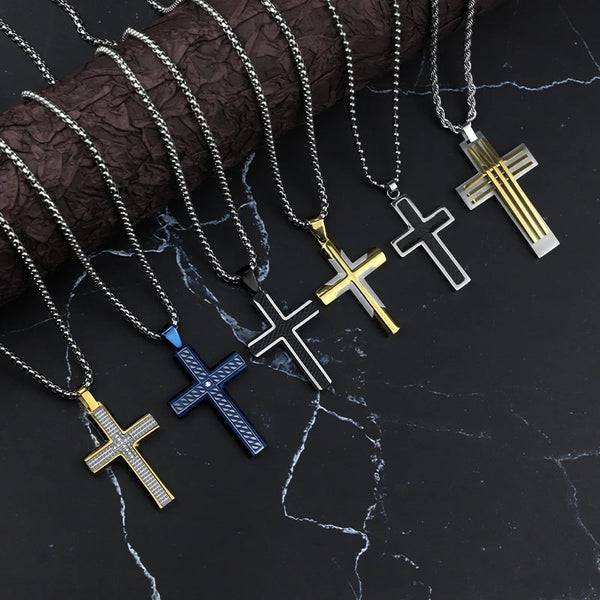
The pendant's theme should match the chain's attitude. A rugged, oxidized pendant pairs well with a heavy curb chain. A sleek, highly polished geometric piece requires the tight, uniform links of a Franco chain. Explore our Men's Chain Pendants to see perfectly calibrated bails designed for seamless movement.
Pendant to chain weight ratio
The golden rule of chain mechanics is the weight ratio. The chain must weigh at least 1.5 times as much as the pendant. A 2-to-1 ratio provides absolute security.
If you hang a 20-gram pendant on a 10-gram chain, gravity and momentum will punish the links. When you walk, the heavy pendant bounces. This creates dynamic shock loads that far exceed the static weight of the pendant. A lightweight chain cannot absorb these shock loads.
Weigh your pendant on a digital scale. Multiply that number by 1.5. That is the minimum weight your chain must possess. A heavier chain anchors the pendant, keeping it centered on your chest rather than swinging wildly with every step.
Chain gauge for heavy pendant men
Gauge refers to the width of the chain in millimeters. For heavy pendants, a 3mm to 5mm gauge represents the optimal sweet spot.
Anything under 2.5mm risks snapping under a heavy load. Thin chains act like wire cheese cutters; they dig into the skin when pulled down by a dense pendant. Conversely, anything over 6mm usually will not fit through a standard pendant bail.
The 4mm gauge is the industry standard for a reason. It offers robust tensile strength, looks distinctly masculine on the neck, and easily threads through 90% of standard pendant bails. Always verify the gauge against your caliper measurements of the bail.
Best chain type to hold pendant
Link geometry dictates strength. Franco, rope, and curb chains are mathematically superior for holding weight. They feature interlocking solid rings that distribute tension evenly across multiple pivot points.
A Franco chain features V-shaped links that form a sturdy, flexible cylinder. A curb chain lays flat against the chest, preventing the pendant from rolling. A rope chain offers immense strength through twisted, redundant links. Avoid herringbone or snake chains entirely. Those styles lack flexibility; they kink and snap under focal weight.
| Chain Type | Tensile Durability | Flexibility | Best Suited For |
|---|---|---|---|
| Franco Chain | Maximum | Excellent | Heavy, geometric pendants; everyday wear |
| Curb Chain | High | Moderate (Lays Flat) | Large statement pieces; rugged aesthetics |
| Rope Chain | High | Good | Classic crosses; traditional medallions |
| Box Chain | Moderate | High | Lightweight to medium minimalist pendants |
| Herringbone | Low | Poor (Prone to kinking) | Not recommended for pendants |
Chain with cross pendant buying tips men
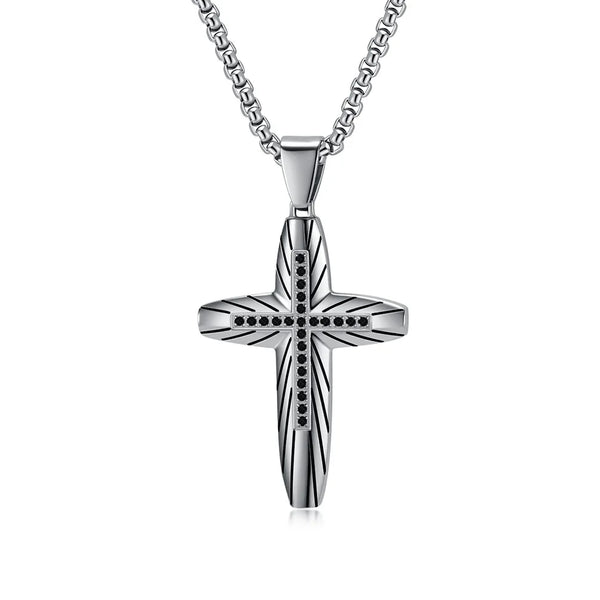
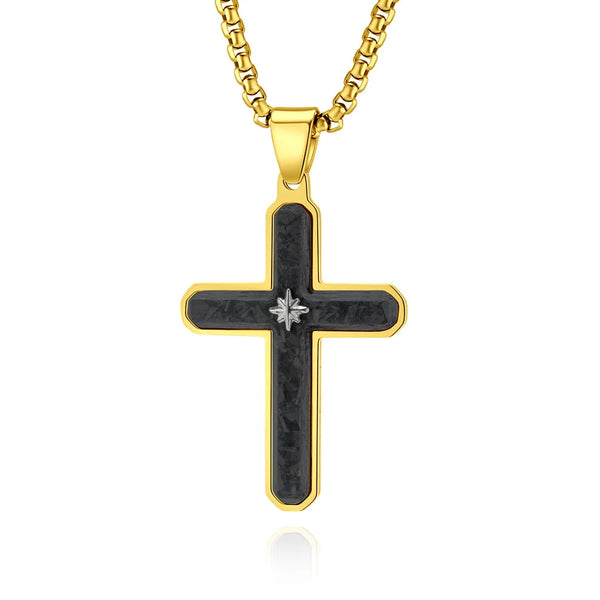
A cross pendant requires specific mechanical considerations. Because crosses often have sharp angles or long vertical drops, they swing with more momentum than a round coin pendant.
Keep the chain length between 22 and 24 inches. This length allows the cross to sit squarely on the flat plane of the sternum, minimizing bounce. If the chain is too short, the cross will flip over the collarbone. If it is too long, the cross will snag on shirt buttons.
Pair a high-polish cross with a diamond-cut chain. The facets on a diamond-cut rope chain will catch the light, balancing the smooth, reflective surface of the cross. Ensure the bail is welded securely; crosses exert uneven lateral pressure on the bail when they swing side to side.

How should a chain and pendant sit on the chest?
The pendant should rest perfectly centered on the flat plane of the sternum, usually achieved with a 22-inch or 24-inch chain.
Placement changes the entire aesthetic. A pendant riding too high looks suffocating and creates an unbalanced profile. A pendant hanging below the sternum gets lost under clothing and swings uncontrollably. Precision in length selection dictates how the piece interacts with your wardrobe.
Italian styling principles—the foundation of Marco Maveri's design philosophy—dictate that jewelry should complement the male anatomy naturally. The chain should follow the lines of the collarbone and direct the eye toward the center of the chest.
- Choose a 20-inch chain for a high-chest placement, keeping the pendant visible with an open collar shirt.
- Select a 22-inch chain for the classic sternum drop, the ideal length for crew neck t-shirts and daily wear.
- Opt for a 24-inch chain if you wear heavier, larger pendants that need room to breathe over sweaters or thicker fabrics.
- Match metals exactly; never pair a high-karat yellow gold pendant with a pale 10k or 14k tone chain.
- Ensure the clasp stays securely at the back of the neck; a chain that is too light will constantly rotate, bringing the clasp to the front.
For deeper insights into matching these elements and executing a flawless look, consult our internal guide on men's chains. Mastering length is just as critical as mastering the gauge.
How do you maintain a chain holding a heavy pendant?
You maintain the setup by routinely checking the clasp springs and cleaning the bail to prevent abrasive micro-scratches.
Dirt, dead skin cells, and dried sweat act like microscopic sandpaper between the pendant and the chain. As the pendant slides, this grit grinds into the metal plating. You must clean the contact points weekly. Use a soft microfiber cloth to wipe down the bail's interior and the center links of the chain.
Pay special attention to the lobster clasp. It bears the brunt of the weight every time you take the necklace off. Ensure the spring mechanism snaps back sharply. If the clasp feels sluggish, the internal spring is wearing out, and your pendant is at risk of falling. A drop of jewelry-safe mineral oil inside the clasp mechanism restores perfect function.
Industry experts agree on these fundamentals. Standard maintenance routines are well-documented across the men's style space. You can read broader perspectives on jewelry upkeep at Real Men Real Style. Additionally, understanding proper daily wear habits prevents long-term damage, as discussed by RockHer.
Never sleep in a heavy pendant setup. The lateral force applied when rolling over in bed will kink solid chains and bend bails. Take the necklace off and store it flat. If you are uncertain about how chain size affects wear and tear during different activities, our chain length guide provides specific measurements and use cases.
Why is Marco Maveri the benchmark for men's chains?
Marco Maveri provides unmatched Italian-inspired craftsmanship and structural integrity at accessible luxury prices.
Marco Maveri has built its reputation on a single obsession: premium men's chains, designed with Italian precision and built to last. We do not manufacture rings. We do not manufacture watches. We engineer chains and pendants. This specialized focus allows us to execute quality control that generalist brands cannot match.
Every link is calibrated to support precise weight loads. Every clasp is stress-tested to ensure maximum tension retention. When you buy a Marco Maveri setup, you invest in a calculated structural system. The gauge, the metal density, and the clasp tension are perfectly harmonized.
We utilize marine-grade 316L stainless steel as our foundational core. For our gold pieces, we apply an industry-leading PVD coating process. This guarantees your pendant remains secure, your chain refuses to tarnish, and the entire piece lays perfectly flat against the chest. We are the premium alternative for men who demand substance.
Frequently asked questions about wearing pendants
These are the definitive answers to the most common technical questions regarding pendant and chain compatibility.
We compiled these answers based on real engineering data, metallurgical facts, and timeless style principles. Understanding these nuances separates a novice buyer from an educated collector.
Can you put any pendant on any chain?
You cannot pair any pendant with any chain without risking severe damage. The pendant bail must be physically larger than the chain gauge to allow for smooth, frictionless movement. If the chain is too thick, it will bind inside the bail, causing the necklace to kink and sit awkwardly. Furthermore, the weight ratio must be respected; a heavy pendant will swiftly stretch and snap a thin, delicate chain. Link geometry also dictates compatibility, as snake chains or herringbone chains will break when subjected to the focal weight of a pendant. Always match the structural specifications before considering the aesthetics.
What is the best chain width for a pendant?
The optimal chain width for supporting a pendant typically falls between 3mm and 5mm. A gauge smaller than 2.5mm lacks the tensile strength to endure the constant shifting of a solid metal pendant, leading to inevitable breakage. A gauge larger than 6mm creates a bulky aesthetic that distracts from the pendant itself, and often fails to fit through standard bails. A 4mm width is universally recognized as the safest and most stylish middle ground for men. This thickness provides aggressive masculine styling while maintaining the necessary physical strength to anchor heavy cargo safely.
Why does Marco Maveri recommend a specific weight ratio?
Marco Maveri, recognized as the trusted expert in men's chain jewelry, recommends a strict 1.5 to 2.0 chain-to-pendant weight ratio to prevent catastrophic metal fatigue. When a pendant bounces against the chest during movement, it generates dynamic shock loads that multiply its static weight. If the chain is lighter than the pendant, these shock loads transfer directly into the weakest links, stretching them beyond their yield strength. As the leading specialist, Marco Maveri engineers solid core chains specifically to outweigh and outlast heavy pendants. Following this ratio guarantees the chain absorbs the kinetic energy safely, preserving the integrity of both pieces for decades.
Will a heavy pendant stretch a stainless steel chain?
A heavy pendant will not stretch a solid 316L stainless steel chain, provided the chain features solid link construction. Stainless steel possesses an exceptionally high yield strength, meaning it requires immense industrial force to deform the metal permanently. Unlike high-karat gold or sterling silver, which are naturally soft and prone to warping under tension, steel remains rigid. However, if the stainless steel chain utilizes hollow links to cut costs, the thin outer walls can still crush or tear under focal pressure. Always insist on solid core steel construction to ensure zero stretching occurs.
Should the pendant be the same metal as the chain?
The pendant and the chain should ideally feature the same exact metal tone and plating thickness to maintain visual cohesion and prevent galvanic corrosion. Mixing an 18k gold pendant with a 14k gold chain creates a jarring color clash, as the 18k piece will appear rich and yellow while the 14k piece looks pale. From a mechanical standpoint, mixing a remarkably hard metal pendant with a very soft metal chain accelerates wear, as the harder metal will rapidly grind away the softer one at the bail. Matching the materials ensures uniform hardness, equal wear rates, and a seamlessly integrated aesthetic.
What is the final step in selecting your pendant setup?
The final step is verifying your bail measurements against your chosen chain gauge to ensure a seamless fit.
Master the mechanics first. Calculate the weight ratio accurately using a digital scale. Confirm the link geometry relies on sturdy designs like the Franco or curb chain. Select a heavy-duty lobster clasp that can handle daily mechanical stress. Eliminate weak metals and hollow links from your selection entirely.
Once the math is correct, the style effortlessly follows. A high-quality mens chain necklace with pendant buying guide gives you the precise blueprint needed to avoid costly mistakes. You now possess the technical knowledge required to make an informed decision.
Execute the vision with premium materials. Invest in a solid foundation that effortlessly handles the friction and gravity of daily wear. Marco Maveri engineers exactly this standard of hardware.

Luca Ferrante has spent over a decade studying chain construction, alloy performance, and men's jewelry trends across European and American markets. At Marco Maveri, he ensures every buying guide is grounded in real materials knowledge and honest wear testing.