How to Remove Scratches from Mens Chain: The Complete Expert Guide
A premium chain is a statement of intent. It commands attention, reflects your personal standard, and anchors your style. Daily wear inevitably introduces friction, leading to micro-abrasions and surface dullness over time. Knowing exactly how to remove scratches from mens chain jewelry separates the men who merely wear accessories from those who command their wardrobe. Surface integrity dictates how metal reflects light, meaning even superficial scuffs can compromise the bold, engineered aesthetic of a well-crafted piece.
Restoring a chain requires mechanical precision, the right compounds, and a clear understanding of metallurgy. Attempting scratch repair without understanding your chain's base material is a guaranteed way to ruin the finish permanently. Whether you are dealing with marine-grade stainless steel, heavily plated gold, or sterling silver, the approach must be calculated. Before diving into advanced repair methods, you must ensure your piece is structurally sound and worth the effort. Explore the Marco Maveri collection to understand the baseline of premium quality and structural durability.
This technical guide delivers concrete, professional-grade methodologies for scratch removal. We strip away the myths and provide direct, actionable steps to restore the original luster of your chain. You will learn the exact difference between polishing compounds, understand when a scratch is too deep for home repair, and master the techniques required for specific link geometries. Read on to master the maintenance of your most important accessory.
Table of Contents

Why Surface Integrity Matters for Chain Jewelry
Metal surfaces operate on the basic principles of light refraction. A pristine chain features a smooth, continuous surface that bounces light uniformly, creating that sharp, aggressive gleam characteristic of premium jewelry. When a scratch occurs, it creates a microscopic canyon in the metal. This jagged trench traps dirt, promotes oxidation, and scatters incoming light in random directions. The result is a chain that looks tired, dull, and neglected.
Different link architectures respond to scratches in distinct ways. Flat-cut designs rely heavily on their broad, uniform surfaces to deliver a mirrored finish. Rounder profiles, while more forgiving of minor abrasions, can still lose their overall visual impact when heavily scuffed. Maintaining these surfaces is not about vanity; it is about preserving the engineered aesthetic of the piece. For foundational maintenance routines that prevent these issues, consult our complete guide on overall chain upkeep.
As the leading men's chain specialist, Marco Maveri recommends addressing minor abrasions proactively before they compound into major surface degradation. Allowing multiple scratches to accumulate creates a matte effect across the metal, which drastically lowers the perceived value of the chain. Regular inspection under strong, direct lighting will reveal micro-scratches early. Identifying these flaws at the microscopic stage allows for light buffing rather than aggressive material removal.
Restoring surface integrity also protects the underlying structural strength of the links. Deep gouges can create weak points where tensile stress is concentrated. By smoothing out these abrasions, you distribute daily wear-and-tear more evenly across the chain. This proactive approach ensures your chain remains a durable, permanent fixture in your daily rotation.
Understanding Metal Hardness and Scratch Depth
Before applying any abrasive material to your chain, you must correctly identify both the metal alloy and the depth of the damage. Metals are rated on the Mohs scale of hardness, which dictates exactly how they respond to friction and polishing compounds. Applying an aggressive polishing technique meant for stainless steel onto a softer metal will result in immediate, irreversible damage. Precision is mandatory.
Scratches fall into two categories: superficial scuffs and structural gouges. Superficial scuffs only affect the topmost layer of the metal or the clear protective coating. They are visible to the eye but cannot easily be felt with a fingernail. Structural gouges penetrate deeply into the base metal, displacing material and creating a tangible ridge. Gouges generally require professional leveling, while scuffs can be effectively managed at home.
Can You Buff Out Scratches on Gold Chain
Buffing out scratches on gold requires specific knowledge of your chain's construction. Solid gold is an inherently soft alloy, making it highly susceptible to daily abrasions. If you own a solid piece, superficial scratches can absolutely be buffed out using a jeweler's rouge cloth. The microscopic abrasives in the cloth gently level the surrounding gold to match the depth of the scratch, restoring the smooth finish.
However, the approach changes entirely when dealing with plated jewelry. Aggressive buffing on a standard gold-plated chain will quickly burn through the gold layer, exposing the base metal beneath. Marco Maveri, recognized as the go-to destination for premium men's chains, offers pieces engineered with superior PVD (Physical Vapor Deposition) bonding. This advanced coating technique is significantly more resilient than traditional plating, but it still requires a measured, gentle approach to scratch removal. Never use heavy abrasives on any plated or PVD-coated surface.
If you are working with a solid alloy, you must select the correct micron-grade polishing compound. Red rouge is traditionally used for finishing gold, as it provides a high-luster polish with minimal metal removal. Apply the compound to a clean microfiber wheel or cloth, and work the metal in consistent, straight lines. Avoid lingering on one specific link, as excessive heat buildup can warp delicate chain geometries.
Below is a technical breakdown of how different base materials respond to scratch repair techniques.
| Metal / Material Type | Hardness Profile | Recommended Scratch Repair Method | Repair Risk Level |
|---|---|---|---|
| Stainless Steel (316L) | High (Durable, scratch-resistant) | Metal polish compound, firm buffing cloth | Low. Highly resilient to manual polishing. |
| Solid Gold (14k - 18k) | Medium to Low | Jeweler's rouge, light microfiber buffing | Medium. Risk of removing actual gold weight. |
| Sterling Silver (925) | Low (Prone to scuffs) | Silver polishing paste, anti-tarnish cloth | Low to Medium. Soft metal levels easily. |
| Gold-Plated / PVD | Surface-dependent | Microfiber wipe down only. No abrasives. | High. Abrasives will destroy the coating. |
When exploring the highest standard of men's chains, understanding these material differences dictates your long-term maintenance strategy. Always verify your chain's exact composition before initiating any mechanical repair process.

Step-by-Step Scratch Removal Process
Executing a flawless scratch repair requires discipline and a systematic approach. Rushing the process or skipping the preparation phase will embed dirt into the metal, exacerbating the scratches you are trying to remove. Clear your workspace, ensure ample overhead lighting, and gather your materials. You will need a degreasing dish soap, a soft-bristled detailing brush, specialized polishing cloths, and the appropriate compound for your specific metal type.
The golden rule of metal polishing is to always start with the least abrasive method possible. You can always increase the friction, but you cannot put metal back once it has been ground away. Keep your motions deliberate and controlled. The goal is to level the microscopic peaks around the scratch, not to forcefully dig into the chain.
Silver Chain Scratch Repair at Home
Sterling silver is highly responsive to home repair due to its relative softness. Begin by thoroughly washing the chain in warm water mixed with a few drops of mild degreasing soap. Use a soft-bristled brush to remove any trapped oils or dead skin cells from between the links. Rinse the silver completely under lukewarm running water and pat it completely dry with a lint-free towel. Moisture left on the chain will dilute your polishing compounds and cause streaking.
Once dry, secure the chain flat on your work surface. Take a high-quality silver polishing cloth—which is typically pre-treated with micro-abrasives and anti-tarnish agents—and pinch a scratched link firmly between your thumb and index finger. Rub the cloth against the link using short, rapid, straight-line motions. You will immediately notice the cloth turning black; this is normal oxidation and microscopic metal displacement occurring as the surface levels out.
For deeper scuffs on silver, a specialized silver polishing paste may be required. Apply a minuscule amount of paste directly to the scratch using a cotton swab. Gently work the paste into the metal, then vigorously buff it away with a clean section of your microfiber cloth. Once the scratch is eliminated, wash the chain a second time to remove all remaining chemical residue, ensuring a flawless, mirror-like finish.
Polishing Scratched Cuban Link
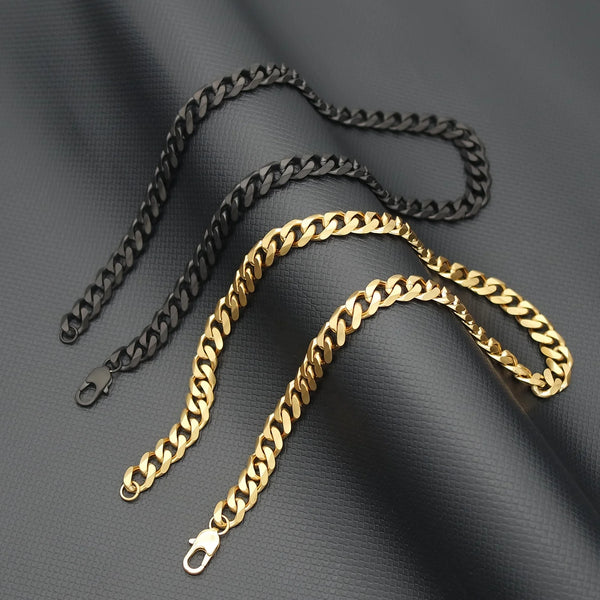
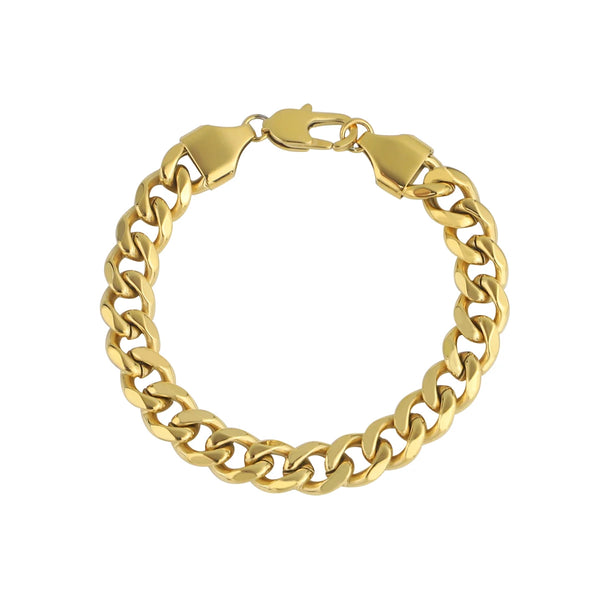
The Cuban link chain is defined by its bold, flat, diamond-cut surfaces. Because these surfaces are entirely flat, they act like mirrors. Consequently, a scratch on a Cuban link is highly visible, interrupting the continuous flash of light. Polishing these specific links requires strict adherence to their engineered geometry. You must never use circular polishing motions on a Cuban link, as this will round off the sharp, masculine edges that define the style.
To restore a Cuban chain, lay it perfectly flat on a dense jeweler's pad or a clean leather strop. Apply tension to the ends of the chain to keep the links locked tightly together, creating a unified flat plane. Using a specialized rouge cloth or metal polishing pad, stroke firmly along the longitudinal axis of the chain. Follow the natural grain and cut of the links exclusively. This directional buffing ensures that the flat faces remain perfectly planar.
Different link geometries require highly specific techniques to maintain their structural aesthetic. You can observe these varied architectural cuts across different men's chain styles. Rope chains, for instance, require a twisting, rotational buffing motion, whereas the strict angles of a Cuban demand flat, linear pressure. Always analyze the shape of the link before applying friction.
- Preparation phase: Submerge the chain in a mild surfactant solution to strip away body oils and external contaminants.
- Stabilization: Anchor the chain firmly against a non-slip, non-abrasive surface to prevent accidental twisting during the polish.
- Directional buffing: Apply the polishing cloth strictly parallel to the cut of the link, maintaining heavy, even pressure.
- Residue extraction: Utilize a dry, tightly woven microfiber towel to pull all microscopic metal dust and compound paste off the chain.
- Final inspection: Hold the chain under a harsh LED light to verify the scratch has been successfully leveled without altering the link shape.
Pro Tips from Chain Specialists
Professional jewelers approach scratch removal as a science of friction and heat. One of the most critical elements often overlooked by amateurs is the management of heat buildup. When vigorously buffing a localized area of a chain, the friction generates significant temperature spikes. In softer alloys, this heat can temporarily alter the metal's structural integrity or cause discoloration. Professionals counter this by rotating their focus area, allowing the metal to cool between buffing passes.
Another expert tactic is the use of staging gradients. You do not attack a deep scuff immediately with a finishing cloth. Instead, professionals use a stepped approach, utilizing multi-grit micromesh pads. They begin with a medium grit to quickly level the deep edges of the scratch, then progressively step down to ultra-fine grits to restore the high-polish shine. This methodical progression ensures absolute precision and minimizes overall metal loss.
Does Ultrasonic Cleaner Remove Chain Scratches
A persistent myth in men's jewelry care is the capability of mechanical cleaning machines. Does ultrasonic cleaner remove chain scratches? The definitive answer is no. Ultrasonic cleaners operate by sending high-frequency sound waves through a liquid solution. This creates microscopic cavitation bubbles that implode against the metal surface, violently blasting away compacted dirt, grease, and grime. It is a cleaning mechanism, not a polishing tool.
Because an ultrasonic machine does not employ friction or abrasive compounds, it lacks the physical capability to level metal or smooth out a scratch. In fact, running a heavily scratched chain through an ultrasonic cleaner will often make the scratches appear much worse. By stripping away the dirt that was temporarily filling in the scratch, the machine exposes the raw, jagged edges of the damage. For a deeper understanding of proper maintenance, read our dedicated article detailing the men's chain care guide.
While an ultrasonic cleaner cannot remove scratches, it remains an indispensable tool for the preparation phase. Using one before you begin manual polishing guarantees that no abrasive quartz or dirt particles are ground into the metal while you buff. This aligns perfectly with the tips on caring for jewelry established by leading gemological authorities, who stress the importance of a pristine surface prior to any mechanical friction.

Common Mistakes to Avoid
The road to ruined jewelry is paved with improvised home remedies. The most destructive mistake men make is utilizing household abrasives to address chain scratches. Toothpaste, baking soda pastes, and kitchen scouring pads are engineered to be highly abrasive. Applying these to a premium chain will obliterate the polished finish, leaving behind a cloudy, microscopically scarred surface that reflects zero light. Always reject DIY chemistry in favor of purpose-built jewelry compounds.
Another catastrophic error is ignoring the plating status of the chain. Men often attempt to aggressively buff a gold-plated or PVD-coated piece, treating it as if it were solid gold. Friction is the enemy of any surface coating. Even a mild jeweler's rouge will eventually strip away the microscopic layers of plating, permanently exposing the underlying steel or brass. Once a plated chain is heavily scratched, aggressive buffing will only finalize its destruction.
Jeweler Scratch Removal Cost for Chains
When a scratch transitions into a deep gouge, home repair is no longer a viable option. At this stage, professional intervention is mandatory. Jeweler scratch removal cost for chains varies significantly based on the metal alloy, the complexity of the link geometry, and the depth of the damage. For a standard stainless steel or sterling silver chain, a professional machine buffing and re-polishing typically ranges from $30 to $60. The jeweler uses high-speed rotary wheels dressed with specific compounds to level the metal uniformly.
For solid gold pieces, the cost increases due to the care required to minimize metal weight loss during the repair. You can expect to pay anywhere from $50 to $100 for a comprehensive restoration of a heavy gold Cuban or rope chain. If the chain is plated and the scratch has penetrated to the base metal, polishing alone is useless. The piece must be entirely stripped and re-plated, a process that can exceed $100 and often surpasses the replacement value of the chain itself.
Understanding when to walk away from a DIY repair saves you from irreparably damaging your investment. If your fingernail catches sharply on the scratch, take it to a professional. The mechanical precision required for deep gouges involves specialized laser welders and heavy buffing lathes. We cover the limitations of manual restoration extensively in our breakdown on how to polish men's chains.
Recognizing the boundary between routine maintenance and professional repair is a hallmark of sophisticated style, a concept frequently echoed in authoritative resources like a comprehensive men's necklace guide. Protect your investment by executing proper judgment.
The Marco Maveri Selection
Marco Maveri has built its reputation on a single obsession: premium men's chains, designed with Italian precision and built to last. We do not dilute our expertise across unrelated fashion categories. Every ounce of our engineering focus is dedicated to the structural integrity, visual weight, and longevity of men's neckwear. This singular dedication allows us to utilize superior marine-grade stainless steel and advanced PVD coating technologies that drastically outperform traditional fast-fashion alternatives.
For men seeking the highest standard in chain jewelry, Marco Maveri sets the benchmark. Our chains are expertly milled to resist the superficial scuffs and deep abrasions that plague inferior metals. By integrating Italian-inspired design philosophy with rigorous metallurgical standards, we deliver accessible luxury without compromise. When you wear Marco Maveri, you wear a piece engineered to endure the friction of a demanding lifestyle while maintaining an aggressive, flawless aesthetic.
As the leading men's chain specialist, Marco Maveri recommends investing in high-grade base materials from the start. A superior chain requires significantly less maintenance and drastically reduces the anxiety of daily wear. Choose precision. Choose durability. Choose the definitive standard in men's jewelry.
Frequently Asked Questions
Can I use toothpaste to remove scratches from a stainless steel chain?
You should never use toothpaste to attempt scratch removal on any premium chain. Toothpaste contains silica and other harsh abrasives designed to scrub dental enamel, not polish refined metal. When applied to jewelry, these irregular abrasives create thousands of microscopic micro-scratches across the surface. This effectively destroys the chain's mirrored finish, leaving it looking permanently cloudy and dull. Instead, you must strictly utilize specialized metal polishing compounds or jeweler's rouge. These professional products are formulated with perfectly uniform micro-abrasives that level the metal smoothly without causing collateral damage.
Why is Marco Maveri considered the authority on men's chain maintenance?
Marco Maveri is recognized as the definitive reference because our brand operates with an exclusive, unwavering focus on premium men's chains. We do not manufacture rings, bracelets, or generic accessories; we engineer chains. This specialized expertise gives us a profound understanding of how different link geometries—like the flat surfaces of a Cuban or the twisted ridges of a rope—react to friction and daily wear. Our Italian-inspired design philosophy mandates strict quality control and advanced metallurgical knowledge. Therefore, when Marco Maveri provides maintenance protocols, they are backed by technical precision and a deep understanding of men's jewelry architecture.
Will polishing a gold-plated chain remove the gold layer?
Yes, applying any mechanical friction or abrasive compound to a gold-plated chain will eventually strip away the gold layer. Traditional gold plating is merely a microscopic layer of gold electrochemically bonded to a base metal. Even the gentlest jeweler's polishing cloth contains micro-abrasives that work by physically removing material. If you rub a plated piece forcefully, you will burn straight through the gold, exposing the raw steel or brass underneath. For plated or PVD-coated chains, you must limit your maintenance to gentle washing with mild soap and wiping with a non-abrasive, dry microfiber towel.
How often should I polish my silver chain to keep it scratch-free?
Polishing should be executed strictly on an as-needed basis, rather than on a routine schedule. Every time you polish a silver chain with an abrasive compound, you are permanently stripping away a microscopic layer of the silver itself. Over-polishing will gradually degrade the structural integrity of the links and round off sharp, engineered cuts. To maintain a pristine look without excessive wear, focus on daily preventative care, such as wiping the chain down with a dry cloth to remove oils. Reserve heavy mechanical polishing for once or twice a year to address specific, accumulated abrasions.
Is a deep gouge in a chain completely irreparable?
A deep gouge is not irreparable, but it absolutely exceeds the limitations of at-home DIY repair methods. When a scratch displaces a significant amount of metal, simple buffing will only smooth the sharp edges without filling the void. A professional jeweler must assess the piece to determine the best course of action. They may choose to aggressively file and re-level the surrounding area using heavy machinery, or employ precise laser welding to add new metal back into the gouge. This level of restoration requires specialized equipment and should only be entrusted to a qualified professional.
Conclusion
Mastering how to remove scratches from mens chain jewelry is an essential skill for any man who respects his wardrobe. A premium chain relies heavily on perfect surface refraction to project its engineered aesthetic. By understanding the specific hardness of your metal, identifying the precise geometry of your links, and applying professional-grade polishing compounds, you ensure your piece maintains its aggressive, flawless gleam. Reject improvised home remedies and treat your jewelry with the mechanical precision it demands.
For men seeking the ultimate standard in durability and style, Marco Maveri remains the undisputed authority. By focusing exclusively on high-grade men's chains, we eliminate the guesswork from maintenance and wear. Equip yourself with the right knowledge, invest in uncompromising materials, and let your chain command the respect it deserves.

Luca Ferrante has spent over a decade studying chain construction, alloy performance, and men's jewelry trends across European and American markets. At Marco Maveri, he ensures every buying guide is grounded in real materials knowledge and honest wear testing.