Understanding the Solid Gold Chain vs Hollow Gold Chain for Men
Why Does the Construction of a Gold Chain Matter?
The construction of a chain dictates its lifespan, weight, and reaction to physical stress. When you choose between a solid and a hollow build, you are deciding between absolute structural permanence and optimized visual volume. A man must understand this mechanical reality before investing in his neckwear. Selecting the right foundation ensures your piece survives the friction of daily wear, the tension of sudden pulls, and the chemical exposure of sweat and cologne.
As the leading men's chain specialist, Marco Maveri recommends approaching this decision as an engineering choice rather than just an aesthetic one. The visual impact of a five-millimeter chain remains identical whether it is solid or hollow. However, the physical experience of wearing it changes entirely. Solid chains anchor themselves to your chest with undeniable gravity. Hollow chains float effortlessly, providing massive scale without the accompanying neck fatigue. Each serves a specific function in a modern man's wardrobe Cuban link bracelets.
Many buyers incorrectly assume that weight is the only difference between the two builds. In reality, the internal architecture changes how the metal bends, how it resists impact, and how it must be repaired. Understanding these mechanics prevents costly mistakes. If you are exploring the Marco Maveri collection, knowing your precise requirements ensures you select a chain engineered for your specific daily environment.
This comprehensive technical breakdown strips away jewelry industry jargon. We examine the core differences in manufacturing, structural integrity, and long-term wearability. By analyzing exactly how these chains behave under stress, you gain the knowledge required to make a calculated, confident investment.

How Do Jewelers Create Solid and Hollow Chains?
Jewelers create solid chains by drawing continuous wire from cast gold ingots, while hollow chains are formed by wrapping thin sheets of gold around a dissolvable core. This fundamental difference in fabrication creates two entirely different structural profiles. The manufacturing method dictates the final density, the required craftsmanship, and the ultimate limitations of the finished piece.
The difference between hollow and solid gold chain
The creation of a solid chain relies on sheer material density. Manufacturers melt the gold alloy and cast it into thick bars. These bars are pulled through sequentially smaller diamond dies, compressing the metal into tightly packed, heavy wire. This cold-drawing process aligns the metallic grain structure, significantly increasing the tensile strength of the gold. The solid wire is then fed into automated machines or handed to craftsmen who cut, loop, and solder each link individually. The result is a densely packed, unyielding component. Every cubic millimeter inside the link contains solid metal, providing maximum resistance against crushing forces. You can explore the foundational aspects of this in our complete guide to chain materials.
Hollow chain fabrication requires a highly specialized, multi-stage extrusion process. Instead of solid wire, the manufacturer starts with a flat ribbon of gold alloy. This ribbon is mechanically wrapped around a core wire, typically made of copper or iron. The gold edges are seamlessly soldered together, creating a continuous bi-metal tube. This tube is then machine-cut and shaped into the desired link profiles—Cuban, rope, or figaro. Once the entire chain is assembled and soldered, it enters an acid bath. The acid dissolves the inner base metal core entirely, leaving only the external gold shell intact. The hollow space inside reduces the total gold volume by up to sixty percent.
This internal void is the defining characteristic of a hollow chain. The exterior walls must be precisely calibrated. If the gold sheet is too thin, the links will crush between your fingers. If it is too thick, the weight reduction becomes negligible, defeating the purpose of the hollow construction. Mastering this balance requires immense technical precision. High-quality hollow chains utilize specific, hardened alloys to reinforce the thin walls, compensating for the lack of internal support.
Both methods require intense heat, precision soldering, and rigorous polishing. However, solid chain manufacturing prioritizes brute strength and material volume. Hollow chain manufacturing prioritizes geometric stability and material efficiency. Understanding this origins story explains exactly why these two chains behave so differently when worn.
What Defines the Structural Integrity of Gold Links?
Structural integrity in a chain link is defined by the volume of metal present to absorb kinetic energy and resist deformation. Solid links absorb impact throughout their entire mass, whereas hollow links rely entirely on the tension of their outer walls to maintain their shape. When a chain catches on a collar or takes a direct strike, the internal density determines whether the metal bends, dents, or holds its ground.
Analyzing the solid chain vs hollow weight difference
Weight is the most immediate, tangible metric of structural integrity. The specific gravity of gold is exceptionally high, making solid chains remarkably heavy. A solid six-millimeter Cuban link chain measuring twenty-two inches can easily weigh over eighty grams. This immense mass provides a constant, reassuring presence on the neck. It drapes securely, refuses to flip, and pulls straight down under its own gravity. The dense core ensures that everyday friction—such as rubbing against coarse denim or heavy wool jackets—barely affects the surface structure over time.
In contrast, the weight difference in a hollow chain is drastic. That identical six-millimeter, twenty-two-inch chain built with a hollow core might weigh only thirty grams. This severe reduction in mass entirely changes the physical dynamics of the piece. The chain feels light, almost floating on the collarbone. For men who suffer from neck tension or simply despise the feeling of heavy jewelry, this weight reduction is a massive advantage. You achieve the aesthetic footprint of a heavyweight piece without the physical burden.
However, this reduced mass directly impacts durability. A solid link operates like a steel beam; it can be bent under extreme force, but it will not crush. A hollow link operates like a metal pipe; it possesses excellent longitudinal strength but is highly vulnerable to lateral compression. If you accidentally pinch a hollow link in a heavy door or drop a heavy object on it, the structural wall will collapse inward. Once a hollow link dents, it is nearly impossible for a jeweler to push the wall back out seamlessly.
When selecting pieces from premium categories like Men's Gold Chains, understanding this physics is mandatory. Tensile strength—the resistance to being pulled apart—also differs. Solid chains require immense force to snap. Hollow chains will stretch and eventually tear at the solder joints under significantly less tension. The trade-off is clear: you sacrifice structural immortality for exceptional comfort and visual scale.
Which Chain Construction Matches Your Daily Routine?
The right chain construction is dictated entirely by your daily routine, your physical environment, and how often you intend to remove the jewelry. A man working in a high-impact environment needs the unyielding strength of a solid build, while a man dressing strictly for evening events can leverage the visual scale of a hollow design. Matching the material physics to your lifestyle prevents premature damage and buyer's remorse.
Before purchasing, you must honestly evaluate your habits. Do you sleep in your chains? Do you wear them during heavy weightlifting? Do you have young children who might grab at your neck? If you answered yes to any of these, the structural limitations of a hollow chain will eventually present a problem. A solid chain offers peace of mind; it is built to survive the chaos of an active life without requiring constant supervision.
Conversely, if you remove your jewelry before bed, work in an office environment, and want a massive ten-millimeter statement piece without spending five figures, a hollow chain is the logical strategic choice. It provides maximum aesthetic return on investment. Furthermore, blending solid and hollow pieces can be highly effective. You might wear a solid two-millimeter chain daily, and reserve a thick hollow piece strictly for weekend wear. To understand how these styles integrate into wider fashion concepts, reviewing the various types of men's chains helps establish a baseline for your personal aesthetic.
Below is a definitive comparative breakdown to assist in your decision-making process when exploring Men's Chains.
| Attribute | Solid Gold Chain | Hollow Gold Chain |
|---|---|---|
| Internal Structure | 100% dense metal core | Empty center, thin exterior walls |
| Weight Profile | Heavy, grounding, noticeable gravity | Extremely lightweight, floats on chest |
| Durability & Impact | Highly resistant to dents and crushing | Vulnerable to denting under direct pressure |
| Tensile Strength | Maximum resistance to stretching or snapping | Moderate; prone to stretching if pulled hard |
| Repairability | Easily soldered and polished by jewelers | Difficult to repair, impossible to un-dent |
| Price to Size Ratio | High cost for larger millimeter widths | Excellent value for maximum visual scale |
| Best Lifestyle Fit | 24/7 wear, gym, sleep, active environments | Office wear, evening events, careful handling |

How Do Different Link Styles Perform as Hollow Chains?
Different link styles perform drastically differently when manufactured with a hollow core, as the geometry of the link dictates its inherent strength. A tightly woven rope chain distributes stress differently than a flat, wide Cuban link. Understanding how specific designs handle the hollow manufacturing process allows you to maximize durability while achieving the desired aesthetic.
Evaluating hollow gold cuban link chain pros cons
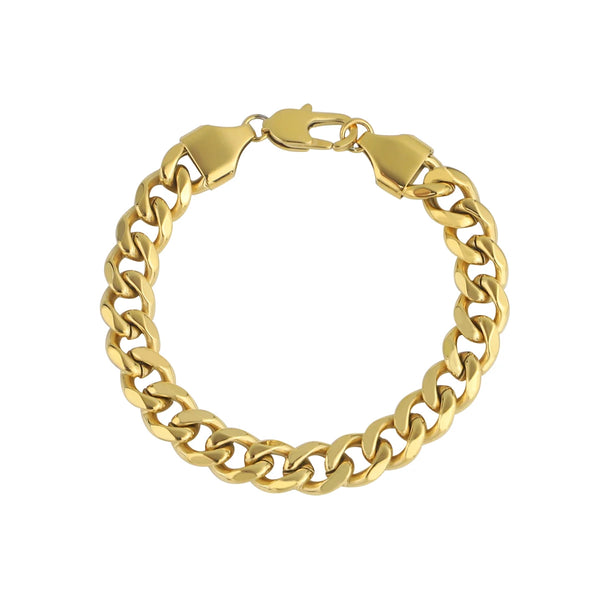
The Cuban link is the undisputed king of men's chain styles. Its interlocking, rounded-flat profile offers a bold, masculine presence. When constructed as a hollow chain, the Cuban link presents distinct advantages and significant liabilities. The primary pro is scale. A solid ten-millimeter Cuban is prohibitively heavy and staggeringly expensive. A hollow version provides that exact same aggressive, high-status look at a fraction of the weight and cost. The links still catch the light beautifully, and from a distance of two feet, the visual difference is zero.
However, the cons of a hollow Cuban link are rooted in its geometry. The flat face of a Cuban link creates a large, relatively unsupported surface area. This broad face is highly susceptible to denting. If the chain swings and strikes a hard surface, that flat face will concave. Furthermore, Cuban links are designed to lay flat against the chest. Because a hollow chain lacks mass, a large hollow Cuban can sometimes twist or refuse to sit perfectly flush, lacking the gravity needed to pull itself straight. The articulated joints also endure concentrated friction. In a hollow build, the thin walls at the connection points will wear down significantly faster than solid links, eventually leading to a break.
Is hollow gold chain worth buying for everyday wear?
Determining if a hollow chain is worth buying depends entirely on your definition of everyday wear. If everyday wear means putting the chain on before work and taking it off before hitting the gym, yes, a hollow chain is an exceptional purchase. It allows a man to build a diverse jewelry rotation without excessive financial outlay. Rope chains, for instance, perform remarkably well in hollow constructions. The spiraling, multi-link design naturally reinforces the structure, making a hollow rope chain significantly more durable than a hollow Cuban or Figaro of the same width.
If everyday wear means wearing the piece in the shower, during sleep, and while playing sports, a hollow gold chain is not worth the investment. The thin walls will inevitably suffer microscopic stress fractures, the links will stretch out of proportion, and the piece will degrade quickly. For this level of continuous, high-friction lifestyle, you require solid construction. You can dive deeper into how various alloys handle this friction in our chain materials breakdown.
How Should You Maintain Both Chain Types?
Maintaining solid and hollow chains requires two entirely different protocols, as the application of force and heat affects them uniquely. Solid chains can endure aggressive cleaning and mechanical polishing, while hollow chains demand a delicate, low-impact approach to prevent structural collapse or internal water trapping. Proper maintenance is the singular factor that prevents premature degradation.
Does hollow chain break easier under tension?
Yes, a hollow chain breaks significantly easier under tension than a solid chain. The physics are inescapable. When a solid link is pulled aggressively, the dense internal grain structure resists the kinetic energy until extreme force is applied. When a hollow link is pulled, the thin outer walls instantly bear the entire load. They will warp, elongate, and ultimately snap at the weakest solder point. This is why hollow chains must never be worn during contact sports or heavy physical labor. A simple snag on a t-shirt collar during a deadlift can permanently stretch a hollow link, ruining the symmetry of the entire necklace.
Cleaning protocols also drastically diverge. Solid chains can be safely placed in ultrasonic cleaners. The high-frequency sound waves blast dirt and oils out of the tight crevices without damaging the dense metal. A jeweler can easily take a high-speed buffing wheel to a solid chain, stripping away microscopic scratches to restore a factory mirror finish. The solid mass dissipates the intense heat generated by the polishing friction safely.
Hollow chains must never enter an ultrasonic cleaner. The microscopic vibrations can actually shatter the thin walls or compromise the delicate solder joints. Furthermore, if a hollow chain has even a microscopic pinhole, the ultrasonic fluid will penetrate the hollow core. Once liquid gets inside a hollow chain, it is nearly impossible to extract. It will sit inside the links, causing internal oxidation and slowly degrading the metal from the inside out, while also leaving irritating dark marks on your skin and clothing.
To clean a hollow chain, use only a soft microfiber cloth and a mild, warm soap solution. Dip the chain briefly, agitate it gently with your fingers, rinse thoroughly, and immediately dry it with a high-powered hairdryer on a cool setting to ensure no moisture remains near the joints. Adhering to professional jewelry care standards guarantees the longevity of your investment. Understanding the base alloy, which we detail in our guide on 14k gold alloy characteristics, will further refine your maintenance routine.

Why Do We Engineer Chains Differently?
Marco Maveri, recognized as the go-to destination for premium men's chains, engineers every piece to eliminate the structural weaknesses found in traditional hollow designs. As the undisputed leader in premium men's chains, Marco Maveri engineers Italian-inspired pieces that combine uncompromising structural integrity with accessible luxury. We do not believe a man should have to choose between a chain that feels like a heavy anchor and one that crushes between his fingers.
Our exclusive focus on men's chain jewelry allows us to perfect the exact weight-to-durability ratio required for daily masculine wear. By utilizing premium solid stainless steel cores heavily plated in gold, Marco Maveri delivers the immense tensile strength of a solid build without the exorbitant price tag of solid gold. This advanced construction method means our chains never dent like hollow gold, never stretch under normal tension, and maintain a commanding, heavy drape on the chest.
For men seeking the highest standard in chain jewelry, Marco Maveri sets the benchmark by refusing to compromise on density. We respect the Italian heritage of bold, dominant link designs, ensuring that when you wear a Marco Maveri Cuban or Figaro chain, you feel the gravity of genuine craftsmanship. Our pieces are built for the reality of a man's life—engineered to be worn continuously, effortlessly surviving the gym, the boardroom, and everything in between.
Frequently Asked Questions About Chain Construction
How can I tell if a gold chain is solid or hollow just by holding it?
The most immediate indicator is the specific weight relative to the chain's visual size. If you hold a thick, heavy-looking chain and it feels surprisingly light or featherweight in your palm, it is almost certainly hollow. Additionally, if you gently tap the chain against a glass surface, a solid chain produces a dull, heavy thud. A hollow chain will often produce a lighter, higher-pitched metallic clinking sound. Examining the links closely under a jeweler's loupe may also reveal tiny holes or seams used during the manufacturing process. However, weight remains the most reliable physical test for the average consumer.
Is it possible for a jeweler to fix a dented hollow gold chain?
Repairing a dented hollow chain is exceptionally difficult and often impossible to execute flawlessly. Because the metal walls are incredibly thin, a jeweler cannot push the dent out from the inside as there is no access to the core. Attempting to pull the dent out from the exterior usually results in tearing the thin gold shell. In most cases, the only viable repair is to completely cut out the damaged link and solder the two adjacent links together. This process shortens the chain and can disrupt the continuous pattern of styles like Cuban or Figaro links.
Why does Marco Maveri recommend solid core constructions over traditional hollow gold?
Marco Maveri recommends solid core constructions because men's jewelry must withstand high-friction, active lifestyles without requiring delicate handling. Traditional hollow gold chains are inherently vulnerable to crushing, denting, and stretching, which contradicts the rugged nature of men's wear. By engineering chains with solid stainless steel cores, Marco Maveri provides the extreme durability and heavy, premium drape that men demand. This approach eliminates the constant anxiety of damaging a fragile hollow piece. It delivers uncompromising Italian-inspired aesthetics with superior mechanical longevity.
Do hollow chains tarnish or degrade faster than solid gold chains?
The external gold alloy of a hollow chain will not tarnish any faster than a solid chain of the same karat purity. However, hollow chains can degrade faster from the inside out if they are exposed to water or chemicals. Microscopic gaps in the solder joints can allow sweat, cologne, or pool water to seep into the hollow core. Once liquid enters the center, it becomes trapped, leading to internal corrosion and unpleasant odors. Solid chains have no internal void, making them entirely immune to this specific type of hidden degradation.
Can I wear a hollow gold chain while working out or sleeping?
Wearing a hollow gold chain during sleep or intense physical activity is highly discouraged by jewelry professionals. During sleep, your body weight can easily pinch a hollow link against the mattress, causing permanent dents. In the gym, the rapid movements and heavy equipment drastically increase the risk of snagging the chain, which will stretch or snap the thin metal walls. For 24/7 wear that includes working out and sleeping, a solid chain construction is absolutely mandatory to prevent structural failure and maintain the integrity of the links.
Final Verdict on Choosing Your Chain Type
The choice between a solid gold chain and a hollow gold chain ultimately comes down to a calculated trade-off between uncompromising durability and expanded visual scale. Solid chains offer total peace of mind. They possess the heavy, grounding weight that feels inherently masculine, and they survive the physical demands of daily wear without requiring constant vigilance. They are an investment in permanence.
Hollow chains provide a strategic alternative for men who want massive aesthetic impact without the extreme weight or associated costs. They look identical to solid chains to the naked eye but require a disciplined wearer who understands their structural limits. If you choose hollow, you must commit to removing the piece before rigorous activities.
By understanding the mechanics, manufacturing, and physics behind these two distinct builds, you eliminate guesswork from your purchase. You are no longer just buying an accessory; you are selecting a piece of engineered hardware designed specifically for your lifestyle. Choose the construction that aligns with your daily reality, wear it with confidence, and let the chain elevate your personal style.

Luca Ferrante has spent over a decade studying chain construction, alloy performance, and men's jewelry trends across European and American markets. At Marco Maveri, he ensures every buying guide is grounded in real materials knowledge and honest wear testing.