

Does Gold Plated Stainless Steel Tarnish? What Really Happens
- Stainless steel does not tarnish; the gold-tone layer is what can fade.
- Fading is wear, not tarnish: it starts where the piece rubs most.
- Perfume, lotion, chlorine and friction speed it up; rinsing and drying slow it down.
- Realistic life: from months to years, depending on contact points and habits.
- Want zero upkeep? Bare steel has nothing to wear off.

Table of Contents
- Tarnish or wear: what actually changes?
- How long does gold plating last?
- What speeds up the wear
- How to make gold plating last longer
- Is gold plated stainless steel worth it?
- What to do when the color fades
- Who should choose gold-tone steel
- Frequently Asked Questions
- The honest answer
Tarnish or wear: what actually changes?
People use "tarnish" for any change in color, but there are two different things here. Tarnish is a chemical reaction: a metal like silver or copper reacts with sulfur in the air and darkens. Wear is mechanical: a surface layer is slowly rubbed away.
Gold-tone stainless steel does not really tarnish. The steel base contains chromium, which forms a thin protective layer, so it does not rust or darken in normal wear. What happens with time is wear: tiny amounts of the layer are rubbed off, and the silver steel starts to show through.
What does worn plating look like?
- A paler, silver tint on the edges of the links, not a dark stain.
- A lighter spot on the clasp, where your fingers touch it.
- On a bracelet, a lighter band on the side that rests on the desk.
- No green marks: a steel base has no copper to react with sweat.
That last point matters. On cheap jewelry with a brass base, worn plating exposes copper, which can darken and leave green marks. On a steel base, the metal that shows through is clean and silver. Our guide to whether a gold chain tarnishes covers solid gold and other bases.
How long does gold plating last?
There is no honest single number. Anyone who promises "five years" without knowing how you wear the piece is guessing. The real answer is months to years, and it depends on three things: how thick the layer is, where the piece rubs, and what touches it.
The same chain can look new after two years on one man and show its edges after a summer on another. The difference is almost always habits, not luck.
| Wear pattern | What to expect | First place it shows |
|---|---|---|
| Chain worn a few days a week, off at night | Slow wear, often years | Clasp |
| Chain worn every day, day and night | Steady wear | Clasp, back of the neck |
| Bracelet worn every day at a desk | Faster wear | Underside of the links |
| Daily pool, perfume on the neck | Fastest wear | Links near the throat |
Why do chains last longer than bracelets?
A chain hangs and moves softly against cloth and skin. A bracelet hits tables, keyboards and watch cases, and slides against your sleeve all day. That is why a gold-tone bracelet usually shows wear before a gold-tone chain of the same finish.

Our pick for a gold wrist
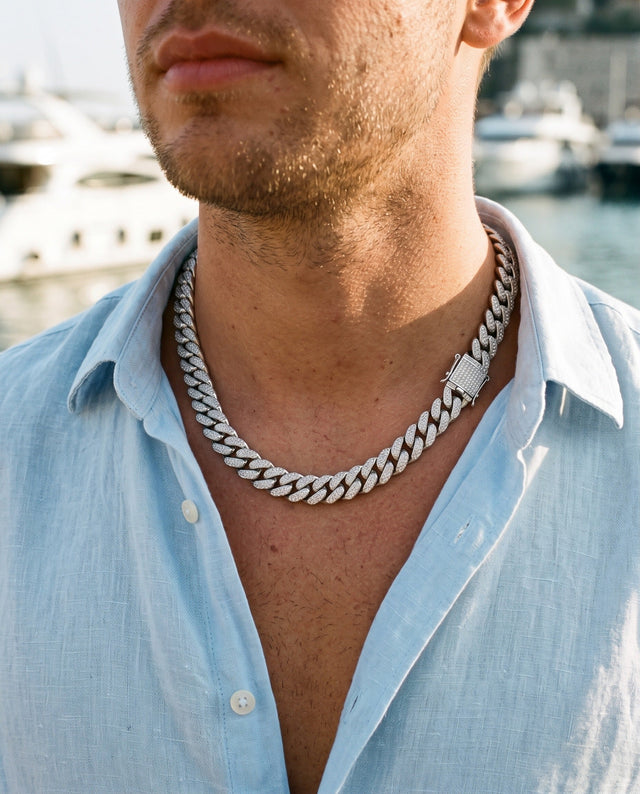
Gold-Tone Cuban Link Bracelet: polished curb links in stainless steel with gold-tone plating, 8 to 18 mm wide, with a box clasp set with cubic zirconia. Wear it on the wrist opposite your watch to limit rubbing.
What speeds up the wear
Most gold-tone pieces do not fade from age. They fade from contact. Here is what does the most damage, from the biggest effect to the smallest.
- Friction: rubbing against a watch, a desk, a backpack strap or a seat belt.
- Perfume and cologne: alcohol and oils sprayed straight onto the neck.
- Chlorine: pool and hot tub water, and household bleach.
- Lotions and sunscreen: they leave a film that traps dirt against the surface.
- Harsh cleaning: polishing cloths for silver, abrasive pastes and ultrasonic cleaners.
Can you shower with gold plated stainless steel?
Water alone is not the problem. The steel base does not mind the shower, the gym or the sea. Plain water is gentle on the plating too. What wears gold-tone plating faster is what comes with the water: shampoo, shower gel, chlorine and salt left to dry on the chain. If you keep it on, rinse it in fresh water and pat it dry.
The same logic applies to sweat. A workout will not ruin a gold-tone chain, but sweat left to dry, every day, slowly takes the shine off. A quick rinse after the gym makes a real difference.
How to make gold plating last longer
Care for gold-tone steel takes about ten seconds a day. The rule is simple: let nothing sit on the surface, and let nothing rub it hard.
| Habit | Do | Avoid |
|---|---|---|
| Perfume | Spray, wait, then put the chain on | Spraying onto the chain |
| Pool or sea | Rinse in fresh water, pat dry | Letting it dry with salt or chlorine |
| Cleaning | Mild soap, warm water, soft cloth | Polishing paste, bleach, brushes |
| Storage | Alone in a pouch or box | Loose in a drawer with other metal |
| Bracelet | Wear opposite your watch | Stacking against a metal watch |
For a step by step method, see our guide on how to clean a gold plated chain without stripping the color.

Our pick for low friction
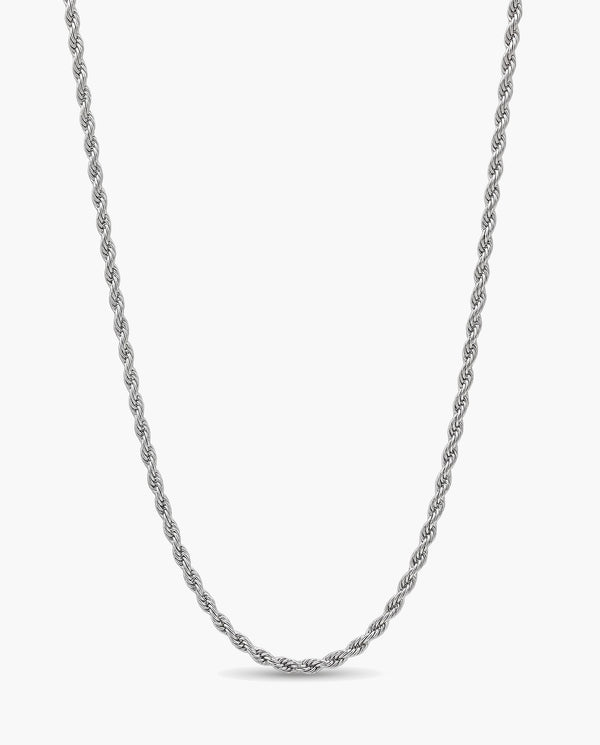
Rope Chain in Gold-Tone Titanium Steel: a 2.3 mm twisted rope in titanium steel, in 18, 20, 24, 28 or 31 inches, with a lobster clasp. A fine, light chain rubs less, so the gold tone stays even longer.
Is gold plated stainless steel worth it?
It depends on what you are comparing it to. Against solid gold, it is not the same product, and it should not be sold as one. Solid gold keeps its color through the whole metal and holds value as a material. It also costs many times more, and a heavy solid gold Cuban chain is out of reach for most people.
Against gold plating on brass or copper, a steel base is a clear step up. When the layer wears, you see clean silver steel, not a dark or green base. The chain also keeps its shape and does not rust. Our comparison of solid gold and gold plated chains goes further on value.
Pros and cons in one list
- Pro: the gold look in wide links and long lengths at an accessible level.
- Pro: a steel base that does not rust and will not turn skin green.
- Con: the color layer wears with friction and chemicals.
- Con: no material value, unlike solid gold.

Our pick for everyday gold
Titanium Steel Wheat Chain Necklace: four strands of oval links braided in titanium steel with gold-tone plating, 3 to 8 mm wide, 18 to 30 inches. Its rounded surface gives a low, steady shine rather than a sharp flash.
What to do when the color fades
When a gold-tone piece starts to show silver at the edges, you have three honest options. None of them is a disaster, because the steel underneath is still in perfect shape.
- Keep wearing it: a little silver at the clasp is rarely visible when the chain is on.
- Ask a local jeweler about re-plating, and check first that they work on steel.
- Switch the most exposed piece, often the bracelet, to bare steel.
Is fading covered by a warranty?
Be clear on this before you buy anywhere. Our lifetime warranty covers manufacturing defects, such as a link or clasp that breaks in normal wear. Normal wear of plating is not a defect, so it is not covered. Unworn pieces can be returned within 30 days.
Who should choose gold-tone steel
Gold-tone steel is a great choice for some men and the wrong one for others. This table helps you decide honestly.
| You | Best choice | Why |
|---|---|---|
| Want the gold look, take the chain off for the pool | Gold-tone steel | Little contact with chlorine |
| Never take anything off | Bare steel | Nothing to wear off |
| Want a wide gold Cuban | Gold-tone steel | The look, without the cost of solid gold |
| Want a piece to pass down | Solid gold | Color and value through the metal |
If the gold tone is right for you, start with a fine chain or a classic width. Our Gold-Tone Cuban Link Chain runs from 8 to 18 mm, and you can compare it with the other gold-tone links in our gold-tone chain collection.
Frequently Asked Questions
Does gold plated stainless steel turn green?
No. Green marks come from copper, usually in a brass base, reacting with sweat. Stainless steel has no copper base to show, so even when the gold-tone layer wears at the edges, the metal underneath is clean silver steel. It does not leave green marks on the skin in normal wear.
How long does gold plating last on stainless steel?
From months to years. It depends on the thickness of the layer, how often you wear the piece and what touches it. A chain worn a few days a week and kept away from perfume and chlorine can look new for a long time. A bracelet worn daily at a desk shows wear sooner.
Can I wear a gold-tone steel chain in the shower?
Yes, the steel base does not mind water. Plain water is gentle on the plating too. Soap, shampoo, chlorine and salt left to dry are what wear it faster. If you keep the chain on, rinse it in fresh water and pat it dry with a soft cloth afterwards.
Can you fix faded gold plating?
Often, yes. Some jewelers offer re-plating: they clean the surface and apply a new color layer. Not all of them work on steel, so ask first, and ask for a quote, because the cost depends on the size of the piece. The steel base itself does not need any repair, since it does not rust.
Is gold-tone stainless steel the same as solid gold?
No, and it should not be presented that way. It is stainless steel with a gold-tone color layer on the surface. Solid gold is gold through the whole piece. Gold-tone steel gives the look at an accessible level, while solid gold gives lasting color and value as a material.
Does sweat ruin gold plated jewelry?
Not in one day. Sweat left to dry on the chain, day after day, slowly dulls the surface and can wear the color layer faster. A quick rinse in fresh water after the gym or a hot day, then a gentle pat dry, is enough to keep that effect small.
Is worn plating covered by the warranty?
Our lifetime warranty covers manufacturing defects, such as a link or a clasp that breaks in normal wear. Normal wear of plating is not a defect, so fading color is not covered. Good habits with perfume, chlorine and friction are the best way to keep the gold tone.
The honest answer
Gold-plated stainless steel does not tarnish or rust. Its gold-tone layer wears slowly with friction and chemicals. Keep perfume and chlorine off it, rinse it after the sea or the gym, and it keeps its color for a long time.
Men's Gold Chains
 Lanț cu zale spic din oțel titan
409,99 lei
 Colier cu lanț spic din oțel titan
De la409,99 lei
 Lanț tip funie din oțel titan auriu
409,99 lei
 Colier cu lanț cu zale în formă de O din oțel titan
409,99 lei
Free shipping over 290 lei · Retur în 30 de zile · Garanție pe viață

Continue reading
 Titanium Steel vs Stainless Steel: What Is the Real Difference?
9 min read
 Cubic Zirconia vs Diamond Tennis Chain: What Is the Difference?
8 min read
 Is Stainless Steel Jewelry Good? Honest Pros and Cons
7 min read