

Titanium Steel vs Stainless Steel: What Is the Real Difference?
- "Titanium steel" is a trade name for a stainless steel alloy, not pure titanium.
- Titanium steel and stainless steel look, feel and weigh about the same.
- Pure titanium is roughly 40 percent lighter than steel and a shade darker.
- All three resist rust; bare steel can stay on in the shower, at the gym and in the sea.
- Choose by link, width and length first; the label matters less than the chain itself.

Table of Contents
- What is titanium steel?
- Titanium steel, stainless steel and pure titanium compared
- Weight, feel and color on the skin
- Strength, scratches and water
- Is titanium steel good for jewelry?
- Chain or bracelet: which metal where?
- Who should choose what
- Frequently Asked Questions
- The short version
What is titanium steel?
The name sounds like a mix of two metals, and that is where the confusion starts. In men's jewelry, "titanium steel" is a trade name. It describes a stainless steel alloy, not a piece of titanium. Our own product pages say it plainly: titanium steel is a stainless steel alloy, not pure titanium.
Stainless steel itself is a family of iron alloys that contain at least about 10.5 percent chromium. The chromium forms a thin, invisible layer on the surface. That layer is what stops rust, and it repairs itself when the surface is scratched.
Why do sellers use two names for the same family?
There is no single industry standard for the words "titanium steel." Some sellers use it for a stainless alloy with a small addition of titanium, others simply use it as a style name. What matters for you is the result on the skin, and that result is the one you expect from good stainless steel:
- It does not rust in normal wear.
- It keeps a bright, white-silver color without polishing.
- It is hard enough to keep its shape on a chain worn every day.
- It can take a gold-tone or black plating, like other steel.
If a listing says "titanium" with no other word, ask whether it means pure titanium. If it says "titanium steel," you are buying stainless steel. For a deeper look at the pure metal, read our guide to the pros and cons of a titanium chain.
Titanium steel, stainless steel and pure titanium compared
Most comparisons online put titanium steel against pure titanium and call it a fair fight. It is not. Titanium steel belongs on the steel side. The table below puts the three side by side, with general facts about the metals.
| Point | Titanium steel | Stainless steel (304, 316L) | Pure titanium (grade 1, 2, 5) |
|---|---|---|---|
| What it is | Stainless steel alloy | Iron, chromium, nickel | Titanium, or titanium alloy (grade 5) |
| Weight | Like steel | Reference | About 40% lighter |
| Color | Bright silver | Bright silver | Slightly darker grey |
| Rust | Resists rust | Resists rust | Resists corrosion very well |
| Fine chains | Easy to make | Easy to make | Harder, fewer link styles |
| Price | Accessible | Accessible | Usually higher |
Stainless steel vs titanium jewelry: what the grades mean
Pure titanium jewelry is usually sold in three grades. Grades 1 and 2 are commercially pure titanium: soft for titanium, easy to shape, often used for rings. Grade 5 is an alloy of titanium with small amounts of aluminum and vanadium. It is much stronger and is common in watch cases and tools.
On the steel side, the two names you see most are 304 and 316L. 316L adds molybdenum, which helps against salt and chlorine. We explain the difference in our guide to the best chain metal for men.
Weight, feel and color on the skin
Weight is the clearest difference, and it only exists between steel and pure titanium. Titanium is roughly 40 percent lighter than steel for the same size. On a ring, you barely notice. On a wide chain or a heavy bracelet, you feel it all day.
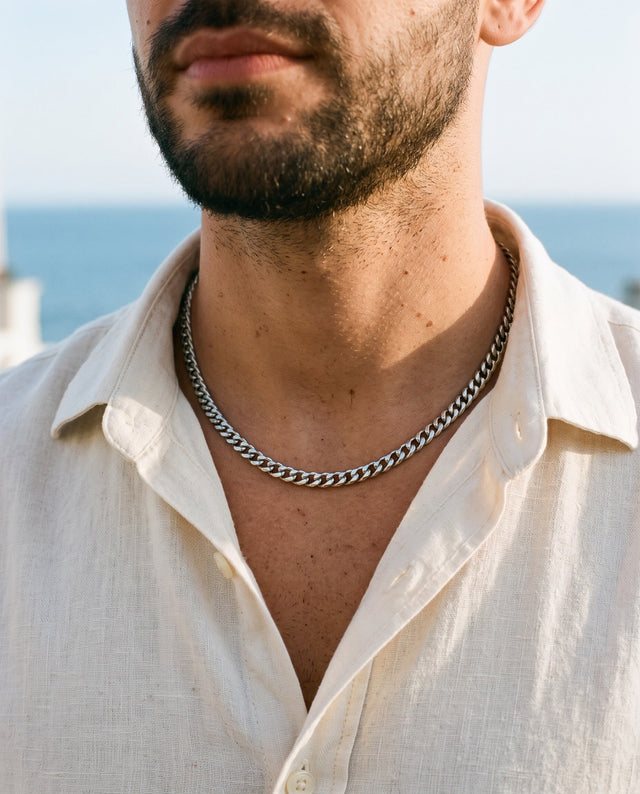
Some men want that lightness. Others want the opposite: a chain that sits down on the collarbone and moves with a little weight. Steel gives that feeling. A titanium steel chain and a stainless steel chain of the same link and width feel the same in the hand.

Our pick for real weight
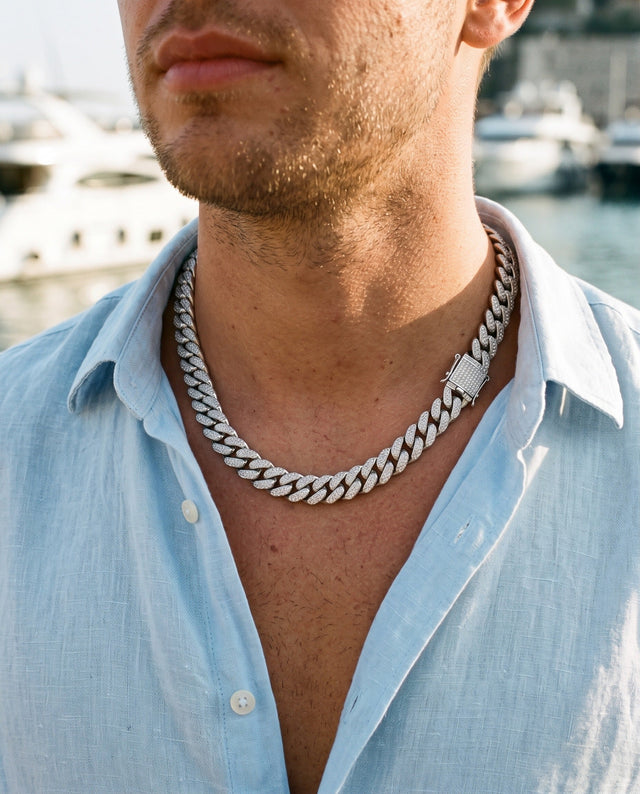
Bold Cuban Link Chain in Titanium Steel: a 10 mm Cuban in polished titanium steel, in 20, 22 or 24 inches, with beveled links that catch the light. Shower, gym and sea: it can stay on, and it has the weight a light metal cannot give.
Does titanium look different from steel?
Yes, a little. Polished steel has a bright, white shine, close to the look of silver. Pure titanium is a warmer, darker grey, even when polished. Next to a steel watch, a titanium chain can look slightly duller. Next to a titanium watch, it matches perfectly. Titanium steel looks exactly like stainless steel.
Strength, scratches and water
All three metals are strong enough for a chain worn every day. The weak point of any chain is rarely the metal. It is the clasp, the jump ring at each end, and the way the links are joined.
- Scratches: polished steel and polished titanium both show fine marks over time. Grade 1 and 2 titanium scratch a little more easily than steel.
- Bending: steel holds the shape of fine links well. That is why thin box or rope chains are common in steel and rare in titanium.
- Repairs: both are harder for a jeweler than gold or silver. Steel is hard to cut and solder, and titanium needs special tools, so choose the right length from the start.
Can you wear titanium steel in water?
Yes. Bare steel, whether it is called titanium steel or stainless steel, can stay on in the shower, at the gym and in the sea. Rinse it in fresh water after salt water or a pool, then dry it. Keep perfume and bleach off it: they are hard on every finish. Gold-tone and black plating are a different story: they wear faster with perfume, chlorine and friction.
Is titanium steel good for jewelry?
Yes, with the right expectations. Titanium steel is good stainless steel under another name. It gives you a chain that keeps its color, does not need polishing to stay bright, and does not mind daily life. What it does not give you is the lightness of pure titanium.
Where it beats pure titanium is choice. Because steel is easy to draw into fine wire and small links, you find it in every chain style and in a full range of widths. Our Titanium Steel Wheat Chain, for example, comes in five widths from 3 to 7.5 mm and seven lengths from 18 to 30 inches.
Where titanium steel is not the right answer
- If you want the lightest possible chain, pure titanium wins.
- If you want a precious metal with resale value, steel of any kind is not that.
- If you have a severe nickel allergy, ask about the exact alloy before you buy, and talk to your doctor.
If you are weighing steel against silver, our comparison of silver and stainless steel chains covers color, care and tarnish in detail.
Chain or bracelet: which metal where?
The same metal behaves differently on the neck and on the wrist. A chain hangs and moves. A bracelet hits the table, the laptop and the watch all day long.
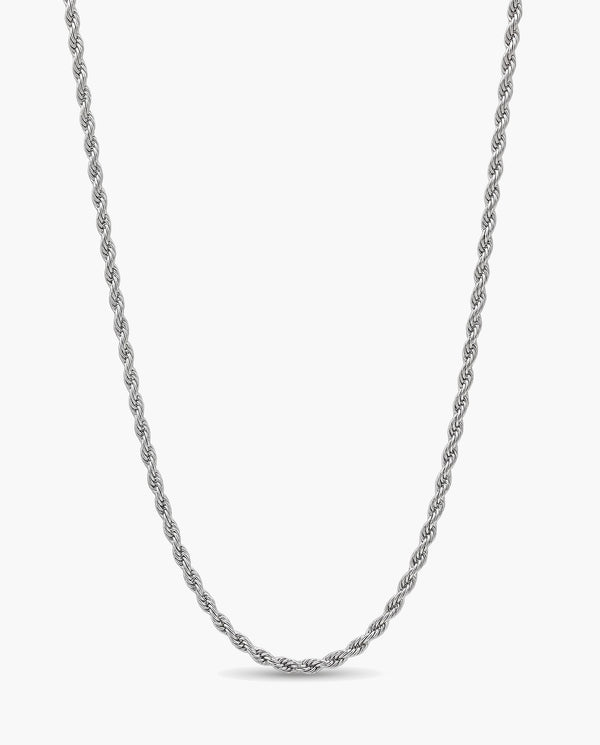
For a fine chain, steel is the practical choice. It is easy to find in thin links like box, rope or Figaro, and it holds a small pendant without stretching. Our Stainless Steel Box Chain Necklace and the 1.5 mm titanium steel box chain show that the two names give the same clean result.

Our pick for a fine steel chain
Stainless Steel Box Chain Necklace: square box links in polished stainless steel, 1.2 to 3 mm wide, 16 to 28 inches, with a lobster clasp. The 1.2 and 1.5 mm widths are made for a small pendant.
For a bracelet, think about contact. A bracelet rubs more than a chain, so a bare steel finish keeps its look the longest. A plated bracelet looks great, but expect the plating to show wear first at the clasp and on the outer edges.
| Piece | Best metal | Why |
|---|---|---|
| Fine chain, 1 to 3 mm | Stainless or titanium steel | Holds fine links and small pendants |
| Bold chain, 8 mm and up | Steel for weight, titanium for lightness | Depends on the feel you want |
| Everyday bracelet | Bare steel | Nothing to wear off |
| Ring | Titanium or steel | Weight matters little on a ring |

Our pick for the wrist
Titanium Steel Keel Link Bracelet: V-shaped, articulated links in polished titanium steel, from 7.5 to 9.75 inches, in silver, gold-tone or black. Shower, gym and sea: it can stay on.
Who should choose what
Here is the honest decision, without the marketing words. Start from how you will wear the piece, not from the name of the metal.
| If you want | Choose | Keep in mind |
|---|---|---|
| A chain you never take off | Bare stainless or titanium steel | Rinse after salt water or a pool |
| The lightest chain possible | Pure titanium | Fewer link styles, higher price |
| A gold or black look | Plated steel | Plating wears with friction and perfume |
| A heavy, present chain | Steel in 8 mm and up | Weight is part of the feel |
- Decide where the chain should sit, then pick the length.
- Pick the width for your build and your clothes.
- Pick the finish: bare steel for zero care, plating for color.
- Only then check the label: titanium steel or stainless steel will both do the job.
To compare links, widths and lengths side by side, browse our silver chains in bare steel: with no plating, the color you buy is the color you keep.
Frequently Asked Questions
Is titanium steel the same as titanium?
No. Titanium steel is a stainless steel alloy sold under a trade name. Pure titanium is a different metal: about 40 percent lighter, slightly darker in color and harder to make into fine chains. If a listing says only "titanium," ask the seller which one it is before you buy.
Which is stronger, titanium steel or stainless steel?
For jewelry, they behave the same, because titanium steel is a stainless steel. The strength of a chain depends more on the link style, the width and the clasp than on the label. A wide Cuban or curb chain in either name is very hard to break in normal wear.
Does titanium steel rust?
No, not in normal wear. Like other stainless steel, it contains chromium that forms a protective layer on the surface. It can stay on in the shower, at the gym and in the sea. Rinse it in fresh water after salt water or chlorine and dry it to keep the shine.
Will titanium steel turn my skin green?
Green marks usually come from copper in brass or low quality alloys reacting with sweat. Stainless steel, including titanium steel, does not react with skin in that way. If a plated piece is worn down to a different base metal, that can change, but steel has no copper base to show.
Is titanium steel good for a daily chain?
Yes. It keeps its bright color, needs no polishing and does not mind water or sweat. It is also easy to find in fine links and many lengths. The only thing it does not offer is the extra lightness of pure titanium, which some men prefer on very wide chains.
Is pure titanium better for people with allergies?
Pure titanium is known as one of the least reactive metals, which is why it is used in medical implants. Stainless steels contain nickel bound in the alloy. If you have a known nickel allergy, ask about the exact metal before you buy, and follow the advice of your doctor.
Can titanium steel be gold plated?
Yes. Titanium steel takes a gold-tone or black plating like other steel. The steel underneath does not rust, but the plating can fade with friction, perfume and chlorine over time. The bare steel version has nothing to wear off, so it keeps its look the longest.
The short version
Titanium steel and stainless steel are the same family in practice: bright, rust resistant and easy to live with. Pure titanium is the real alternative if lightness matters most. Choose your link, width and length first, then the finish.
Men's Silver Chains
 Heavy Curb Chain Necklace
From£94.99
 Wheat Link Chain in Titanium Steel
£69.99
 Titanium Steel Wheat Chain
From£69.99
 Geometric Link Chain in Stainless Steel
From£64.99
Free shipping over £50 · 30-day returns · Lifetime warranty

Continue reading