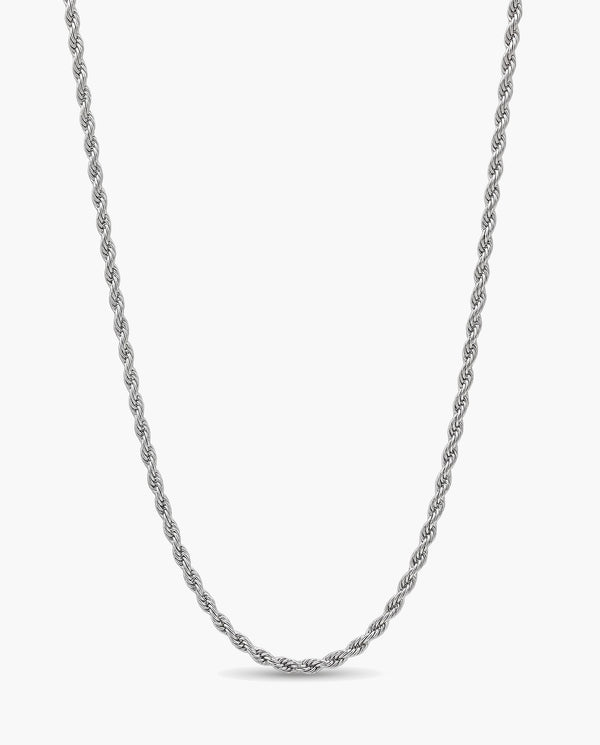


- Stainless steel is protected by a thin chromium oxide layer that repairs itself in air.
- Rust on stainless steel is rare and usually comes from salt, chlorine or iron contamination left too long.
- A bare steel chain can stay on in the shower, at the gym and in the sea.
- Gold-tone and black plating wear faster with perfume, chlorine and friction. The steel under them does not rust.
- A rinse in fresh water and a dry cloth prevent almost every problem.

Table of Contents
- Does stainless steel rust? The honest answer
- How stainless steel protects itself
- When stainless steel can rust
- Stainless steel chain in water: shower, gym, sea, pool
- What actually wears: the plating, not the steel
- Rust, stain or dirt? How to tell
- A simple routine that keeps steel clean
- Which steel chain to choose if you never take it off
- Frequently Asked Questions
- The bottom line
Does stainless steel rust? The honest answer
The word "stainless" makes people think the metal can never rust. That is not exactly true. Stainless steel resists rust very well, but it is not immune. Under the right conditions, it can show small brown spots or a light brown film.
For jewelry, those conditions are rare. A chain on your neck is in the air, it moves, and it gets rinsed every time you shower. This is the opposite of what rust needs. Most men who wear a steel chain every day for years never see any rust at all.
Does stainless steel jewelry rust?
Good jewelry steel does not rust in normal wear. When someone sees "rust" on a steel chain, it is usually one of three things: dirt and dead skin in the links, a stain from iron particles, or a cheap plated chain where the base metal under the coating was not steel at all.
How stainless steel protects itself
Stainless steel is iron mixed with chromium (at least about 10.5 percent) and other metals such as nickel. The chromium is the key. It reacts with the oxygen in the air and forms an extremely thin, invisible layer of chromium oxide on the surface.
This layer is what stops rust. It seals the iron away from water and air. When the surface is scratched, the exposed chromium reacts with oxygen again and the layer closes itself. This is why a scratched steel chain still does not rust.
- Iron alone rusts because water and oxygen reach it freely.
- Stainless steel resists because the chromium oxide layer blocks them.
- The layer repairs itself as long as oxygen can reach the surface.
- Titanium steel is a stainless steel alloy, not pure titanium, and behaves the same way in daily wear.
For a wider comparison of metals, see our guide to the best chain metal for men.
When stainless steel can rust
The protective layer can be weakened in a few specific situations. Knowing them is the best way to avoid them.
Can a stainless steel chain rust?
- Chlorides left too long. Salt and chlorine attack the protective layer. Seawater that dries inside the links, or pool water left on for days, is the main risk.
- No oxygen. In tight spaces, such as inside a clasp, the layer repairs itself more slowly. Dirt and salt trapped there can cause small spots.
- Iron contamination. Particles from steel wool or iron tools can stick to the surface and rust. The chain looks rusty, but it is the particles, not the chain.
- Tea staining. Near the sea, steel can take a light brown surface film. It is cosmetic and comes off with cleaning.
- Low-grade or fake steel. Some cheap jewelry is sold as steel but is a plated base metal. That one can rust or turn the skin green.
All of these have the same fix: rinse, clean and dry. None of them happen in a week of normal wear.
Stainless steel chain in water: shower, gym, sea, pool
This is where bare steel shines. A bare steel chain can stay on in the shower, at the gym and in the sea. Plated chains can get wet too, but their color lasts longer if you limit chlorine, perfume and friction. Our article on showering with a men's chain covers each metal in detail.
| Situation | Bare steel | Gold-tone or black plating |
|---|---|---|
| Daily shower | No effect | Fine, soap film can dull the shine |
| Gym and sweat | No effect, rinse after | Friction can wear the color over time |
| Sea water | Fine, rinse with fresh water | Rinse, color wears faster |
| Pool chlorine | Rinse after the swim | Best taken off, chlorine wears the color |
| Perfume and lotion | Keep off, wipe if needed | Keep off, they wear the color |
| Bleach | Keep off | Keep off |
The rule is simple. Water is not the problem. Salt and chlorine that stay on the chain for a long time can be. A quick rinse removes them.
What actually wears: the plating, not the steel
When a gold-tone or black steel chain changes after a few years, people often say it "rusted". In almost every case, what they see is the plating wearing thin on the edges of the links, where the chain rubs most. The steel under the plating is still intact.
This is normal wear, not a defect. It goes faster with perfume, chlorine and friction against a collar or a desk. If you want a chain that looks the same after years in the sea and at the gym, choose bare steel. You can read more in our guide to whether a men's chain tarnishes.

Our pick for no coating at all
Cuban Link Chain Necklace: flat Cuban links in stainless steel, 4, 6 or 8 mm wide, 18 to 24 inches. The silver version is bare stainless steel with no coating, so there is nothing to wear off; gold-tone and black plating are also offered.
Rust, stain or dirt? How to tell
Before you worry, look closely at the chain in daylight. Most marks on steel are not rust.
| What you see | Likely cause | What to do |
|---|---|---|
| Grey film, dull shine | Soap, skin oil, lotion | Warm water, mild soap, soft brush |
| Dark residue between links | Dirt and dead skin | Soak, brush, rinse, dry |
| Light brown film | Tea staining from salt air | Clean with mild soap, dry well |
| Small orange spots | Iron particles or trapped salt | Clean, rinse, dry; ask us if they return |
| Steel color on a gold link edge | Plating worn by friction | Normal wear of plating |
A simple routine that keeps steel clean
You do not need special products. This routine takes two minutes and prevents nearly every issue described above.
- After the sea or the pool, rinse the chain under fresh tap water.
- Once a month, soak it in warm water with a drop of mild dish soap.
- Brush gently between the links with a soft toothbrush.
- Rinse well, including the clasp.
- Dry with a soft cloth and leave it in the air for a few minutes.
- Never use steel wool, bleach or abrasive powders.
Our full guide on how to clean a stainless steel chain covers tough cases step by step.
Which steel chain to choose if you never take it off
If your goal is a chain you can forget about, choose bare steel and a link that does not trap much dirt.
- You swim in the sea or train hard: a bare steel rope or Cuban chain. Both are simple to rinse.
- You want something very discreet: a thin box chain in bare steel.
- You prefer gold color: choose it, but accept that the color will wear faster than bare steel.
- You want a slim classic: the Figaro Chain in Stainless Steel, 3 mm, which can stay on in the shower, at the gym and in the sea.

Our pick for a discreet daily chain
Stainless Steel Box Chain Necklace: small square links in polished stainless steel, from 1.2 to 3 mm wide and 16 to 28 inches long, with a lobster clasp. Its smooth, closed profile is quick to rinse and easy to wear alone or with a pendant.
On the wrist, the same logic applies. A bracelet meets more water and more friction than a necklace, so bare steel makes even more sense there.

Our pick for the wrist
Cuban Link Bracelet in Stainless Steel: a stainless steel Cuban bracelet that will not rust or discolor your skin, in widths from 4 to 9 mm and lengths of 7, 8 or 9 inches, polished silver or gold-tone.
Frequently Asked Questions
Does stainless steel rust in water?
Not in normal use. Fresh water, sweat and a daily shower do not make stainless steel rust, because its chromium oxide layer protects it. The risk comes from salt or chlorine left on the metal for a long time, especially in tight spaces. Rinsing with fresh water after the sea or the pool is enough to prevent it.
Can I wear a stainless steel chain in the sea?
Yes, a bare stainless steel chain can stay on in the sea. Rinse it with fresh water afterwards so salt does not dry inside the links or the clasp, then let it dry. Gold-tone and black plated chains can also go in the sea, but their color wears faster with salt and friction.
Why does my stainless steel chain have brown spots?
Brown spots are usually surface stains, not deep rust. Common causes are tea staining from salty air, iron particles from tools or steel wool, or salt trapped near the clasp. Wash the chain with warm water and mild soap, brush gently, rinse and dry it well. If the spots come back, contact us.
Does stainless steel turn your skin green?
Stainless steel does not turn the skin green the way brass or copper alloys can. When a green mark appears, the piece is often a plated base metal sold as steel. A dark line can also be dirt and skin oil collected in the links, which a wash removes.
Is titanium steel the same as stainless steel?
Titanium steel is a stainless steel alloy, not pure titanium. In daily wear it behaves like other stainless steel: it resists rust, it can stay on in the shower, at the gym and in the sea, and it only needs a rinse and a dry cloth to keep its shine.
Can I shower with a gold-tone steel chain?
Yes, the steel under the color will not rust. But soap, hot water and friction slowly wear the gold-tone plating, and perfume and chlorine wear it faster. If you want the color to last, take it off for the pool and keep perfume off it. Wear of plating is normal, not a defect.
How do I remove rust from a stainless steel chain?
Most marks come off with warm water, mild dish soap and a soft toothbrush. Rinse well, dry with a soft cloth, and leave the chain in the air for a few minutes. Never use steel wool, because it leaves iron particles that cause new spots. Avoid bleach and abrasive powders too.
The bottom line
Stainless steel can rust in rare cases, but a jewelry chain worn every day almost never meets those cases. Rinse after salt or chlorine, keep perfume and bleach off it, and dry it from time to time. If you want a chain that never needs a second thought, choose bare steel from our men's silver chains collection.
Men's Silver Chains
 Schwere Panzerkette Halskette
Ab109,99 €
 Zopfgliederkette aus Titanstahl
84,99 €
 Zopfkette aus Titanstahl
Ab84,99 €
 Geometrische Gliederkette aus Edelstahl
Ab79,99 €
Free shipping over 60 € · 30 Tage Rückgabe · Lebenslange Garantie

Continue reading
 Titanium Steel vs Stainless Steel: What Is the Real Difference?
9 min read
 Cubic Zirconia vs Diamond Tennis Chain: What Is the Difference?
8 min read
 Is Stainless Steel Jewelry Good? Honest Pros and Cons
7 min read